Conference
Publié : 15 December 2025
I Mis à jour : 1 December 2025
[FRB-CESAB] Blue and Green Justice
![[FRB-CESAB] Blue and Green Justice](https://preprod.fondationbiodiversite.fr/wp-content/uploads/2025/10/FRB-Cesab_Affiche-Justice-2-690x976.jpg) Photography Mikhail Nilov, Pexels
Photography Mikhail Nilov, Pexels Traditional conservation approaches have typically focused solely on ecological aspects. However, a growing body of research shows that the success of conservation policies depends as much on governance, power dynamics, and underlying principles of justice as on the biological mechanisms they aim to protect. Despite this, the interactions between these dimensions remain poorly understood and are often studied in isolation.
Drawing on the findings of four FRB-CESAB research projects, this conference explores the emerging concept of Blue and Green Justice in biodiversity conservation. Each project used distinct methodological and disciplinary approaches, yet all shared a common goal: to examine how stakeholder engagement in conservation processes can strengthen the protection and resilience of terrestrial and marine ecosystems.
The conference will take place on December 15 at 2:00 PM (Paris time) and will be conducted in English. Attendees are invited to join in person in Paris. Attendance is free, but registration via the form below is required.

Learn more about the projects
The program will begin with the PARSEC project, which combined satellite imagery, socio-economic data, and artificial intelligence to quantify the global impacts of protected areas, particularly on poverty. The project also addresses scientific reproducibility and the importance of data sharing according to FAIR principles.

Consortium co-funded by:


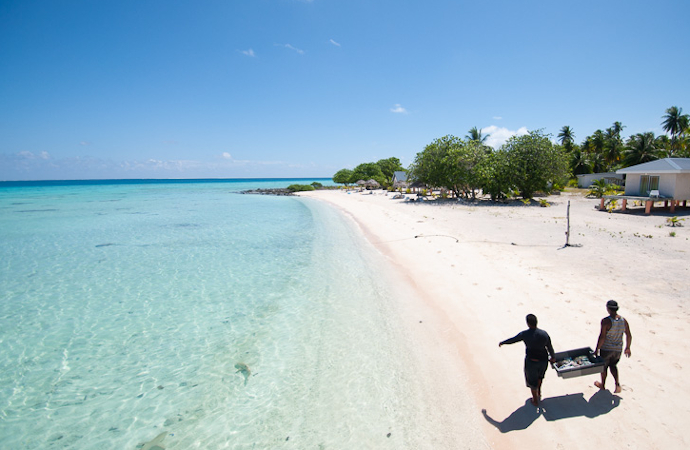
The discussion will continue with the BLUE JUSTICE project, which explored the global connections between equity, marine policies, and the resilience of coastal communities, especially under the combined pressures of climate change, conservation, and development.
Complementing this, the JUSTCONSERVATION project synthesizes 50 years of empirical literature (662 case studies), providing robust statistical evidence that governance led by Indigenous peoples and local communities significantly improves ecological and social outcomes.

Finally, the POWERBIODIV project examines a dimension long theorized but rarely operationalized: power. Using a multidimensional framework combining systematic reviews, network analyses, and modeling, the project investigates how visible, hidden, and systemic forms of power influence participatory processes and their outcomes.

December 15, 2025 – from 2:00 to 5:30 PM
- Conference venue
CNRS – Gérard Mégie Campus, 3 rue Michel-Ange, 75016 Paris
Registration for the conference is mandatory and can be completed via this form until Monday, November 24, at midnight CEST.
This event is intended for researchers interested in the social, political, and ethical dimensions of biodiversity conservation practices and will be held entirely in English.
Program
2:00 pm – 2:10 pm Welcome and Opening remarks
2:10 pm – 2:20 pm FRB-CESAB Presentation
2:20 pm – 3:00pm PARSEC Project | Building New Tools for Data Sharing and Re-use through a Transnational Investigation of the Socioeconomic Impacts of Protected Areas (25′ presentation + 15′ questions)
David Mouillot (MARBEC, University of Montpellier, France)
3:00 pm – 3:40 pm BLUE JUSTICE Project | Advancing ocean equity at the nexus of development, climate and conservation policy (25′ presentation + 15′ questions)
Joachim Claudet (CNRS, France)
3:40 pm – 4:00 pm Break
4:00 pm – 4:40 pm JUSTCONSERVATION Project | Towards ‘just conservation’: linking theories and practices of justice in biodiversity conservation (25′ presentation + 15′ questions)
Brendan Coolsaet (FNRS and UCLouvain, France)
4:40 pm – 5:20 pm POWERBIODIV Project | Understanding power dynamics in stakeholder participation: integrating theory and practice for effective biodiversity conservation (25′ presentation + 15′ questions)
Lou Lecuyer (CNRS and FRB-CESAB, France)
5:20 pm – 5:30 pm Closing remarks
Host