News
Publié : 21 October 2025
[FRB-CESAB] Newsletter 13 CESAB – September 2025
The FRB’s Center for Biodiversity Synthesis and Analysis (CESAB) is a research structure with an international scope whose objective is to implement innovative work on the synthesis and analysis of existing data sets in the field of biodiversity. Twice a year, the CESAB publishes a newsletter listing the different news and activities going on.
few words from Hélène Soubelet, FRB’s Executive Director

Thinking about sustainability through the Nexus lens — a new challenge for CESAB 2026
The year 2025 ends with a strong record for the FRB and its CESAB. With the help and under the leadership of its scientific director, Nicolas Mouquet, we successfully achieved the goal of revitalizing the synthesis center by relocating it from Aix-en-Provence to Montpellier, while maintaining an annual call for projects. 2025 was no exception, with the Datashare call, which was expanded this year to include a new type of project, Ideashare. This program supports projects that focus on creating new concepts, models, and methods through interdisciplinary collaboration, bringing together biodiversity experts and specialists from other fields to explore new perspectives and frameworks for thinking. 2025 also saw the launch of a new training course on artificial intelligence for ecologists, which was highly successful. Finally, the workshop meetings of the research program “impacts of human activities on terrestrial biodiversity in the Anthropocene” brought together researchers and stakeholders to reflect on transdisciplinarity and the transfer of scientific knowledge to public and private actors.
The year 2025 marks a period of many changes for the CESAB, both within its Scientific Council and its scientific leadership. After six years in this position, Nicolas Mouquet, whom we thank for his dedication, will hand over the role to Aude Vialatte in 2026. This appointment opens a new chapter for the FRB. A research director at INRAE and head of the Dynafor unit, Aude brings a strong interest in the synthesis between ecology, agriculture, and society. In the years to come, the FRB aims to position CESAB’s work within an evolving biodiversity science landscape, guided by international frameworks and IPBES assessments. One of the key challenges will be to align CESAB’s missions with these frameworks by encouraging projects that simultaneously integrate biodiversity, food, water, health, and climate, while maintaining the center’s analytical excellence and its hallmark interdisciplinarity. Breaking down research silos, strengthening interactions between natural and social sciences, developing data interoperability and open science, and promoting the co-production of knowledge are the core missions of the FRB. CESAB is a leading platform for the analysis and valorization of research data. As such, it contributes to this dynamic, combining scientific excellence with the political relevance of ecological research across all areas of society.
Life and updates from the groups
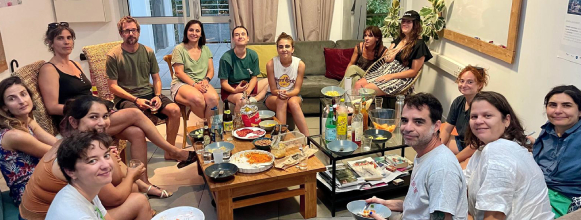
Teams from around the world in Montpellier
The issues surrounding biodiversity bring together researchers from all over the globe. By the end of the year, 14 research groups will have stopped by our Montpellier offices. Among them, two newcomers:
- FISHMIP-OSP, which explores the future of global fisheries;
- Archetypes, which aims to analyse the conditions for the efficient scaling-up of Nature-based Solutions (NbS), the first of five Knowledge Hubs of the PEPR Solubiod programme hosted at the CESAB.
Projects completing their journey
Nine groups completed their work in 2025 and will deliver their results by 2026:
- Five groups from the 2020 calls: BRIDGE (in partnership with ITTECOP), BIOSHIFTS, BLUE JUSTICE, POWERBIODIV and SYNTREESYS (from the generic call).
- Two groups from the 2021 Synergy call in partnership with SinBiose, FAPESP and LabEX CEBA: FAUNASERVICE, NEFINEO.
- One group from the 2020 call in partnership with the German synthesis centre sDiv: UNICOP.
- And the group MAESTRO, from the 2020 call in partnership with France Filière Pêche.
These projects explore biodiversity at different scales – from neotropical trees and soils to road and river corridors – combining ecological, evolutionary and functional approaches.
If you are interested in their conclusions:
- Their main results will soon be summarised and made available on their group pages.
- Each group will present its work during webinars, the CESABinars, scheduled monthly starting in October. More details below.
Focus on the projects of the partnership programme “Anthropogenic pressures and impacts on terrestrial biodiversity” (MTE, OFB, FRB)
As part of the establishment of the national programme for “terrestrial biodiversity monitoring”, led by the French Office for Biodiversity (OFB), the Ministry for Ecological Transition (MTE) and the Foundation for Biodiversity Research (FRB) have been funding for four years a research programme on “Impacts on terrestrial biodiversity in the Anthropocene”. The FRB ensures the scientific coordination and facilitation of the research groups. The data synthesis projects are hosted at the CESAB.
- On 19–20 June, eight projects presented their progress, including three FRB-CESAB groups focusing on the impacts of human activities on small carnivores (DISCAR), dragonflies (DRAGON) and agro-environmental variables (MOTIVER). Their mid-term presentation slides are available on their group pages.
- On 25 September, a workshop took place in Paris bringing together researchers and stakeholders from the national terrestrial biodiversity monitoring framework. It provided an opportunity for groups from the MTE-OFB-FRB programme — including IMPACTS, MOTIVER, SPATMAN and LANDWORM — to engage directly with stakeholders and share the challenges and findings of their research.
Seen on TV
The documentary film “Our New World: When the Earth Surprises Us”, broadcast on 8 July on France TV, drew in particular on the results of the BIOSHIFTS group, which studies the redistribution of biodiversity in response to global change. It is available -in French- on the France TV website until January 2026.
Calendar: Calls and events
Calls for proposals
- Now open! | Beyond the CESAB, an FRB call for proposals in partnership with the OFB-ONB is currently open to fund two projects of €65,000 each over a period of 18 months. The selected projects must aim to develop at least one new indicator reflecting a biodiversity issue related to a specific environment or theme, meet ONB indicator criteria, and add value to the observatory’s indicator catalogue. Project proposals must be submitted by 30 October 2025.
[In French] See the FRB/OFB-ONB call for proposals
![[Appel à projets – FRB / OFB-ONB] Nouveaux indicateurs pour l’Observatoire national de la biodiversité (ONB)](https://preprod.fondationbiodiversite.fr/wp-content/uploads/2025/05/abeille-appel-indicateurs.jpg)
- The IdeaShare and DataShare call for projects closed on 8 September. The selection results will be announced in mid-December.
Events
- Cesabinars
A new format launched a year ago — thank you for your enthusiasm! Eleven groups have already honoured us by presenting their findings during these 40-minute sessions held in English, bringing together around 500 participants so far. The end of 2025 promises more exciting scientific presentations, with two upcoming sessions:
-
- 22 November at 10 a.m. – POWERBIODIV, on power dynamics in participatory processes.
- 11 December at 3 p.m. – BIOSHIFTS, on the redistribution of biodiversity in response to global change.
Find all information on past and upcoming webinars
![[FRB-CESAB] CESABINARs](https://preprod.fondationbiodiversite.fr/wp-content/uploads/2024/11/CESAB-Cesabinar-Webinar.jpg)
- Conference on Blue and Green Justice – 15 December afternoon – Paris
Bringing together four FRB-Cesab groups — BLUE JUSTICE, JUSTCONSERVATION, POWERBIODIV and PARSEC — this conference offers an in-depth reflection on the emerging concept of blue and green justice in biodiversity conservation. Each group uses distinct methodological and disciplinary approaches, but all share a common goal: to analyse how stakeholder engagement in conservation processes can strengthen the protection and resilience of terrestrial and marine ecosystems.
More information and registration
![[FRB-CESAB] Blue and Green Justice](https://preprod.fondationbiodiversite.fr/wp-content/uploads/2025/10/FRB-Cesab-Apercu-Conference-Justice.jpg)
Training courses
The training programme continues at the CESAB. A newcomer this year: the course “Artificial Intelligence for Ecologists”, whose first session took place in May. A confirmed success, it was widely appreciated by participants!
Interested in a training course? We announce each new pre-registration opening by email (subscribe to the mailing list).
November 2025: Biodiversity data: from data collection to publication [Registrations closed] / 2nd edition
- In French
- Data cycle in biodiversity: from acquisition to open access, including standardization, archiving, and the publication of a data paper and data management plan
- In partnership with the Pôle National de Données de Biodiversité (PNDB) and GBIF France
- Pre-registrations for the next edition open in March 2026
December 2025: Best practices for Reproducible Research in Computational Ecology [Registrations closed] / 7th edition

- In French
- Training researchers in reproducibility tools, software development, and version control (R, Git, Quarto, renv, Docker, etc.) applied to biodiversity research
- In partnership with the GDR Ecostat
- Pre-registrations for the next edition open in June 2026
March 2026: Theory-driven Analysis of ecological data [Registrations open in October] / 5th edition
- In English
- Training in mathematical modeling techniques (differential equations, Lotka-Volterra, jacobian matrices, etc.) as well as the statistical interface between models and biodiversity data
- In partnership with the GDR TheoMoDive
Pre-registration open until October 31 via the event page
March 2026: Analysing ecological network data [Registrations open in November] / 3rd edition
- In English
- Training in the analysis of ecological network data, through a general introduction to networks, classic metrics (including modularity, nestedness, and clustering), null models, generative models (SBM), multi-layer networks, as well as an overview of newer techniques (such as embedding), combining traditional lectures and practical case studies.
- Pre-registrations open from November 3
May 2026: AI for Ecologists: a toolkit [Registrations open in December] / 2nd edition

- In English
- Training in the concepts and tools of artificial intelligence through a mix of theory and practical work, based on various types of data commonly encountered in ecology. The goal of the training is to provide participants with the necessary autonomy to assess which algorithms are best suited to their research problems, where to find them, and how to adjust them based on the question being asked.
- Pre-registrations open from December 1
October 2026: Biodiversity knowledge synthesis: an introduction to meta-analyses and systematic reviews / 4th edition
- In French
- Introduction to meta-analyses and systematic review/mapping methods applied to the field of biodiversity
- In partnership with PatriNat
- See you next year for the pre-registrations opening!
Team updates
Welcome to the new colleagues who are starting their postdoctoral positions in October:
- Greta LA BELLA – joining to work on the FELLOW project,
- Érica RIEVRS BORGES – former postdoctoral researcher on the BRIDGE project, now returning as part of the BIOFOREST group.
- Stanislas RIGAL will be working on the BEYONDS project (starting in November).
And because the postdoctoral dynamic fostered through the CESAB extends beyond Montpellier, we also warmly welcome:
- Axelle TORTOSA – joined in March in Toulouse (FUNBIODIV project),
- Lucas ETIENNE – joined in September in Avignon (ESEB project),
- Enora BRULEY – joined in September in Grenoble (KH ARCHÉTYPES project).
The beginning of 2025 also marked the departure of two postdoctoral researchers:
- Cathleen PETIT, from the SPATMAN project,
- and Michela BUSANA, from the ACOUCÈNE project.
We wish you all the very best for the future.
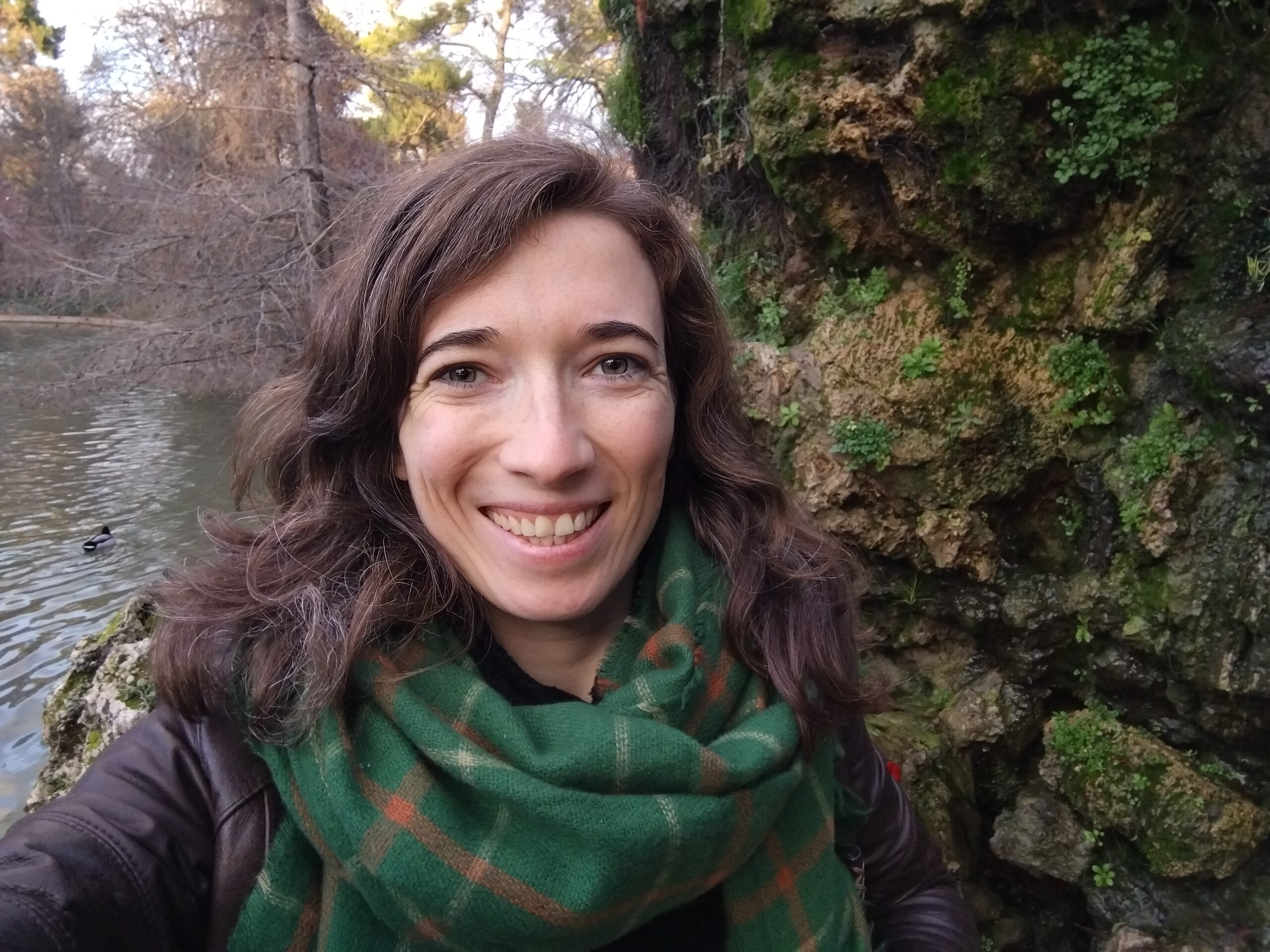
Miriam Beck's portrait
Postdoctoral researcher at the CESAB since early 2024, Miriam tells us about her research within the IMPACTS group, the latest collaborative project led by FRB-CESAB postdocs on ethical citations, and her commitment to sharing science beyond the walls of research institutions.
- Hello Miriam, could you tell us more about your research within the IMPACTS group?
The aim of our project is to understand the human impacts on biodiversity change. Common drivers in the terrestrial environments for example are climate change, land use change, pesticide. However, drawing robust conclusions in ecology can be tricky: Unlike other scientific fields, we cannot perform large-scale controlled experiments – cutting down forests, applying pesticides over wide areas, or removing invasive species is simply not ethical. Therefore, we rely heavily on data that has already been collected. This brings challenges: for example, an observed effect of temperature on biodiversity might actually be caused by another factor that co-varies with temperature. Similar to the famous statement that ‘correlation is not causation’. Climate scientists or epidemiologists face similar issues and have developed statistical approaches to make more reliable, causal claims based on observational data. These approaches, known as causal inference methods, are recently gaining attention in biodiversity research.
In a recent publication our working group gathers best practices for how to detect and attribute biodiversity change – that is how to identify and quantify its drivers. We identify and explicitly address the challenges ecologists face, such as those described earlier or limited data availability or quality. Currently we are running several case studies. For example, I am applying a new approach to better understand the underlying mechanisms of changes in bird richness across Europe which will enable us to determine whether the observed changes in richness are due shifts in number of individuals birds, the relative frequency of a species or bird’s aggregation in space.

- Together with other postdoctoral researchers from the CESAB, you recently co-authored a collective paper. Can you tell us more about it?
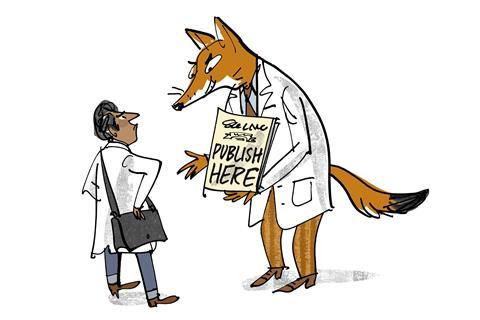
Yes, building on the work of former CESAB postdocs that addressed challenges for ERCs, we focus on the current scientific publishing system. As scientists, we rely on journals to publish and make available our work. However, especially in recent years the dominance of publishers acting on a clear for-profit basis has grown significantly. Maybe you heard about profit margins exceeding those from Goole, Apple or BMW. There are of course non-profit publishers or those who reinvest in the scientific community, but these journals, despite an equal quality, often lack the same prestige. As a result, scientists are less likely to publish in them, reinforcing a system where visibility and impact are tied to profit-driven platforms.
© M-H Jeeves
Boycotting these journals often is no practical solution, especially for early career researchers whose careers still often depend on publishing in high-impact journals. That’s why we propose a more pragmatic approach: strategic citation. The idea is simple – when choosing between two equally relevant articles to cite, give preference to the one published in a non-profit journal. Over time, this small shift in citation behaviour can increase the visibility and influence of non-profit journals, making them more attractive for publication and slowly disrupting the self-reinforcing cycle of prestige and profit.
- Beyond your research, you are also active in science outreach. Could you tell us more about that and how it connects to your work as a scientist?
I still often come across the image of the scientist isolated in their ivory tower, being disconnected from everyday life. I try to counteract this stereotype by engaging directly with the public. I’m part of the organizing team for the Pint of Science festival, a yearly science outreach event throughout France and many countries in Europe where scientists and general public meet in bars and pubs around town. I love this format because it brings science out of academic spaces and it is the scientists who go to the people, not the other way around.
I also enjoy sharing my own work, for instance by giving talks in schools. I develop small workshops and activities to spark the pupil’s curiosity about science. Besides sharing bits of my studies — like bird diversity or food webs in the marine ecosystem — I also try to convey what the scientific process really is, how it works in practice, and why it matters to all of us.
It's published!
Articles highlighted on the FRB website and social media
We also talk about your research online!
- [In French] On the occasion of the UNOC, held last June in Nice, the FRB compiled a set of results highlighting the marine environment. This was an opportunity to link international news with cross-cutting perspectives between conservation, climate, economy and society, and to showcase – among others – the results of the FRB-CESAB groups BLUE JUSTICE and MAESTRO.

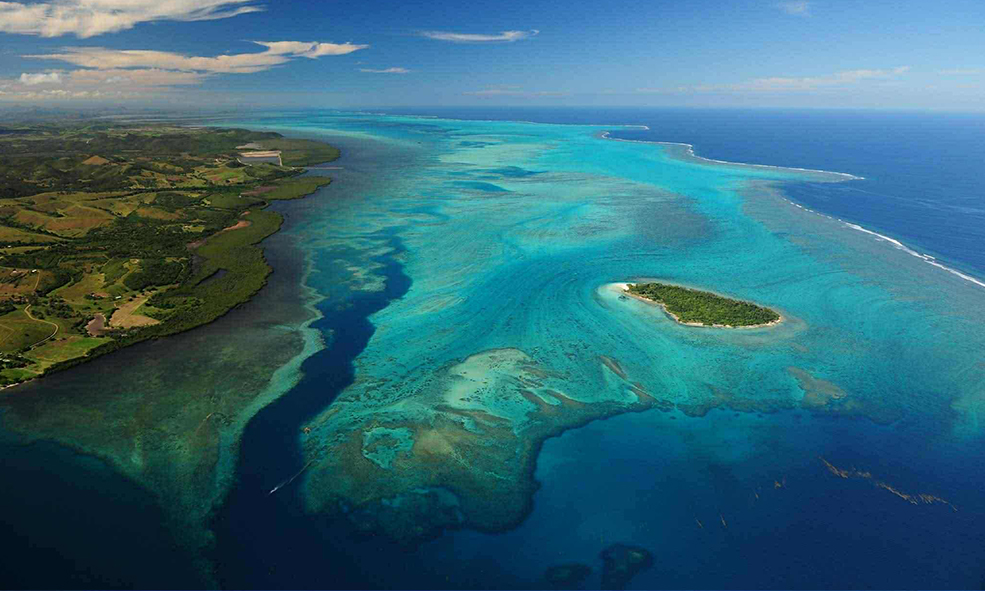
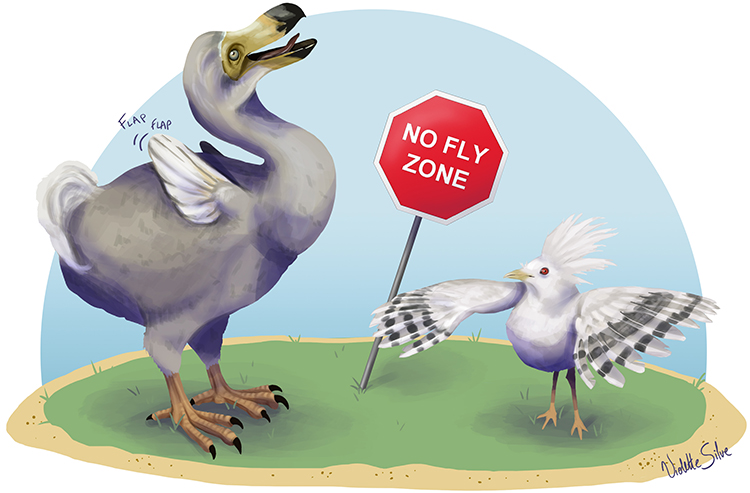
- The biodiversity of islands is exceptional due to their geographical isolation, but also vulnerable for the same reason. At the crossroads of pressures and often overlooked in global assessments, islands are at the heart of the work carried out by the FRB-CESAB group RIVAGE, which proposes a new vulnerability index tailored to their specificities.
Les nouvelles publications scientifiques
- Bennett NJ, Relano V, Roumbedakis K, Blythe JL, Andrachuk M, Claudet J, Dawson NM, Gill DA, Lazzari N, Mahajan SL, Muhl E-K, Riechers M, Strand M & Villasante S (2025) Ocean Equity: From assessment to action to improve social equity in ocean governance. Frontiers in Marine Science, accepted. DOI: 10.3389/fmars.2025.1473382.
- Iseli E, Diaz Zeugin N, Brioschi C, Alexander J & Lenoir J (2025) Early detection of plant community responses to climate warming along mountain roads. Journal of Ecology, 113, 2575-2589. DOI: 10.1111/1365-2745.70114.
[BRIDGE]
- Rievrs Borges E, González‐Sargas E, Casajus N, Carboni M, Bauman D, Fried G, Maskell L, Escario AJ, Planty‐Tabacchi A & Tabacchi E (2025) Road‐river intersections (bridges) negatively affect plant species diversity and ecological attributes. Applied Vegetation Science, 28, e70011. DOI: 10.1111/avsc.70011.
[DISCAR]
- Bauduin S, Germain E, Zimmermann F, Idelberger S, Herdtfelder M, Heurich M, Kramer-Schadt S, Duchamp C, Drouet-Hoguet N, Morand A, Blanc L, Charbonnel A & Gimenez O (2025) Modelling Eurasian lynx populations in Western Europe: What prospects for the next 50 years? Peer Community Journal, 5, e60. DOI: 10.24072/pcjournal.543.
- Lacombe S, Devillard S, Kauffmann C, Aznar M, Dupuis O, Fournier-Chambrillon C, Isère-Laoué E, Fraissard C, Fuento N, Heugas T, Martin A, Perrin M, Roche A, Ruys T, Simonnet F, Thomas B, Souriau-Villeger A & Gimenez O (2025) Range expansion and reconnection of historical populations in the Eurasian otter (Lutra lutra) in France: Insights from heterogeneous data and integrated species distribution modelling. Biological Conservation, 307, 111179. DOI: 10.1016/j.biocon.2025.111179.
- Speakman CN, Bull S, Cubaynes S, Davis KJ, Devillard S, Fryxell JM, Gallagher CA, McHuron EA, Rastello K, Smallegange IM, Salguero‐Gómez R, Bonnaud E, Duchamp C, Giraudoux P, Lacombe S, Marneweck CJ, Schroll L, Tableau A, Ruette S & Gimenez O (2025) Understanding and predicting population response to anthropogenic disturbance: Current approaches and novel opportunities. Ecology Letters, 28, e70198. DOI: 10.1111/ele.70198.
[DIVERS]
- Brazier T, Stetsenko R, Roze D & Glémin S (2025) Mating system and the evolution of recombination rates in seed plants. Journal of Evolutionary Biology, accepted. DOI: 10.1093/jeb/voaf008.
[FISHGLOB]
- Kitchel ZJ, Maureaud AA, Fredston A, Shackell N, Mérigot B, Thorson JT, Pécuchet L, Palacios-Abrantes J, Palomares MLD, Acón AE, Belchier M, Bono G, Carbonara P, Collins MA, Cubillos LA, Fairweather TP, Follesa MC, Ruiz CG, Farriols Garau MT, Garofalo G, Isajlovic I, Kathena JN, Koen-Alonso M, Maiorano P, Manfredi C, Mifsud J, O’Driscoll RL, Sbrana M, Solmundsson J, Spedicato MT, Stephenson F, Werner K-M, Yepsen DV, Zupa W & Pinsky ML (2025) Marine communities do not follow the paradigm of increasing similarity through time. PLOS Climate, 4, e0000659. DOI: 10.1371/journal.pclm.0000659.
- Maureaud AA, Kitchel Z, Fredston A, Guralnick R, Palacios-Abrantes J, Palomares MLD, Pinsky ML, Shackell NL, Thorson JT, Alemany D, Amador K, Bandara RMWJ, Belmaker J, Beukhof ED, Bograd SJ, Camara ML, Carbonara P, Chaikin S, Collins MA, Eddy TD, Edelist D, Fock HO, Frelat R, Friedland K, Grüss A, Hidalgo M, Jouffre D, Kidé SO, Koen-Alonso M, Knuckey I, Kotwicki S, Lavender E, Lindegren M, Llope M, Mannocci L, Mason JG, Masski H, McLean M, Merillet L, Mihneva V, Nunoo FKE, O’Driscoll RL, O’Leary C, Pecuchet L, Petrova E, Ramos JE, Sobrino I, Sólmundsson J, Soni V, Spies I, Spedicato MT, Stephenson F, Thiam N, Tserkova F, Tserpes G, Tzanatos E, van Denderen D, Vasilakopoulos P, Webb T, Yepsen DV, Ziegler P, Zupa W & Mérigot B (2025) FISHGLOB: A collaborative infrastructure to bridge the gap between scientific monitoring and marine biodiversity conservation. Conservation Science and Practice, accepted. DOI: 10.1111/csp2.70035.
[FREE 2]
- Mahaut L, Loiseau N, Villéger S, Auber A, Hautecoeur C, Maire A, Mellin C, Mouquet N, Stuart-Smith R, Violle C & Mouillot D (2025) Functional diversity shapes the stability of reef fish biomass under global change. Proceedings of the Royal Society B: Biological Sciences, 292, 20250252. DOI: 10.1098/rspb.2025.0252.
[GEISHA]
- Tran‐Khac V, Doubek JP, Patil V, Stockwell JD, Adrian R, Chang C, Dur G, Lewandowska A, Rusak JA, Salmaso N, Straile D, Thackeray SJ, Venail P, Bhattacharya R, Brentrup J, Bruel R, Feuchtmayr H, Gessner MO, Grossart H, Ibelings BW, Jacquet S, MacIntyre S, Matsuzaki SS, Nodine E, Nõges P, Rudstam L, Soulignac F, Verburg P, Znachor P, Zohary T & Anneville O (2025) Using long‐term ecological datasets to unravel the impacts of short‐term meteorological disturbances on phytoplankton communities. Freshwater Biology, 70, e70023. DOI: 10.1111/fwb.70023.
- Gérard S, Decaëns T, Butt KR, Briones MJ, Capowiez Y, Cluzeau D, Hoeffner K, Le Bayon R-C, Marchán DF, Marsden C, Muys B, Pelosi C, Pérès G, Phillips HR, Santini L, Thuiller W & Hedde M (2025) Putting earthworm conservation on the map: Shortfalls and solutions for developing earthworm conservation. Biological Conservation, 302, 110911. DOI: 10.1016/j.biocon.2024.110911.
[LOLABMS]
- Melero Y, Evans LC, Kuussaari M, Schmucki R, Stefanescu C, Roy DB & Oliver TH (2025) Species responses to weather anomalies depend on local adaptation and range position. Communications Biology, 8, 660. DOI: 10.1038/s42003-025-08032-9.
[RIVAGE]
- Bellard C, Marino C, Butt N, Fernández-Palacios JM, Rigal F, Robuchon M, Lenoir J, Irl S, Benítez-López A, Capdevila P, Zhu G, Caetano G, Denelle P, Philippe-Lesaffre M, Schipper AM, Foden W, Kissling WD & Leclerc C (2025) A framework to quantify the vulnerability of insular biota to global changes. Peer Community Journal, 5, e48. DOI: 10.24072/pcjournal.557.
[CESAB members]
- McLean M, Mouillot D, Langlois J, Arif S, Bejarano S, Casajus N, Edgar GJ, Flandrin U, Guilhaumon F, Judah AB, Loiseau N, MacNeil MA, Maire E, Stuart-Smith RD & Mouquet N (2025) Conserving the beauty of the world’s reef fish assemblages. Proceedings of the National Academy of Sciences, 122, e2415931122. DOI: 10.1073/pnas.2415931122.
- Mouquet N, Blanc N, Brassac T, Casajus N, Tribot A-S (2025) Too cute to be wild: what teddy bears reveal about our disconnection from nature. BioScience, accepted. DOI: 10.1093/biosci/biaf146.
Translation
This translation was done automatically from French and may contain some phrasing errors.
