Islands: biodiversity gems at risk

The theory of evolution took its very first steps on an island – and that is no coincidence. In 1835, during his journey to the Galápagos, Charles Darwin carefully observed finches. It was the differences in the shape of their beaks from one island to another that put him on the trail of evolutionary mechanisms (read the key to understanding Darwinian evolution).

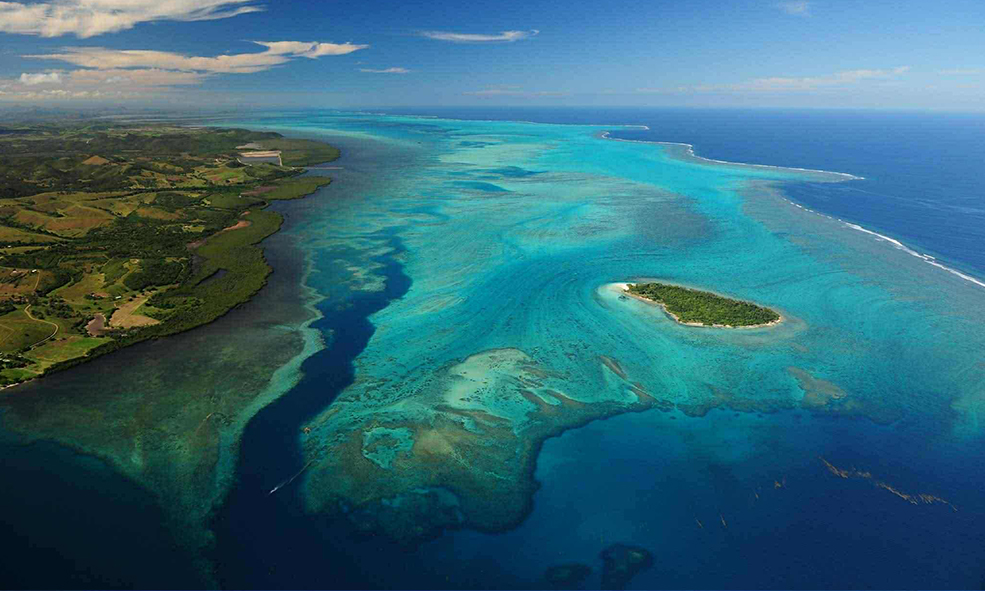
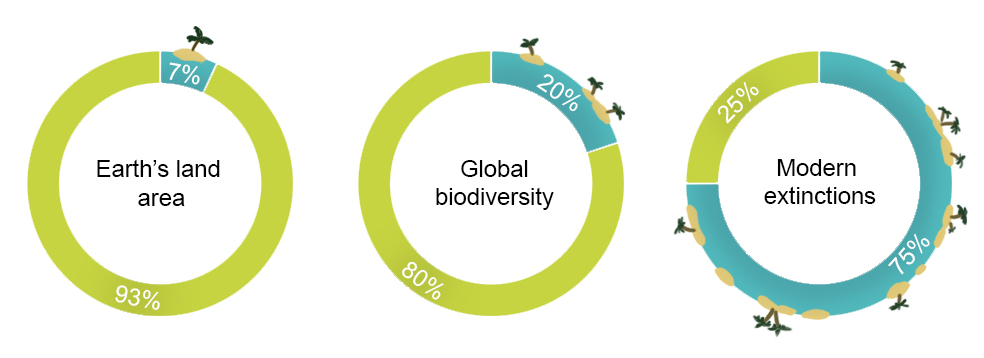
Islands are true jewels of biodiversity. Their geographic isolation, combined with unique ecological conditions, encourages the emergence of unique, often endemic species. That is why, although they cover only 7% of Earth’s land area, islands host nearly 20% of global biodiversity. This richness also comes with extreme vulnerability: three-quarters of recorded modern extinctions have occurred on islands.


Key percentage comparisons between islands (blue) and continents (green). Sources detailed in Fernández-Palacios et al. 2021.


This contrast between exceptional biodiversity and extreme vulnerability is precisely what the FRB-CESAB RIVAGE group explores, proposing a specific framework for assessing island ecosystems (Bellard et al. 2025). But before diving deeper, let’s take a moment to understand: How can islands, so rich in life, be so fragile?

The extraordinary biodiversity of islands is explained by their isolation, but it is precisely this trait that makes their ecosystems fragile. Scientists call this the “island syndrome.” Many island species have evolved in environments without certain predators or competitors, leading them to lose defenses that were no longer needed (think of the famous dodo of Mauritius or the kagu of New Caledonia, both birds that lost the ability to fly).

Small territories also mean small populations, which greatly limits genetic diversity and therefore their ability to adapt to disturbances. Finally, an isolated environment implies reduced mobility. When threatened, individuals cannot escape to safer territories.


Dodo of Mauritius (extinct) and kagu of New Caledonia (IUCN status: endangered). © Violette Silve.


On top of this intrinsic vulnerability, external pressures are intensifying:

  • Climate change, including rising global temperatures and sea level rise — a particularly serious issue for islands,
  • Land-use changes — from urbanization and intensive agriculture to tourism development — which further reduce and fragment available habitats,
  • Growing human activity, leading to resource overexploitation and pollution,
  • And finally, the intentional or accidental introduction of species from elsewhere. Predators, herbivores, or competitors disrupt ecological balances by preying on species that never developed — or lost — the ability to “resist.” These are called invasive alien species, causing biological invasions.


Biological invasions: a global threat to terrestrial vertebrates

In a study conducted just before the creation of the FRB-CESAB RIVAGE group (Marino et al. 2024), scientists cross-referenced data on 1,600 terrestrial animal species (birds, mammals, and reptiles) with those of 304 invasive alien species known to harm them. They estimated that at least 38% of Earth’s land area is already affected by these invasions — a figure likely underestimated, since the study considered only 10% of invasive species recorded worldwide.

But exposure does not necessarily mean danger. To refine their analysis, the scientists also considered how sensitive native species are to these threats. This approach allowed them to produce global maps of vulnerability to biological invasions. The result is clear: islands emerge as the most fragile zones, especially for bird populations. Some areas appear spared from invasions, but this may reflect gaps in data collection — a worrying blind spot for global biodiversity conservation.


And yet, even though island biodiversity plays a crucial role, it remains largely overlooked in global assessments, which tend to focus mainly on continents and climate. For instance, in the Convention on Biological Diversity (CBD), only 1 of the 23 targets explicitly mentions islands as a conservation priority.

In this context, it has become urgent to better assess the vulnerability of island ecosystems. This is precisely the goal of the FRB-CESAB RIVAGE group, which proposes in its first article a brand-new evaluation framework specifically adapted to island biodiversity (Bellard et al. 2025).

This framework assesses vulnerability across three dimensions:

  • Exposure: the degree to which species or their environments face pressures (in terms of intensity, scale, or frequency),
  • Sensitivity: the extent to which species respond to pressures, depending on their biological and ecological traits,
  • Adaptive capacity: their ability to adjust to new conditions through rapid ecological changes. For animals, this depends on mobility. For plants and immobile organisms, it relates more to persistence (e.g., high fertility and seed dispersal). Adaptive capacity can also depend on external factors such as habitat quality, availability, protection, or accessibility.

Overall biodiversity vulnerability can thus be defined as the sum of exposure and sensitivity, minus the adaptive capacity of species.


Unlike other approaches, which often consider just one pressure at a time (most commonly climate change, or more recently biological invasions with Marino et al. 2024), the framework proposed by RIVAGE integrates multiple pressures simultaneously, factoring in their intensity and scale, while also accounting for species-specific traits and adaptive capacity. This tool complements broader indicators, such as the percentage of species threatened on the IUCN Red List. The aim is not to reproduce the same results, but to highlight differences between approaches, refine analyses, and guide action where it is most urgently needed. A detailed comparison between the RIVAGE index and existing indicators is presented in their upcoming article, already available as a preprint (Marino et al. in review).


By proposing this index adapted to the specificities of island ecosystems, the scientists of the RIVAGE group are calling for action to put islands at the heart of conservation priorities.


Learn more about the FRB-CESAB RIVAGE group:

Des résultats rassurants sur le déclin des insectes remis en cause par l’analyse détaillée d’une base de données mondiale

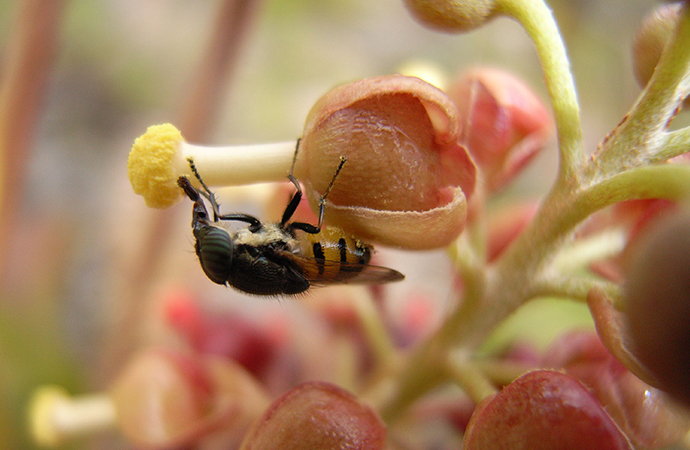
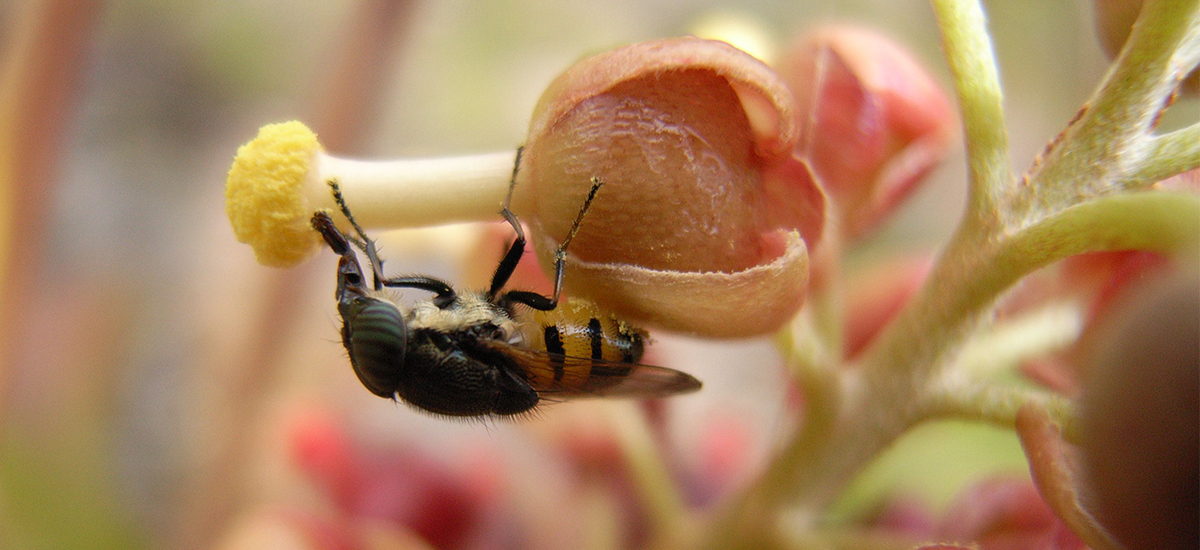
Syrphe (Diptera : Syrphidae) sur une fleur de Nepenthes rafflesiana (Brunei, Borneo) © Laurence Gaume (CNRS). Les syrphes sont des mouches rendant des services de pollinisation essentiels pour les flores sauvage et cultivée. Les syrphes sont pourtant en déclin, notamment en Europe où elles sont particulièrement impactées par l’agriculture intensive.


Le problème de la qualité des données en écologie : l’exemple d’InsectChange


La crise actuelle de la biodiversité soulève des enjeux écologiques, économiques et sociétaux majeurs. Aussi, des bases de données en écologie se multiplient pour évaluer les tendances de la biodiversité. Les résultats de ces évaluations influencent l’opinion publique et les décideurs. Or, bien qu’elle soit une condition nécessaire à la fiabilité des tendances estimées, la qualité de ces jeux de données fait rarement l’objet d’investigations poussées.


Les données sur les insectes n’échappent pas à ce constat. Les insectes assurent des services essentiels dans les écosystèmes (pollinisation, recyclage de la matière organique, source de nourriture pour de nombreuses espèces, contrôle des bioagresseurs …). Leur déclin est donc particulièrement préoccupant mais il est très difficile de mesurer précisément son ampleur et ses déterminants en raison de leur grande diversité taxonomique et d’un manque de données concernant certains groupes.


Ainsi, une évaluation minutieuse de la seule base de données mondiale sur les insectes, InsectChange, publiée dans Ecology en 2021, montre qu’il est crucial de mieux prendre en compte la question de la qualité des bases de données. InsectChange rassemble les données utilisées dans la méta-analyse de van Klink et al. publiée dans Science en 2020, qui montrait un déclin des insectes terrestres de 9 % par décade, et une augmentation des insectes d’eau douce de 11 % par décade. Cette méta-analyse ne mettait pas en évidence d’impact de l’agriculture sur le déclin des insectes. Elle argumentait au contraire que l’amélioration des pratiques agricoles était un facteur explicatif de l’augmentation des insectes d’eau douce. Cette méta-analyse, plutôt rassurante par rapport à d’autres résultats antérieurs, a fait néanmoins l’objet de plusieurs analyses critiques de la part de la communauté scientifique internationale, dont une publiée dans Science la même année. Les auteurs de l’article débattu ont publié une correction, mais celle-ci n’a considéré qu’à la marge les critiques énoncées, et la publication a continué à être fortement médiatisée. L’analyse complète de InsectChange, en révélant une accumulation d’erreurs et de biais dans les données, démontre que les tendances estimées et leurs déterminants ne sont pas fiables.


Cette analyse critique révèle plus de 500 erreurs et problèmes méthodologiques dans la constitution de cette base de données à partir de 165 jeux de données. Ces problèmes, parfois transmis depuis une autre base de données, relèvent de 17 types : chiffres mal reportés, biais d’échantillonnage, insectes comptés deux fois, unités de mesures non standardisées, etc. La méthode développée pour évaluer la base de données définit des critères spécifiques et regroupe les problèmes en quatre catégories : erreurs, incohérences, problèmes méthodologiques et déficit d’informations.


Illustration de la répartition et du nombre moyens des 17 types de problèmes rencontrés par jeu de données dans la base InsectChange, auquel s’ajoute le problème général de non-standardisation des données (non représenté sur le graphique). Ces types de problèmes appartiennent à quatre catégories : les erreurs, les incohérences, les problèmes méthodologiques et les déficits d’information.


Ainsi, l’analyse détaille quatre problèmes majeurs qui ont conduit à fausser l’analyse des tendances des insectes et celle de leurs déterminants.


Des données hétérogènes et leur transformation mathématique invalident l’estimation des tendances globales


Un problème majeur de la base de données réside dans le fait que les métriques (abondance, biomasse) sont disparates, les méthodes d’échantillonnage sont différentes et les unités de mesure ne sont pas standardisées. L’analyse montre que la transformation mathématique log(x+1) de ces données hétérogènes effectuée dans la méta-analyse de Science compromet la comparaison des pentes entre les séries temporelles et l’estimation des tendances globales des insectes. Elle ne permet pas, comme il était spécifié, de travailler sur des variations temporelles relatives et donc comparables entre jeux de données. Ce problème suffit ainsi à lui seul à invalider l’estimation faite des tendances des insectes dans le monde. 


Des erreurs conduisent à sous-estimer le déclin des insectes


La base de données présente plusieurs d’erreurs et d’incohérences comme :

  • l’inversion des chiffres entre le premier et le dernier enregistrement d’une série, transformant ainsi une diminution en une augmentation,
  • la sélection préférentielle dans certaines études de séries où la tendance des insectes augmentait,
  • ou encore la non-correction de l’augmentation de l’effort d’échantillonnage.

En plus de ces erreurs, un problème majeur a conduit à sous-estimer le déclin des insectes à partir de cette base de données. En effet, beaucoup de jeux de données comprennent des invertébrés qui ne sont pas des insectes, comme des moules envahissantes, des escargots, des vers et des crustacés. C’est le cas de près de la moitié des jeux de données d’eau douce concernant l’abondance des insectes (le nombre d’individus) et plus de trois quarts de ceux concernant leur biomasse (le poids cumulé des individus). Ce type d’erreur peut avoir des impacts importants sur l’évaluation des tendances : ainsi, un jeu de données d’un lac du Kazakhstan montre, en près d’un siècle, une augmentation exponentielle « d’insectes » … alors qu’il s’agit pour la plupart de coquillages envahissants, atteignant à la fin de la période considérée 95 % de la biomasse de l’assemblage total d’invertébrés pris en compte.


De plus, un examen minutieux des données sources a permis d’identifier les jeux de données pour lesquels il était en fait possible de séparer insectes et non insectes. Dans ces jeux de données, bien souvent la biomasse des seuls insectes diminuait, alors que celle des assemblages d’invertébrés présentés comme des insectes augmentait. Il a pu ainsi être démontré que la prise en compte de l’ensemble des invertébrés, et non des seuls insectes, conduisait à surestimer la tendance des « insectes » d’eau douce.


Des données sont issues de contextes spécifiques, influençant les tendances locales, mais non pris en compte


Une faille méthodologique réside dans le fait que plus de la moitié des publications sources étudiaient les dynamiques des insectes dans des contextes très spécifiques (mesures de restauration, création de nouveaux habitats, feu, sécheresse, traitements insecticides, etc.). Ces contextes étaient des perturbations extrêmes ou des facteurs étudiés comme pouvant influencer les dynamiques observées et testés au travers d’expériences contrôlées (avec manipulation du milieu) ou d’expériences naturelles (comparaison de sites naturellement perturbés avec d’autres restés intacts). Mais ces contextes spécifiques ne sont la plupart du temps pas reportés dans la base de données. Or ils créent des situations non représentatives de la diversité des conditions de vie des insectes dans le monde qui favorisent cinq fois plus fréquemment l’augmentation des insectes que leur diminution. L’utilisateur est laissé ignorant des biais dans les tendances, artificiellement causés par ces facteurs influents, et de la sous-estimation du déclin global des insectes qui en résulte.


Une méthodologie inappropriée conduit à écarter l’agriculture comme facteur du déclin des insectes


Alors que les contextes spécifiques aux études sources – facteurs les plus directement influents sur la dynamique des insectes – ne sont souvent pas reportés dans la base de données, cette dernière extrait depuis des bases externes des données concernant les facteurs anthropogéniques susceptibles d’influencer localement les tendances observées. Plus précisément, les données d’évolution des insectes dans InsectChange sont appariées via les coordonnées géographiques des sites d’échantillonnage avec d’autres bases de données mondiales décrivant l’évolution de l’utilisation des terres (agriculture, urbanisation) et du climat. Or, une analyse détaillée montre que pour deux tiers des jeux de données, l’appariement des bases de données est compromis parce que la zone d’échantillonnage est plus grande que la zone définie comme échelle locale dans la base de données externe, ou n’est pas localisée au bon endroit dans InsectChange. Par ailleurs, la base de données qui code la couverture des terres du globe à partir d’une interprétation automatisée d’images satellites, peut confondre les cultures agricoles avec des prairies, des steppes, etc. Ainsi, une analyse exhaustive montre que les sites considérés sans culture agricole au niveau local sont bien non cultivés, tandis que les sites considérés comme cultivés ne le sont en général pas, ou moins que ce qui est reporté. Cette surestimation importante de la couverture des terres cultivées conduit les auteurs de la méta-analyse à écarter ainsi de façon erronée les pratiques agricoles comme cause possible du déclin des insectes. À cause d’une méthodologie doublement inappropriée, InsectChange ne permet donc pas d’identifier les déterminants des tendances des insectes.


Conclusion


Ce travail minutieux et complet d’évaluation montre l’insuffisante attention accordée à la qualité des données d’InsectChange et amène à réfléchir sur la nécessité d’une évaluation systémique des grosses bases de données construites pour estimer les tendances de la biodiversité. À ce titre, la méthodologie reproductible développée pour évaluer InsectChange peut contribuer à l’élaboration d’une méthode généralisable d’évaluation de la qualité des bases de données en écologie.


Ce travail d’ampleur met également en garde contre les risques d’une science toujours plus rapide. Il appelle les revues scientifiques à améliorer leur processus d’évaluation par les pairs et à garantir la prise en compte des commentaires post-publication, afin de préserver la qualité des connaissances scientifiques. Cela concerne tout particulièrement les revues de renom, intermédiaires privilégiés des journalistes.


Enfin, cette démarche inédite met en lumière le rôle fondamental de l’organisation de chercheurs à but non lucratif Peer Community In. En publiant, comme elle l’a fait pour cette réanalyse des données de InsectChange, des commentaires critiques sans restriction éditoriale, selon une démarche de science ouverte et un processus d’évaluation indépendant et transparent, cette organisation participe à préserver l’intégrité scientifique et la qualité du débat scientifique.


Cet article a d’ores et déjà fait l’objet de différentes communications et reprises dans la presse. Merci à Laurence Gaume, chercheuse en écologie au CNRS, et Marion Desquilbet, chercheuse en économie de l’environnement (INRAE) d’avoir pris le temps de revenir sur ce texte pour la FRB.


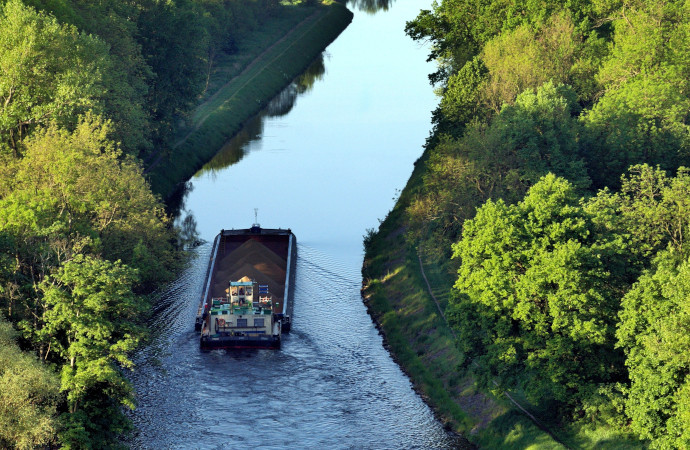
Reducing carbon emissions in the EU by increasing freshwater navigation: what are the consequences for biodiversity?

Roughly 20,000 observations of freshwater fish and macroinvertebrate communities over the last 32 years were combined with data on freshwater ship traffic and navigation infrastructures to better understand the impact that navigation has on biodiversity. This large synthesis effort was carried out by the NAVIDIV research working group, funded by the FRB through its Centre for the Synthesis and Analysis of Biodiversity (Cesab). The results attest to the negative impact of navigation on biodiversity. Two consequences in particular stand out: 

  • A significant decline in biodiversity, particularly through community homogenization and, more specifically, a loss of taxonomic and trait richness of both fish and macroinvertebrates, and 
  • An increase in the presence of invasive species.  


These consequences particularly affect rare species, and for those that live and reproduce on the river bed. Finally, ship traffic proved to be a much stronger predictor of biodiversity than navigation infrastructure, indicating that it is the most important aspect of the navigation industry to consider regarding biodiversity costs. 


In addition to these direct associations between navigation and biodiversity, the researchers wondered whether the pressure exerted by freshwater transport on biodiversity are magnified in human-modified landscapes. In highly degraded landscapes, such as urban and agricultural areas, the negative impact of freshwater transport is strongly magnified for fish communities. The loss of taxonomic and trait diversity is more pronounced in areas with increased urban and agricultural cover. Additionally, the negative effects of channelization, or river straightening, were heightened in areas where the riparian forest had been lost. 


These results highlight the potential biodiversity alterations that the EU may suffer in case of an increases of freshwater shipping in the coming years. These negative effects on biodiversity are probably more significant than they could be if biodiversity had been considered in the design of the development of these infrastructures. Importantly, the authors argue as a result that there should be increased investment in waterway management, rehabilitation, and mitigation of navigation’s strongest impacts. Creating low-flow habitats and areas protected from ship waves could mitigate the negative impacts on river-bed species. Reducing shipping pollutants and increasing riparian habitat alongside waterways could be crucial mitigation measures as well. In summary, the authors advocate for increased consideration of Europe’s freshwater biodiversity in any potential future push for increased shipping and navigation development.  

Social justice and equitable governance: keys to successful conservation

To address this knowledge gap, a group of international researchers, including several members of the Commission on Environmental, Economic and Social Policy of the International Union for Conservation of Nature (IUCN), have been working together for several years within the FRB’s Cesab (Center for the Synthesis and Analysis of Biodiversity). In May 2024, they published a major study in One Earth, drawing on nearly 650 scientific articles. They provide a better understanding of what works best, for humans and for nature, and call for a profound change in favour of social justice and equitable governance.  


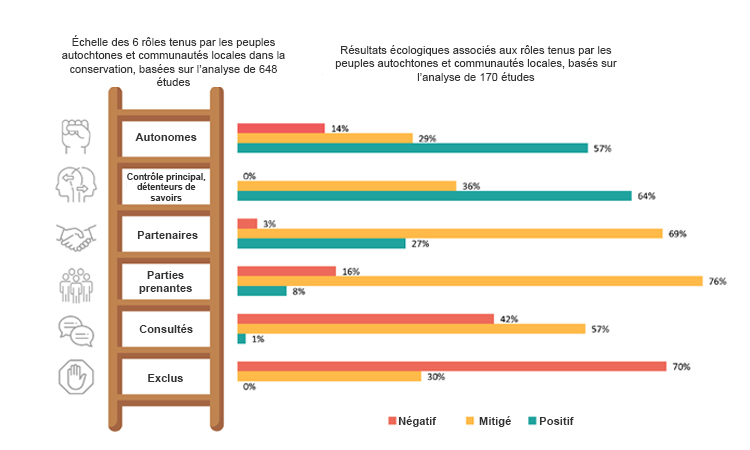
By examining 648 studies, the team first identified six ways in which Indigenous Peoples and local communities are involved in conservation and ranked them on a scale, from exclusion to partnership to autonomy. They then looked at the 170 studies highlighting the links between those six roles and the success or failure of projects (see figure below). The results are clear: 


When Indigenous Peoples and local communities are excluded or involved only as participants or stakeholders, they may find themselves unable to influence decisions of great importance to their daily lives, may have their rights violated, or be denied access to lands of cultural importance, etc. In those cases, the big majority of ecological results are sub-optimal or even counter-productive. 


In contrast, as one moves up the ladder and equal partnerships are established with conservation authorities, with greater control and cultural recognition for the communities, ecological success goes hand in hand with this recognition. Communities can experience respect for their values, rights, identity and culture, empowerment, cooperation and trust, all of which enable them to connect with and be stewards of nature and the land, while improving their quality of life, both individually and collectively.   


Figure : The role of Indigenous Peoples and local communities in conservation projects and associated ecological results.


According to the authors, empowering Indigenous Peoples and local communities as partners and leaders is now essential for fair and effective conservation in order to achieve the objectives of the Global Biodiversity Framework. Although transforming the strategic approaches, design, capacities, processes and interactions, financing and implementation of conservation processes will take time, they highlight various existing and interesting initiatives, such as the growing inclusion of territories and areas conserved by Indigenous Peoples and local communities (ICCAs), also known as territories of life.   


<<

 A collaborative effort based on rights and justice is needed to achieve a transformative change. This applies to all initiatives to conserve species and habitats, including the emerging wave of initiatives aiming to achieve the 30% by 2030 conservation target, and to restore the world’s degraded landscapes.

>>


[Press release] Blue Justice: a new movement in favor of coastal communities, often excluded from decisions in conservation

Coastal communities are on the frontline of three important and accelerating global change processes: climate change, “blue economy” development, and the rapid expansion of area-based conservation initiatives – a phenomena recently coined as ‘triple exposure’. While these change processes and the approaches used to address them (e.g., climate adaptation projects) can support sustainability and well-being in some cases, in others these external processes can converge to amplify vulnerabilities and inequalities. Moreover, pre-existing environmental or political social injustices may increase the vulnerability of people to change processes, and may decrease their capacity to adapt to, or benefit from, interactive impacts of ‘triple exposure’. This topic is described in an article published in One Earth on February 17th 2023, by the interdisciplinary research group Blue Justice, funded by the French Foundation for Biodiversity Research (FRB) within its Centre for the Synthesis and Analysis of Biodiversity (CESAB). This group represents a global network of researchers and practitioners to examine the linkages between ocean conservation, climate change, and equity. The authors argue that social justice and local resilience must be prioritized in order to address the negative impacts of ‘triple exposure’, and reach the objectives of effective and equitable climate adaptation, blue economy, and conservation initiatives.


In order to achieve this shift towards social justice and resilience, David Gill, Assistant Professor at Duke University, and his colleagues recommend that climate, economic, and conservation actors seek to:

  • Tackle the root causes of vulnerability, namely pre-existing social injustices;
  • Use participatory systems approaches to improve the understanding of the local context and potential unintentional consequences of suggested initiatives;
  • And develop inclusive partnerships between diverse actors for the capacity and coordination to facilitate effective and more equitable design and implementation.


In a fast changing world, these strategies, applied together and adapted to the local context, provide an opportunity to develop coastal initiatives that support wellbeing, justice, and resilience of coastal communities.


These measures become all the more significant during catastrophes.

To illustrate their recommendations, the authors identify several examples, including some linked to catastrophes. In 2020, while international efforts were constrained by the pandemic related border closures, an oil spill happened in Mauritius, causing severe impacts on local reefs and threatening the livelihoods of those who depend on them. A local NGO activated its network of volunteers within the community and opened their doors to available resources – necessary for the first clean-up actions.The perceived institutional vacuum for a clean up response in the immediate aftermath of the spill led to strong community engagement in the making of artisanal booms and their deployment at sea. Government institutions did not hinder and instead provided support to the volunteer groups until clean up companies were appointed formally and official clean up efforts began. This shows the importance of inclusive partnerships in tackling environmental or human-caused stressors.


The Blue Justice working group gathers an international panel (North America, UK, France, Australia, Fiji, Italy, Spain etc.) of specialists in marine biology, conservation biology, social science and environmental law.


Link to the article

[Press release] A new method to assess ecosystem vulnerability and protect biodiversity

Setting appropriate conservation strategies is a challenging goal, especially because of the complexity of threats and responses from species, and budget limitations. To overcome this challenge, the team of scientists, including researchers from CNRS, IFREMER, IRD and international organizations, has simulated the response of species communities to a wide range of disturbances, providing a robust estimation of their vulnerability, in a world where future threats are diverse and difficult to predict.


Quantifying the vulnerability of biodiversity is crucial to safeguard the most threatened ecosystems. Published in Nature Communications on the 1st of September 2022, this new tool stands out from previous work as it estimates the degree to which functional diversity, that is biodiversity and associated ecosystem functions, is likely to change when exposed to multiple pressures. It was developed as part of two projects funded by the French Foundation for Research on Biodiversity (FRB) within its Centre for Biodiversity Synthesis and Analysis (CESAB) and with the support of Electricité de France (EDF) and France Filière Pêche (FFP).


The team of 20 scientists used repeated computer simulations of disturbances on species communities to calculate the ecosystem’s vulnerability. From climate change and land use changes to pollution or resource overexploitation, these disturbances simulate the impacts of a large range of potential threats on species communities. “By simulating all possible scenarios, even the worst ones, explains Arnaud Auber, researcher at IFREMER and first author of the publication, we are able to identify the most vulnerable ecosystems from a functional view-point. Moreover, we can now estimate their vulnerability by taking into account unknown, unpredictable or poorly documented pressures, which is a major advance over previous work.” This safer approach offers decision-makers the possibility to classify various sites according to their associated functional vulnerability, which is now urgently needed to move forward adaptive management of biodiversity.


In this study, the functional diversity of communities was made central to the calculation of vulnerability. Overall, biodiversity conservation has mainly focused on taxonomic diversity (e.g., the number of species in an ecosystem). However, recent studies including work from the FREE project, have shown that examining functional diversity can provide a more precise assessment of whether or not an ecosystem is functioning properly. Indeed, a species may have the same function as another (e.g. the same preys or reproductive cycle) and so if one species disappears, another may still fulfil its role in the ecosystem. But if all species sharing the same essential function disappear, the ecosystem will become less functionally diverse, less resilient to threats and thus more vulnerable. In other words, taxonomic diversity in an ecosystem is important but not sufficient to properly assess ecosystem vulnerability. Parrotfishes for example, are one of the only fish species that can directly feed on corals. If they disappear, an essential component of the carbon cycle in coral reefs will be lost. Functional and taxonomic diversity are therefore complementary and should be used together to better guide decision-makers in identifying priority areas for biodiversity protection.


This new approach can be applied to all ecosystems, whether marine, terrestrial or freshwater. “As an example, explains Arnaud Auber, we applied our functional vulnerability framework to the past temporal dynamics of the North Sea fish community. Using fish abundance data and species traits linked to ecosystem functioning such as fecundity, offspring size and feeding mode, our tool revealed a high functional vulnerability of fish communities in the North Sea. However, we found a significant decrease in functional vulnerability throughout the last four decades, dropping from 92 to 86%. During the same period, the North Sea fishing pressure had decreased, following the Common Fisheries Policy, with a progressive decrease in catch quotas and improvement in gears’ selectivity.”


Finally, this tool is open access and can be used to predict ecosystem vulnerability using for example future climate change scenarios or to compare different ecosystems. This highlights the need for synthesis as we continue to improve our understanding of the complexity of nature. Only when put together will data and knowledge help quantify the impact of multiple threats on the world’s ecosystems and assist decision-makers in rationalizing ecosystem management and conservation actions in an uncertain future.


Reference


Arnaud Auber1, Conor Waldock2,3, Anthony Maire4, Eric Goberville5, Camille Albouy6,7, Adam C. Algar8, Matthew McLean9, Anik Brind’Amour10, Alison L. Green11, Mark Tupper12,13, Laurent Vigliola14, Kristin Kaschner15, Kathleen Kesner-Reyes16, Maria Beger17,18, Jerry Tjiputra19, Aurèle Toussaint20, Cyrille Violle21, Nicolas Mouquet22,23, Wilfried Thuiller24, David Mouillot23,25. “A functional vulnerability framework for biodiversity conservation”. 2022. Nature Communications. doi: https://doi.org/10.1038/s41467-022-32331-y/

Lake Temperatures in the Time of Climate Change

People depend on lakes for many ecosystem services such as water, food, transportation, and recreation, but these services are at an unknown level of risk because we do not understand how lakes are affected by climate change. A network of 39 scientists from 20 countries on five continents are collaborating to put long-term and high-frequency data to work to understand, predict, and communicate the role and response of lakes in our changing global environment. This work was partly funded by the John Wesley Powell from U.S. Geological Survey and the Foundation for Research on Biodiversity (FRB), through the research projects GEISHA of the FRB’s Center for Biodiversity Synthesis and Analysis (CESAB).


Many of the scientists hypothesized that storms would have strong impacts on water temperature and water column mixing, based on a prior synthesis studyHowever, the team’s most recent study found that wind- and rainstorms do not cause major temperature changes in lakes.


They examined how wind- and rainstorms affected lake temperature across 18 lakes and 11 countries using meteorological and water column temperature data and found minimal changes to lake temperature from storms. In fact, they found that day-to-day changes in lake temperature during non-storm periods were often more extreme than storm-induced temperature changes. As expected, storms impacted the temperature of deep lakes less than shallow lakes because more energy is needed to mix layers of water with different temperatures in deep lakes than in shallow lakes. For example, storm-induced temperature changes in Lake Superior (average depth almost 500 feet) will be smaller than in Lake Okeechobee (average depth about 10 feet).


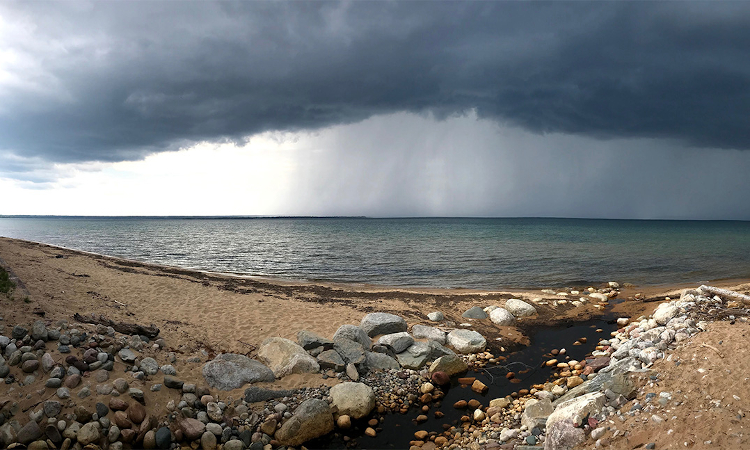
A storm rolls over Lake Superior. Photo credit: Jessica Wesolek, Lake Superior State University’s Center for Freshwater Research and Education


Because storm-induced changes to lake temperature were minimal overall, storm-induced changes in other environmental conditions such as nutrient concentrations or light may have larger impacts on lake animals and plants,” said Jonathan Doubek, Assistant Professor at Lake Superior State University in the School of Natural Resources & Environment and the Center for Freshwater Research and Education, who joined the network while at the University of Vermont. These findings represent concrete progress in understanding how lakes are weathering storms.


“Professor Doubek’s study highlights the usefulness of high-frequency data: we were able to discover that the effect of storms on lake temperatures may not be as strong as we previously believed,” said Dr. Jason Stockwell, Professor and Director of the Rubenstein Ecosystem Science Laboratory at the University of Vermont.


The team of scientists has begun analyzing the impact of storm-related changes in nutrient concentrations and light availability on organisms using the same global dataset and has recently had a proposal funded to help continue this work into the future. “The power of global collaborative teamwork to pool data and ideas is improving our understanding about how our planet functions and may function in the future,” Stockwell said. “We need this information to protect ecosystem and human health.”

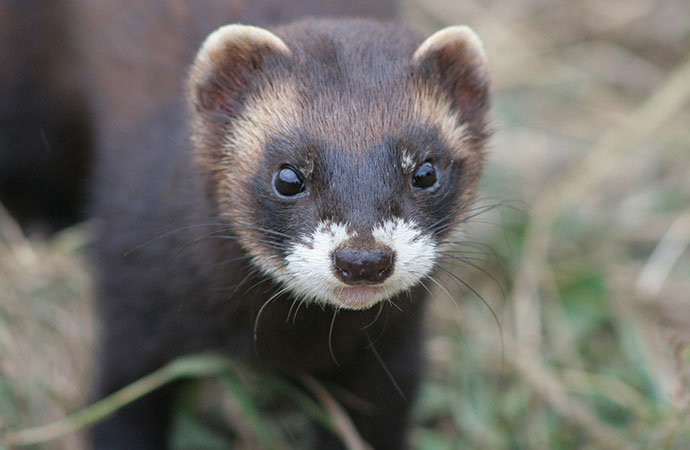
The polecat, this big outsider

Its bad reputation precedes it. It is accused of smelling, of “screaming loudly”, and more recently of sexism through the character of Pepe the Polecat. But, the polecat, this small mustelid, we know little or nothing about it. This is the observation made by researcher Sébastien Devillard and his team, who received the Barbault and Weber “Involved Ecology” grant in 2021 to fill this knowledge gap: “The polecat is a species that is difficult to observe and study because it is a cryptic and nocturnal animal. It lives in low density territories where males and females only cross paths during reproduction”, explains the researcher.


The Curriculum of the polecat is therefore quite short. As an adult, this small mustelid weighs between 600 grams and 1.5 kg, has the diet of an omnivore, mainly meat, and lives in open and wooded areas, often near wetlands. “However,”, continues Sébastien Devillard, “we have noticed that for the past 30 or 40 years, the wetlands, and riparian forests, which are its preferred habitat, have been steadily deteriorating. In all likelihood, that this had and continues to have an impact on the populations of this species.”


If its conservation status is not considered to be at risk by IUCN, it is once again due to a lack of knowledge on this topic according to the researcher: “When IUCN does not have the exact number of individuals living in a territory to monitor its temporal evolution, it looks to see if the distribution area of this species has decreased independently of the population densities. However, the polecat is still present in Europe over a distribution area that seems stable, which is why IUCN has not classified it as a threatened species. “However, local studies carried out by naturalists using photographic traps, or by national organizations responsible for collecting signs of presence, such as visual observations or roadside kills, suggest that the number of such signs of presence has been steadily declining for the last twenty years, particularly in wetlands.” To change its conservation status and justify the implementation of in situ conservation programmers, scientists will have to adopt a conservation biology approach that will study the polecat’s space use and population size.


The research team is therefore committed to understanding how this small mustelid uses and selects its habitat, in particular its dependence on wetlands and protected areas. At the Pierre Vérots Foundation estate in Ain, the research team plans to fit three polecats with GPS collars to track their movements and identify the determinants of their use of space. “This is a world first, stresses the researcher. For a long time, we were limited by the size of GPS collars, which required large batteries to operate and ensure sufficiently long tracking to obtain useful information. “In ecology, the rule is that animals cannot be fitted with collars that exceed 3 to 5% of their weight. Until then, only larger mammals, from a few kilograms up to giraffes or elephants, benefited from this type of tracking to respect the ethical and animal welfare dimension. The miniaturization of batteries has changed the situation: “Once the polecats are fitted with the equipment, we will be able to go out into the field every week to download the data, which will give us extremely detailed and unprecedented information on the use of space by this species.”


The technique is revolutionary in many ways. Previously, the data collected came from VHF radio collars. To locate the individuals studied, the scientists had to visit the area several times a week and triangulate by positioning themselves at three different locations to pick up the signal from the radio collars. “This classic radio-tracking technique did not allow for more than two or three locations per week. Thanks to the GPS collars, this team of scientists will now be able to obtain data on the polecat’s occupation of space and on its pace of activity throughout the day.


This project is only the first step in a larger ambition: “If we manage to show that this device works, we will be able to expand our study area and fit more animals.” The goal? To obtain more data and carry out survival analyses, which will then enable demographic models to estimate the size of the population locally and the rate of population growth. At the same time, researchers want to deploy a photo-trapping protocol to estimate local polecat density. Scientists will thus be able to propose new arguments for the study of its conservation status and perhaps also change the way our society looks at this small, discreet mustelid.

[Press release] Double jeopardy for ecologically rare birds and terrestrial mammals

It has long been thought that rare species contribute little to the functioning of ecosystems. Yet recent studies have discredited that idea: rarity is a matter not only of the abundance or geographical range of a species, but also of the distinctiveness of its ecological functions. Because these functionally distinct species are irreplaceable, it is essential we understand their ecological characteristics, map their  distributions, and evaluate how vulnerable they are to current and future threats.


Using two databases that collect information on the world’s terrestrial mammals (4,654 species) and birds (9,287 species), scientists from the FRB’s Centre de Synthèse et d’Analyse de la Biodiversité (CESAB), CNRS research laboratories, Université Grenoble Alpes, the University of Montpellier, and partner institutes divided the earth’s surface into 50 × 50 km squares and determined the number of ecologically rare species within each. They showed that ecological rarity among mammals is concentrated in the tropics and the southern hemisphere, with peaks on Indonesian islands, in Madagascar, and in Costa Rica. Species concerned are mostly nocturnal frugivores, like bats and lemurs, and insectivores, such as small rodents. Ecologically rare bird species are mainly found in tropical and subtropical mountainous regions, especially in New Guinea, Indonesia, the Andes, and Central America. The birds in question are essentially frugivorous or nectarivorous, hummingbirds being an example. For birds and terrestrial mammals alike, islands are hotspots of ecological rarity.


The researchers also ranked these species according to their IUCN Red List status1 and found they made up the bulk of the threatened species categories. That is, ecologically rare mammals account for 71% of Red List threatened species (versus 2% for ecologically common mammals); and ecologically rare birds, 44.2% (versus 0.5% for ecologically common birds). For each species, they determined (i) anthropogenic pressure exerted; (ii) human development indexes (HDIs) of host countries; and (iii) exposure to armed conflicts. The last two of these elements shape conservation policies. The scientists observed that  human activity had a greater impact on ecologically rare mammals and birds than on more common species, and that these rare species were found in countries of every kind of profile, irrespective of HDI or the prevalence of warfare2 They used models to demonstrate that ecologically rare species will be the greatest victims of climate change, many of them facing extinction within 40 years.


This profiling of ecologically rare species makes it clear that current conservation efforts, even in zones already protected, are insufficient. Conservation strategies still too often ignore functional distinctiveness and focus instead on population sizes. But it is essential to take this distinctiveness into account, letting this knowledge guide steps taken to protect these rare species. As they are necessary for healthy ecosystems, a true paradigm shift in conservation policy is needed to ensure their survival.


For more information... some examples of ecologically rare species


[1] The International Union for Conservation of Nature (IUCN) is a leading international NGO focused on nature conservation. It evaluates the risk of extinction faced by different species, assigning each to a particular category (e.g., ‘Least Concern’, ‘Near Threatened’, ‘Vulnerable’, ‘Endangered’, or ‘Extinct’).

[2] For example, the Philippines, where HDI is low and armed conflicts prevalent, are a hive for ecologically rare species (19 terrestrial mammals and 15 birds). Yet Australia, where HDI is high and armed conflict rare, is also home to many ecologically rare species (10 terrestrial mammals and 10 birds).

Le réchauffement climatique, un bouleversement pour les écosystèmes et les scientifiques

Le changement climatique n’est pas un état problématique passager, mais bien une situation pérenne qu’il va falloir considérer dans sa globalité. Il nécessite une adaptation importante des écosystèmes et de ceux qui les étudient. Sous nos latitudes tempérées, ces changements prennent une signification particulière en modifiant la longueur relative des saisons. Or, l’arrivée du printemps rythme le cycle annuel de toute la biodiversité. La remontée printanière des températures s’accompagne d’une reprise explosive de la végétation. Les jeunes feuilles fournissent une nourriture de qualité pour une multitude d’invertébrés herbivores, aux premiers rangs desquels, les chenilles de papillons. Eux-mêmes sont alors consommés par des carnivores. Ce formidable accroissement de la biomasse va, en particulier, permettre aux prédateurs de se reproduire. Ce phénomène est cependant éphémère : les jeunes pousses tendres se chargent rapidement de tanin et deviennent indigestes. On assiste ainsi à un pic d’abondance de nourriture et chaque niveau de la chaîne alimentaire tente de se synchroniser sur le pic dont il dépend.

retour en haut de la page
fermer
This site is registered on wpml.org as a development site. Switch to a production site key to remove this banner.