The FRB in action
Project ongoing since 2025
KH JUSTICE
Environmental justice for humans and non-humans in nature-based solutions
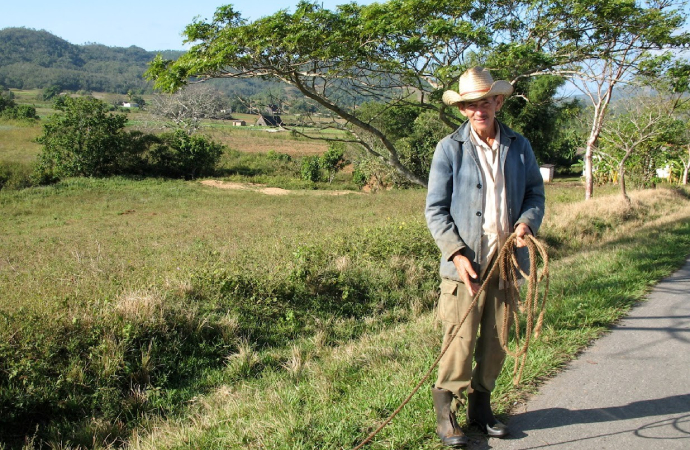 Bruno Locatelli (license CC BY-NC-SA 4.0)
 Nature-based Solutions (NbS) raise crucial justice issues. They relate to who benefits and who loses (distributive justice), how decisions are made (procedural justice), and whose visions are taken into account (recognition justice). Justice matters not only for ethical reasons but also for environmental ones: measures perceived as unjust tend to face resistance and have less impact.
Justice must be addressed at every stage of NbS, from design to evaluation. Key questions arise when assessing justice itself: who evaluates, according to which criteria, and based on what conception of justice? Could evaluation processes foster fairer transformations? What methods can include a diversity of voices, especially those often overlooked — vulnerable groups, remote populations, future generations, and non-human beings?
The Justice project characterizes justice issues across different types of NbS, analyzes existing justice approaches and their implications, examines how NbS projects address justice in practice, and develops a tool to assess these issues with stakeholders.
The project
The Justice project belongs to the PC03 ‘Knowledge Hubs‘, driven by the Montpellier University within the framework of the PEPR Programme National de la Recherche sur les Solutions fondée sur la Nature – SOLU-BIOD.
The researchers
Principal investigators
Cécile BARNAUD – Inrae, UMR Dynafor (France) ;
Bruno LOCATELLI – Cirad, UR Forêts et Sociétés (France).
ouvrir/fermer
Participants
ouvrir/fermer
Expertise
Learn more about the Knowledge Hubs of the PEPR SOLU-BIOD
The PEPR SOLU-BIOD is funded by the France 2030 investment plan, operated by the ANR and led by INRAE and CNRS. The program’s actions take the form of targeted projects, implemented by PEPR partners, and calls for projects, implemented by the ANR.
As a partner of the PEPR SOLU-BIOD, the University of Montpellier (UM) leads and implements Targeted Project 3 (PC03) “Knowledge Hubs,” with a budget of €1,800,000 over 60 months, from April 1, 2025, to March 31, 2030. PC03 aims to create five Knowledge Hubs – working groups addressing specific themes of SOLU-BIOD. These Knowledge Hubs, each composed of around fifteen national and international experts, will begin their work between 2025 and 2026 for a duration of three years.
The Foundation for Research on Biodiversity (FRB) is a platform linking scientific stakeholders and societal actors on biodiversity. The Cesab, a program of the FRB, enables the collection and pooling of existing biodiversity data and information in order to provide an overview of biodiversity and model its future. Thanks to its scientific expertise in data processing and in managing working groups, the FRB is a natural partner of PC03 and hosts the Knowledge Hubs at its Cesab facilities in Montpellier.
Project funders and coordinators