The FRB in action
Project ongoing since 2025
KH PROTECTED AREAS
Protected areas as a Nature based-Solutions for Climate change adaptation
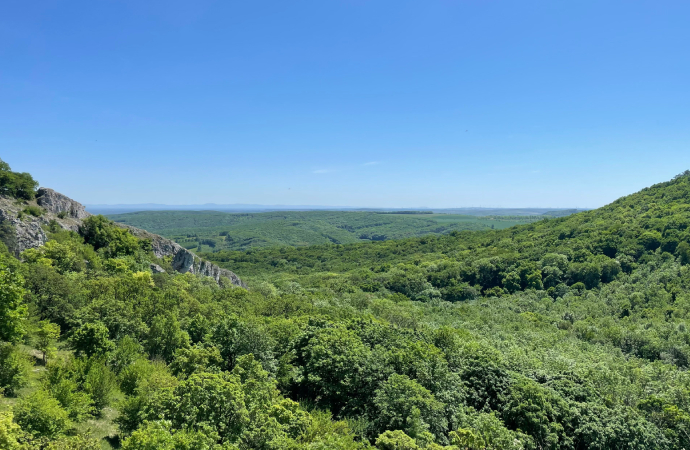 Marek Omasta (Unsplash)
 Protected areas (PAs) are a major tool of Nature-based Solutions (NbS) for climate-change adaptation. Beyond preserving what already exists, PAs can be designed and managed to increase ecosystem resilience, create thermal corridors, and safeguard climate micro-refugia. Yet, a quantitative analyses on how the current network of PAs may contribute as a NbS to protect biodiversity in a context of climate change is still lacking. The aim of the KH Protected Areas project will be to fill this gap and:
- i) review the models and scenarios based on NbS-PAs to enable biodiversity to cope with climate change at the global scale,
- ii) use this knowledge to model how the current network of protected areas in France may or may not protect multiple facets of diversity in the context of climate change, and thus build scenarios of PAs to facilitate the movement of species and preserve biodiversity,
- iii) transfer and test the framework developed from the global to the local scale by relying on PEPR SOLU-BIOD living labs.
By addressing these objectives, the ultimate goal is to provide guidelines to design robust and resilient NbS that address the urgent challenges of climate change and biodiversity loss.
The project
The Protected Areas project belongs to the PC03 ‘Knowledge Hubs‘, driven by the Montpellier University within the framework of the PEPR Programme National de la Recherche sur les Solutions fondée sur la Nature – SOLU-BIOD.
The researchers
Principal investigators
Céline BELLARD – Univ. Paris Saclay (France) ;
Olivier GIMENEZ – Univ. de Montpellier (France).
ouvrir/fermer
Participants
Learn more about the Knowledge Hubs of the PEPR SOLU-BIOD
The PEPR SOLU-BIOD is funded by the France 2030 investment plan, operated by the ANR and led by INRAE and CNRS. The program’s actions take the form of targeted projects, implemented by PEPR partners, and calls for projects, implemented by the ANR.
As a partner of the PEPR SOLU-BIOD, the University of Montpellier (UM) leads and implements Targeted Project 3 (PC03) “Knowledge Hubs,” with a budget of €1,800,000 over 60 months, from April 1, 2025, to March 31, 2030. PC03 aims to create five Knowledge Hubs – working groups addressing specific themes of SOLU-BIOD. These Knowledge Hubs, each composed of around fifteen national and international experts, will begin their work between 2025 and 2026 for a duration of three years.
The Foundation for Research on Biodiversity (FRB) is a platform linking scientific stakeholders and societal actors on biodiversity. The Cesab, a program of the FRB, enables the collection and pooling of existing biodiversity data and information in order to provide an overview of biodiversity and model its future. Thanks to its scientific expertise in data processing and in managing working groups, the FRB is a natural partner of PC03 and hosts the Knowledge Hubs at its Cesab facilities in Montpellier.
Project funders and coordinators