GEISHA | Global Evaluation of the Impacts of Storms on freshwater Habitat and structure of phytoplankton Assemblages

Phytoplankton abundance and composition are sensitive to water column conditions which are strongly influenced by weather (e.g., wind and rain) and climate change. The FRB-CESAB GEISHA project was framed in support to the GLEON Stormblitz project to gather and analyse time-series through collaborative efforts to assess the impacts of storms on phytoplankton. The project includes more than 80 researchers from governmental institutes and universities. GEISHA was, among others, able to:

  • gather and standardize existing long-term datasets,
  • assess the impact of storms on nutrients, light, water column stability and subsequent impacts on the structure of phytoplankton communities,
  • perform meta-analyses to evaluate the sensitivity of aquatic ecosystems to extreme weather events, and
  • highlight that biological consequences of storms on phytoplankton are fundamental to the dynamics of lakes and yet are still poorly understood. There is a real need for scientific collaboration to understand the impact of extreme weather events on lakes.


This document summarizes, in just a few pages, the project’s context and objectives, the methods and approaches used, the main findings, and the implications for science, society, and both public and private decision-making.

BIODIS | Disentangling the linkage between biodiversity and emerging infectious diseases

Zoonotic diseases (diseases that are transmitted between humans and animals) represent 75% of emerging infectious diseases. As a component of biodiversity, the diversity of pathogens is a priori greater in more diverse ecosystems, as is the case in sub-Saharan Africa. Two hypotheses have been proposed to explain the recent changes in the distribution and propagation of these pathogens. The first stipulates that on-going climatic changes induce a shift of some of these pathogens toward  more temperate areas. The second hypothesis postulates that increased pressure on natural habitats from human activity leads to the introduction and development of these pathogens within human populations. However, a third hypothesis can be proposed, linking the emergence and increasing impact of infectious diseases to biodiversity loss: biodiversity would have a protective effect that could prevent the transmission and spread of pathogenic agents.
 
Current research on this topic is mostly theoretical and the available data are sparse. The mechanisms involved, their generalization, and even the possible relationships between biodiversity and infectious diseases remain poorly known. The aim of the FRB-CESAB group BIODIS was to analyze and homogenize multiple databases to address a central question with strong societal implications: how can we prevent the emergence and spread of infectious diseases originating from animal or environmental sources? This project also fostered closer relations between scientists and (inter)national public health authorities.
 
This document summarizes in a few pages the group’s context and objectives, the methods and approaches used, the main findings, as well as the impact for science, society, and both public and private decision-making.

DIVGRASS | Assembling, analysing and sharing data on plant functional diversity to understand the effects of biodiversity on ecosystem functioning

Each grassland is unique. For instance, some contain more species than others, some are taller than others. Why do these differences exist? Are they due to different climatic conditions? Due to the way grasslands are managed by farmers? Due to different soils? What is the impact  of these differences for the functioning of these grasslands (like fodder production for example)? The FRB-CESAB DIVGRASS aimed to integrate and share existing knowledge on plant diversity in French grasslands to elucidate these puzzling questions.
 
 
The project proposed a unique compilation of:
  • botanical sampling data,
  • climate, soil and land-use information and
  • information about the functional role of each grassland species (for instance their ability to capture light and transform it into energy).


DIVGRASS showed that the ecological differences are primarily driven by soil and climate variables only when farmers have hardly modified the grasslands. Conversely, when fertilization is high, the project’s researchers found an ecological homogenization of grasslands across the territory. This result has high importance for the predictions of the role played by grasslands in carbon sequestration, water regulation etc. Earth science models do not yet account for ecological differences among grasslands and neglect the effect of different agricultural practices on ecosystem functioning. Therefore, DIVGRASS findings should help to understand the response of grasslands to global change and the effects of grasslands on earth system functioning. 


This document summarizes in a few pages the group’s context and objectives, the methods and approaches used, the main findings, as well as the impact for science, society, and both public and private decision-making.

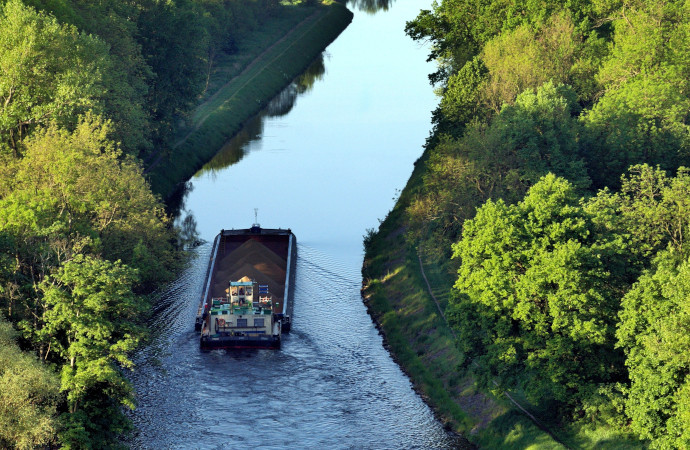
Reducing carbon emissions in the EU by increasing freshwater navigation: what are the consequences for biodiversity?

Roughly 20,000 observations of freshwater fish and macroinvertebrate communities over the last 32 years were combined with data on freshwater ship traffic and navigation infrastructures to better understand the impact that navigation has on biodiversity. This large synthesis effort was carried out by the NAVIDIV research working group, funded by the FRB through its Centre for the Synthesis and Analysis of Biodiversity (Cesab). The results attest to the negative impact of navigation on biodiversity. Two consequences in particular stand out: 

  • A significant decline in biodiversity, particularly through community homogenization and, more specifically, a loss of taxonomic and trait richness of both fish and macroinvertebrates, and 
  • An increase in the presence of invasive species.  


These consequences particularly affect rare species, and for those that live and reproduce on the river bed. Finally, ship traffic proved to be a much stronger predictor of biodiversity than navigation infrastructure, indicating that it is the most important aspect of the navigation industry to consider regarding biodiversity costs. 


In addition to these direct associations between navigation and biodiversity, the researchers wondered whether the pressure exerted by freshwater transport on biodiversity are magnified in human-modified landscapes. In highly degraded landscapes, such as urban and agricultural areas, the negative impact of freshwater transport is strongly magnified for fish communities. The loss of taxonomic and trait diversity is more pronounced in areas with increased urban and agricultural cover. Additionally, the negative effects of channelization, or river straightening, were heightened in areas where the riparian forest had been lost. 


These results highlight the potential biodiversity alterations that the EU may suffer in case of an increases of freshwater shipping in the coming years. These negative effects on biodiversity are probably more significant than they could be if biodiversity had been considered in the design of the development of these infrastructures. Importantly, the authors argue as a result that there should be increased investment in waterway management, rehabilitation, and mitigation of navigation’s strongest impacts. Creating low-flow habitats and areas protected from ship waves could mitigate the negative impacts on river-bed species. Reducing shipping pollutants and increasing riparian habitat alongside waterways could be crucial mitigation measures as well. In summary, the authors advocate for increased consideration of Europe’s freshwater biodiversity in any potential future push for increased shipping and navigation development.  

FORCIS | Foraminifera response to Climatic Stress

Anthropogenic CO2 emissions cause ocean warming, but also a decrease in the pH of the surface ocean. This ocean acidification affects calcifying marine organisms, which play a key role in the biological pump. Among these organisms, the fossilized shells of planktonic foraminifera represent the most thoroughly documented geological archive of past biodiversity as well as of paleoclimates. Recent changes in planktonic foraminifera assemblages have never been synthesized at the global scale, even though the distribution of these microorganisms has already been impacted.

The FRB-CESAB FORCIS project investigated the response of planktonic foraminifera to climate stress through the analysis of global data since 1910. It aimed to build a database, identify key environmental drivers, and model their past and future responses to global change.


This document summarizes in a few pages the group’s context and objectives, the methods and approaches used, the main findings, as well as the impact for science, society, and both public and private decision-making.

Lake Temperatures in the Time of Climate Change

People depend on lakes for many ecosystem services such as water, food, transportation, and recreation, but these services are at an unknown level of risk because we do not understand how lakes are affected by climate change. A network of 39 scientists from 20 countries on five continents are collaborating to put long-term and high-frequency data to work to understand, predict, and communicate the role and response of lakes in our changing global environment. This work was partly funded by the John Wesley Powell from U.S. Geological Survey and the Foundation for Research on Biodiversity (FRB), through the research projects GEISHA of the FRB’s Center for Biodiversity Synthesis and Analysis (CESAB).


Many of the scientists hypothesized that storms would have strong impacts on water temperature and water column mixing, based on a prior synthesis studyHowever, the team’s most recent study found that wind- and rainstorms do not cause major temperature changes in lakes.


They examined how wind- and rainstorms affected lake temperature across 18 lakes and 11 countries using meteorological and water column temperature data and found minimal changes to lake temperature from storms. In fact, they found that day-to-day changes in lake temperature during non-storm periods were often more extreme than storm-induced temperature changes. As expected, storms impacted the temperature of deep lakes less than shallow lakes because more energy is needed to mix layers of water with different temperatures in deep lakes than in shallow lakes. For example, storm-induced temperature changes in Lake Superior (average depth almost 500 feet) will be smaller than in Lake Okeechobee (average depth about 10 feet).
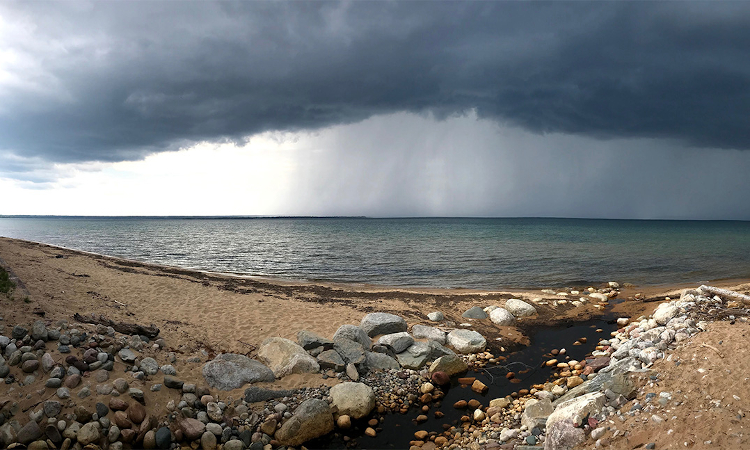


A storm rolls over Lake Superior. Photo credit: Jessica Wesolek, Lake Superior State University’s Center for Freshwater Research and Education


Because storm-induced changes to lake temperature were minimal overall, storm-induced changes in other environmental conditions such as nutrient concentrations or light may have larger impacts on lake animals and plants,” said Jonathan Doubek, Assistant Professor at Lake Superior State University in the School of Natural Resources & Environment and the Center for Freshwater Research and Education, who joined the network while at the University of Vermont. These findings represent concrete progress in understanding how lakes are weathering storms.


“Professor Doubek’s study highlights the usefulness of high-frequency data: we were able to discover that the effect of storms on lake temperatures may not be as strong as we previously believed,” said Dr. Jason Stockwell, Professor and Director of the Rubenstein Ecosystem Science Laboratory at the University of Vermont.


The team of scientists has begun analyzing the impact of storm-related changes in nutrient concentrations and light availability on organisms using the same global dataset and has recently had a proposal funded to help continue this work into the future. “The power of global collaborative teamwork to pool data and ideas is improving our understanding about how our planet functions and may function in the future,” Stockwell said. “We need this information to protect ecosystem and human health.”
[FRB-CESAB / CIEE] Earth’s ecosystems in a time of global change: Six ecologists discuss challenges and solutions

The Canadian synthesis center CIEE-ICEE  organized, with the help of the FRB-CESAB, the French Embassy in Vancouver and the University of British Columbia, a 1h30 conference on Wednesday, April 7, 2021 at 16:00 PT (Pacific Time) – 01:00 French time.


The six panelists of “Earth’s ecosystems in a time of global change: Six ecologists discuss challenges and solutions” are Bastien Mérigot (Montpellier University) – principal investigator of the FRB-CESAB/ CIEE project FISHGLOB, Nicolas Loeuille (Sorbonne Université), Shawn Leroux (Memorial University of Newfoundland), William Cheung (University of BC), Nancy Shackell (Bedford Institute of Oceanography), and Isabelle Gounand (Sorbonne Université) – principal investigator of the FRB-CESAB/ CIEE project RED-BIO.


The recorded panel discussion is now available below. 


[Press release] Study in Nature: Protecting the Ocean Delivers a Comprehensive Solution for Climate, Fishing and Biodiversity

A new study published in the prestigious peer-reviewed scientific journal Nature today offers a combined solution to several of humanity’s most pressing challenges. It is the most comprehensive assessment to date of where strict ocean protection can contribute to a more abundant supply of healthy seafood and provide a cheap, natural solution to address climate change—in addition to protecting embattled species and habitats.


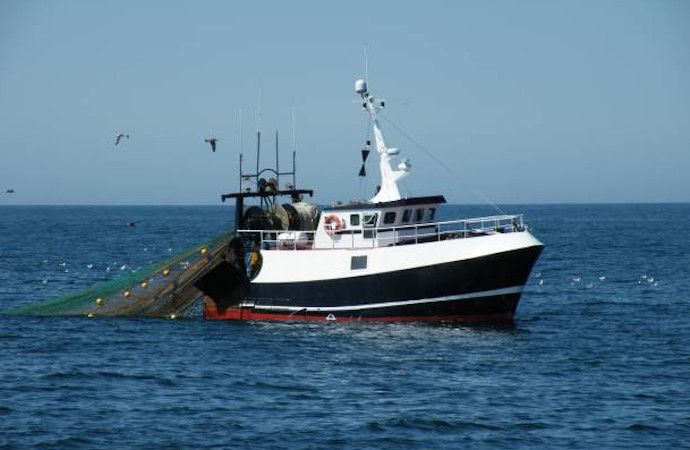
An international team of 26 authors – including researchers from Ifremer and the University of Montpellier and with the CNRS – identified specific areas that, if protected, would safeguard over 80% of the habitats for endangered marine species, and increase fishing catches by more than eight million metric tons. The study is also the first to quantify the potential release of carbon dioxide into the ocean from trawling, a widespread fishing practice—and finds that trawling is pumping hundreds of millions of tons of carbon dioxide into the ocean every year, a volume of emissions similar to those of aviation. This work was partly funded by the Foundation for Research on Biodiversity (FRB), EDF and the Total Foundation, through the FREE and PELAGIC research projects of the FRB’s Center for Biodiversity Synthesis and Analysis (CESAB).


Read the full press release


The project MAESTRO was selected from the FRB-CESAB call for proposals with France Filière Pêche

The project Maestro was selected by the CESAB selection committee from the joint call for proposals between FRB-CESAB and France Filière Pêche


MAESTRO will be coordinated by Arnaud AUBER and Camille ALBOUY, both working at IFREMER, and will look into climate change effects on exploited marine communities.


The project will be based on the analysis and synthesis of existing data, as well as the modelling of the effects of climate change on the biodiversity of European fish stocks and associated fisheries (North-East Atlantic and Mediterranean). The project will contribute to a better understanding of the effect of climate change on fish resources and fisheries, to help develop adaptive fisheries management measures. 


More information about Maestro

Le réchauffement climatique, un bouleversement pour les écosystèmes et les scientifiques

Le changement climatique n’est pas un état problématique passager, mais bien une situation pérenne qu’il va falloir considérer dans sa globalité. Il nécessite une adaptation importante des écosystèmes et de ceux qui les étudient. Sous nos latitudes tempérées, ces changements prennent une signification particulière en modifiant la longueur relative des saisons. Or, l’arrivée du printemps rythme le cycle annuel de toute la biodiversité. La remontée printanière des températures s’accompagne d’une reprise explosive de la végétation. Les jeunes feuilles fournissent une nourriture de qualité pour une multitude d’invertébrés herbivores, aux premiers rangs desquels, les chenilles de papillons. Eux-mêmes sont alors consommés par des carnivores. Ce formidable accroissement de la biomasse va, en particulier, permettre aux prédateurs de se reproduire. Ce phénomène est cependant éphémère : les jeunes pousses tendres se chargent rapidement de tanin et deviennent indigestes. On assiste ainsi à un pic d’abondance de nourriture et chaque niveau de la chaîne alimentaire tente de se synchroniser sur le pic dont il dépend.

GASPAR | A general approach to Species-Abundance relationships in a context of global change, reef fish species as a model

The invasion of non-native species is considered one of the main threats to biodiversity, leading to major changes in the structure and functioning of ecosystems. In the context of globalization, research on invasive species has become increasingly important due to the growing number of species being relocated through human activities—such as transport, trade, and others. Invasive species often cause significant problems as they compete with local flora and fauna, frequently disrupting the abundance and quality of native species. This results in a loss of biodiversity which, in the long term, can lead to substantial reductions in ecosystem services, such as lower fishery yields. Since the opening of the Suez Canal in 1869, the Eastern Mediterranean has undergone an unprecedented transformation in species composition, with the massive arrival of non-native species—known as Lessepsian migrants—from the Red Sea. These species already account for more than a quarter of total catches in the Eastern Mediterranean, and sometimes even more. Some of them are now spreading as far as the Western Mediterranean.

The FRB–Cesab Gaspar project specifically investigated the mechanisms that enable a species to adapt to a new environment, in the context of biological invasions and species adaptation to climate and global change. For the first time, the Gaspar project conducted a comprehensive study of all species inhabiting adjacent systems, in order to identify the processes that determine which ones become invasive. Such information is rarely available, and this approach had never been applied before.

 
This document summarizes, in just a few pages, the project’s context and objectives, the methods and approaches used, the main findings, and the impacts on science, society, and both public and private decision-making.

retour en haut de la page
fermer
This site is registered on wpml.org as a development site. Switch to a production site key to remove this banner.