Des résultats rassurants sur le déclin des insectes remis en cause par l’analyse détaillée d’une base de données mondiale

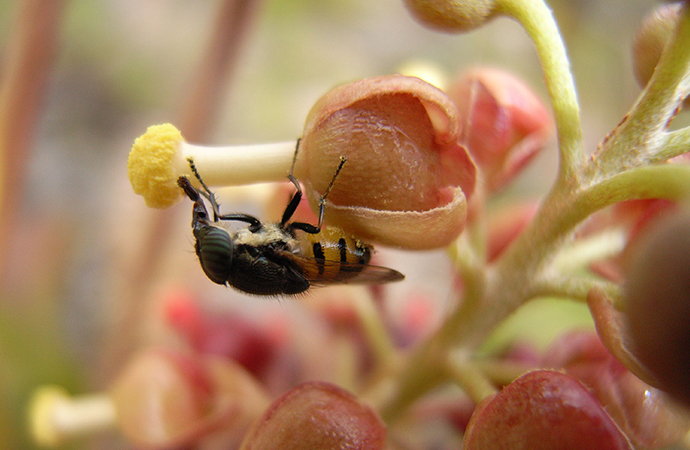
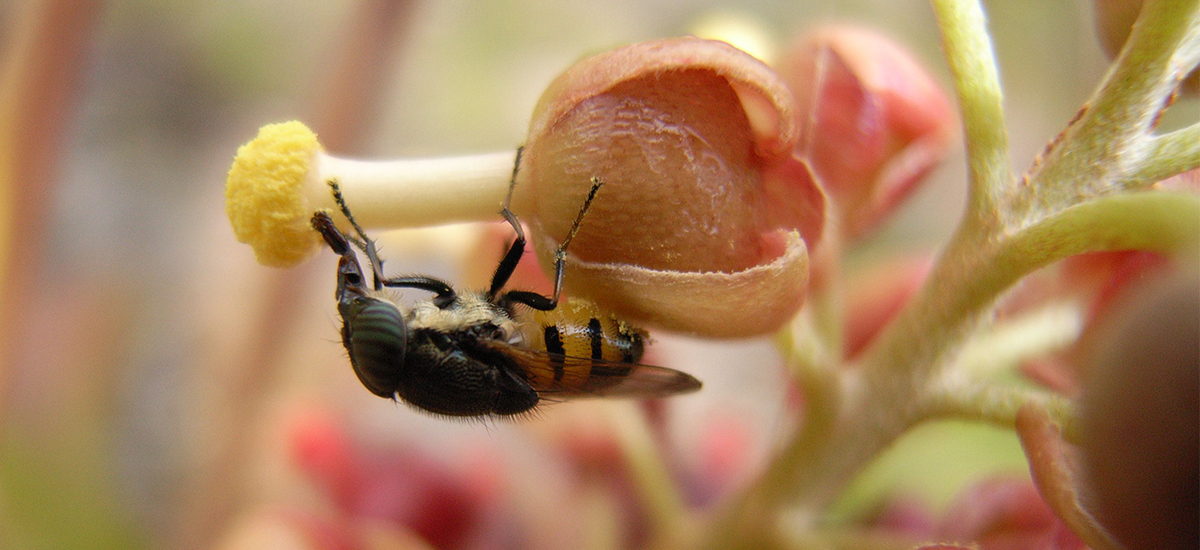
Syrphe (Diptera : Syrphidae) sur une fleur de Nepenthes rafflesiana (Brunei, Borneo) © Laurence Gaume (CNRS). Les syrphes sont des mouches rendant des services de pollinisation essentiels pour les flores sauvage et cultivée. Les syrphes sont pourtant en déclin, notamment en Europe où elles sont particulièrement impactées par l’agriculture intensive.


Le problème de la qualité des données en écologie : l’exemple d’InsectChange


La crise actuelle de la biodiversité soulève des enjeux écologiques, économiques et sociétaux majeurs. Aussi, des bases de données en écologie se multiplient pour évaluer les tendances de la biodiversité. Les résultats de ces évaluations influencent l’opinion publique et les décideurs. Or, bien qu’elle soit une condition nécessaire à la fiabilité des tendances estimées, la qualité de ces jeux de données fait rarement l’objet d’investigations poussées.


Les données sur les insectes n’échappent pas à ce constat. Les insectes assurent des services essentiels dans les écosystèmes (pollinisation, recyclage de la matière organique, source de nourriture pour de nombreuses espèces, contrôle des bioagresseurs …). Leur déclin est donc particulièrement préoccupant mais il est très difficile de mesurer précisément son ampleur et ses déterminants en raison de leur grande diversité taxonomique et d’un manque de données concernant certains groupes.


Ainsi, une évaluation minutieuse de la seule base de données mondiale sur les insectes, InsectChange, publiée dans Ecology en 2021, montre qu’il est crucial de mieux prendre en compte la question de la qualité des bases de données. InsectChange rassemble les données utilisées dans la méta-analyse de van Klink et al. publiée dans Science en 2020, qui montrait un déclin des insectes terrestres de 9 % par décade, et une augmentation des insectes d’eau douce de 11 % par décade. Cette méta-analyse ne mettait pas en évidence d’impact de l’agriculture sur le déclin des insectes. Elle argumentait au contraire que l’amélioration des pratiques agricoles était un facteur explicatif de l’augmentation des insectes d’eau douce. Cette méta-analyse, plutôt rassurante par rapport à d’autres résultats antérieurs, a fait néanmoins l’objet de plusieurs analyses critiques de la part de la communauté scientifique internationale, dont une publiée dans Science la même année. Les auteurs de l’article débattu ont publié une correction, mais celle-ci n’a considéré qu’à la marge les critiques énoncées, et la publication a continué à être fortement médiatisée. L’analyse complète de InsectChange, en révélant une accumulation d’erreurs et de biais dans les données, démontre que les tendances estimées et leurs déterminants ne sont pas fiables.


Cette analyse critique révèle plus de 500 erreurs et problèmes méthodologiques dans la constitution de cette base de données à partir de 165 jeux de données. Ces problèmes, parfois transmis depuis une autre base de données, relèvent de 17 types : chiffres mal reportés, biais d’échantillonnage, insectes comptés deux fois, unités de mesures non standardisées, etc. La méthode développée pour évaluer la base de données définit des critères spécifiques et regroupe les problèmes en quatre catégories : erreurs, incohérences, problèmes méthodologiques et déficit d’informations.


Illustration de la répartition et du nombre moyens des 17 types de problèmes rencontrés par jeu de données dans la base InsectChange, auquel s’ajoute le problème général de non-standardisation des données (non représenté sur le graphique). Ces types de problèmes appartiennent à quatre catégories : les erreurs, les incohérences, les problèmes méthodologiques et les déficits d’information.


Ainsi, l’analyse détaille quatre problèmes majeurs qui ont conduit à fausser l’analyse des tendances des insectes et celle de leurs déterminants.


Des données hétérogènes et leur transformation mathématique invalident l’estimation des tendances globales


Un problème majeur de la base de données réside dans le fait que les métriques (abondance, biomasse) sont disparates, les méthodes d’échantillonnage sont différentes et les unités de mesure ne sont pas standardisées. L’analyse montre que la transformation mathématique log(x+1) de ces données hétérogènes effectuée dans la méta-analyse de Science compromet la comparaison des pentes entre les séries temporelles et l’estimation des tendances globales des insectes. Elle ne permet pas, comme il était spécifié, de travailler sur des variations temporelles relatives et donc comparables entre jeux de données. Ce problème suffit ainsi à lui seul à invalider l’estimation faite des tendances des insectes dans le monde. 


Des erreurs conduisent à sous-estimer le déclin des insectes


La base de données présente plusieurs d’erreurs et d’incohérences comme :

  • l’inversion des chiffres entre le premier et le dernier enregistrement d’une série, transformant ainsi une diminution en une augmentation,
  • la sélection préférentielle dans certaines études de séries où la tendance des insectes augmentait,
  • ou encore la non-correction de l’augmentation de l’effort d’échantillonnage.

En plus de ces erreurs, un problème majeur a conduit à sous-estimer le déclin des insectes à partir de cette base de données. En effet, beaucoup de jeux de données comprennent des invertébrés qui ne sont pas des insectes, comme des moules envahissantes, des escargots, des vers et des crustacés. C’est le cas de près de la moitié des jeux de données d’eau douce concernant l’abondance des insectes (le nombre d’individus) et plus de trois quarts de ceux concernant leur biomasse (le poids cumulé des individus). Ce type d’erreur peut avoir des impacts importants sur l’évaluation des tendances : ainsi, un jeu de données d’un lac du Kazakhstan montre, en près d’un siècle, une augmentation exponentielle « d’insectes » … alors qu’il s’agit pour la plupart de coquillages envahissants, atteignant à la fin de la période considérée 95 % de la biomasse de l’assemblage total d’invertébrés pris en compte.


De plus, un examen minutieux des données sources a permis d’identifier les jeux de données pour lesquels il était en fait possible de séparer insectes et non insectes. Dans ces jeux de données, bien souvent la biomasse des seuls insectes diminuait, alors que celle des assemblages d’invertébrés présentés comme des insectes augmentait. Il a pu ainsi être démontré que la prise en compte de l’ensemble des invertébrés, et non des seuls insectes, conduisait à surestimer la tendance des « insectes » d’eau douce.


Des données sont issues de contextes spécifiques, influençant les tendances locales, mais non pris en compte


Une faille méthodologique réside dans le fait que plus de la moitié des publications sources étudiaient les dynamiques des insectes dans des contextes très spécifiques (mesures de restauration, création de nouveaux habitats, feu, sécheresse, traitements insecticides, etc.). Ces contextes étaient des perturbations extrêmes ou des facteurs étudiés comme pouvant influencer les dynamiques observées et testés au travers d’expériences contrôlées (avec manipulation du milieu) ou d’expériences naturelles (comparaison de sites naturellement perturbés avec d’autres restés intacts). Mais ces contextes spécifiques ne sont la plupart du temps pas reportés dans la base de données. Or ils créent des situations non représentatives de la diversité des conditions de vie des insectes dans le monde qui favorisent cinq fois plus fréquemment l’augmentation des insectes que leur diminution. L’utilisateur est laissé ignorant des biais dans les tendances, artificiellement causés par ces facteurs influents, et de la sous-estimation du déclin global des insectes qui en résulte.


Une méthodologie inappropriée conduit à écarter l’agriculture comme facteur du déclin des insectes


Alors que les contextes spécifiques aux études sources – facteurs les plus directement influents sur la dynamique des insectes – ne sont souvent pas reportés dans la base de données, cette dernière extrait depuis des bases externes des données concernant les facteurs anthropogéniques susceptibles d’influencer localement les tendances observées. Plus précisément, les données d’évolution des insectes dans InsectChange sont appariées via les coordonnées géographiques des sites d’échantillonnage avec d’autres bases de données mondiales décrivant l’évolution de l’utilisation des terres (agriculture, urbanisation) et du climat. Or, une analyse détaillée montre que pour deux tiers des jeux de données, l’appariement des bases de données est compromis parce que la zone d’échantillonnage est plus grande que la zone définie comme échelle locale dans la base de données externe, ou n’est pas localisée au bon endroit dans InsectChange. Par ailleurs, la base de données qui code la couverture des terres du globe à partir d’une interprétation automatisée d’images satellites, peut confondre les cultures agricoles avec des prairies, des steppes, etc. Ainsi, une analyse exhaustive montre que les sites considérés sans culture agricole au niveau local sont bien non cultivés, tandis que les sites considérés comme cultivés ne le sont en général pas, ou moins que ce qui est reporté. Cette surestimation importante de la couverture des terres cultivées conduit les auteurs de la méta-analyse à écarter ainsi de façon erronée les pratiques agricoles comme cause possible du déclin des insectes. À cause d’une méthodologie doublement inappropriée, InsectChange ne permet donc pas d’identifier les déterminants des tendances des insectes.


Conclusion


Ce travail minutieux et complet d’évaluation montre l’insuffisante attention accordée à la qualité des données d’InsectChange et amène à réfléchir sur la nécessité d’une évaluation systémique des grosses bases de données construites pour estimer les tendances de la biodiversité. À ce titre, la méthodologie reproductible développée pour évaluer InsectChange peut contribuer à l’élaboration d’une méthode généralisable d’évaluation de la qualité des bases de données en écologie.


Ce travail d’ampleur met également en garde contre les risques d’une science toujours plus rapide. Il appelle les revues scientifiques à améliorer leur processus d’évaluation par les pairs et à garantir la prise en compte des commentaires post-publication, afin de préserver la qualité des connaissances scientifiques. Cela concerne tout particulièrement les revues de renom, intermédiaires privilégiés des journalistes.


Enfin, cette démarche inédite met en lumière le rôle fondamental de l’organisation de chercheurs à but non lucratif Peer Community In. En publiant, comme elle l’a fait pour cette réanalyse des données de InsectChange, des commentaires critiques sans restriction éditoriale, selon une démarche de science ouverte et un processus d’évaluation indépendant et transparent, cette organisation participe à préserver l’intégrité scientifique et la qualité du débat scientifique.


Cet article a d’ores et déjà fait l’objet de différentes communications et reprises dans la presse. Merci à Laurence Gaume, chercheuse en écologie au CNRS, et Marion Desquilbet, chercheuse en économie de l’environnement (INRAE) d’avoir pris le temps de revenir sur ce texte pour la FRB.


[Call for proposals FRB-MTE-OFB 2022] Nine projects selected within the call “Impacts on terrestrial biodiversity in the Anthropocene”

As part of the implementation of the national “terrestrial biodiversity monitoring” programme carried out by the French Biodiversity Office (OFB), which aims to measure, identify and monitor the influence of human activities on biodiversity and the best practices to be promoted, the Ministry of Ecological Transition (MTE) and the French Foundation for Research on Biodiversity (FRB) launched a call for research projects on the “Impacts on terrestrial biodiversity in the Anthropocene“. 


Three types of projects are funded by this 2022-call:


SYNTHESIS PROJECTS


  • Discar – Population consequences of human DISturbance on small CARnivores ; Olivier Gimenez (CNRS) and Sandrine Ruete (OFB),
  • DragonDragonflies as bellwether for the human impact on interface ecosystems ; Colin Fontaine (CNRS) and Reto Schmuki (UK Centre for Ecology and Hydrology),
  • Motiver – Developing agri-environmental Indicators to MOnitor The Impact of human-driven landscape changes on biodiVERsity in European farmland ; Gaël Caro (Univ de Lorraine) and Ronan Marrec (Univ de Picardie)


These 3-years projects will develop syntheses of ideas and/or concepts, analyses of existing data, and will focus on factors affecting the state, evolution and dynamics of biodiversity.


SYNERGY PROJECTS


  • ComepiCOmprendre les patrons de biodiversité et leurs impacts fonctionnels, MEsurer des indicateurs pour PIloter les habitats par la gestion anthropique ; Anne BONNIS (CNRS)
  • IndicatorsPlant reproductive strategies as new diversity indicators – proof of concept in agricultural landscapes ; Sylvain GLEMIN (CNRS)
  • PppirecPollinisateurs, Pesticides, et Paysages : Indicateurs de Réponses, des Espèces aux Communautés ; Nicolas DEGUINES (CNRS, Université de Poitiers)
  • RodexpoAnticoagulant rodenticides in rodent communities sampled along a gradient of forest anthropisation : exposure and resistance ; Virginie LATTARD (Vet-Agrosup)


These 1-year projects will provide complementary answers to a question that emerges from research projects that has been finalized or is underway and will help stakeholders with indicators and practices to be promoted or abandoned to preserve biodiversity.


SYSTEMATIC REVIEWS PROJECTS


  • DesybelA SYstematic review on the impact of anthropogenic noise on terrestrial biodiversity ; Yorick REYJOL (MNHN)
  • Tres-PraticTrait-based responses of soil fauna to agricultural practices & agricultural management strategies: a systematic review and meta-analysis ; Mickael HEDDE (Inrae)


[Call for proposals] Two calls on biodiversity opening «DataShare» and «Anthropogenic pressures and impacts on terrestrial biodiversity»

Two calls for proposals will fund 1 to 3-years research projects on biodiversity.


Call for proposals DataShare 2023


The aim of this DATASHARE joint call is to accelerate the sharing of open-access and large scale ‘novel’ biodiversity related datasets. This call complements classical biodiversity synthesis calls, which aim at fostering the analysis of existing data and the synthesis of ideas and concepts, with a specific focus on data compilation and sharing. It can be considered as a preliminary step, but not mandatory, before submitting a research proposal to a classical biodiversity synthesis call (e.g. CESAB, sDiv, NCEAS). 


For its second 2023 edition, the DATASHARE joint call will fund four 2-year projects.


More information


Call for proposals Anthropogenic pressures and impacts on terrestrial biodiversity 2023


As part of the implementation of the national “terrestrial biodiversity monitoring” programme carried out by the French Biodiversity Office (OFB), which aims to measure, identify and monitor the influence of human activities on biodiversity and the best practices to be promoted, the Ministry of Ecological Transition (MTE) and the French Foundation for Research on Biodiversity (FRB) are launching a call for research projects on the “Anthropogenic pressures and impacts on terrestrial biodiversity“. The call aims to characterize the positive, negative or non-existent impacts of human activities and induced pressures on the state and dynamics of terrestrial biodiversity.


The results of the research funded by the programme should help to strengthen the actions of society as a whole, to halt the decline of biodiversity and promote sustainable human development. 


This call for proposals will allow the funding of:

  • 3 data SYNTHESIS projects of three years – these projects should develop syntheses of ideas and/or concepts, analyses of existing data, and should focus on factors affecting the state, evolution and dynamics of biodiversity.
  • 4 to 6 one-year SYNERGY projects – these projects should provide complementary answers to a question that emerges from a research project that has been finalized or is underway, and should help stakeholders with indicators and practices to be promoted or abandoned to preserve biodiversity.
  • 1 to 2 SYSTEMATIC REVIEW projects of two years – these projects must present an inventory of human practices that have an impact on biodiversity and a summary of the state of knowledge on the impacts considered.


More information

FORCIS | Foraminifera response to Climatic Stress

Anthropogenic CO2 emissions cause ocean warming, but also a decrease in the pH of the surface ocean. This ocean acidification affects calcifying marine organisms, which play a key role in the biological pump. Among these organisms, the fossilized shells of planktonic foraminifera represent the most thoroughly documented geological archive of past biodiversity as well as of paleoclimates. Recent changes in planktonic foraminifera assemblages have never been synthesized at the global scale, even though the distribution of these microorganisms has already been impacted.

The FRB-CESAB FORCIS project investigated the response of planktonic foraminifera to climate stress through the analysis of global data since 1910. It aimed to build a database, identify key environmental drivers, and model their past and future responses to global change.


This document summarizes in a few pages the group’s context and objectives, the methods and approaches used, the main findings, as well as the impact for science, society, and both public and private decision-making.

[Press release] A new method to assess ecosystem vulnerability and protect biodiversity

Setting appropriate conservation strategies is a challenging goal, especially because of the complexity of threats and responses from species, and budget limitations. To overcome this challenge, the team of scientists, including researchers from CNRS, IFREMER, IRD and international organizations, has simulated the response of species communities to a wide range of disturbances, providing a robust estimation of their vulnerability, in a world where future threats are diverse and difficult to predict.


Quantifying the vulnerability of biodiversity is crucial to safeguard the most threatened ecosystems. Published in Nature Communications on the 1st of September 2022, this new tool stands out from previous work as it estimates the degree to which functional diversity, that is biodiversity and associated ecosystem functions, is likely to change when exposed to multiple pressures. It was developed as part of two projects funded by the French Foundation for Research on Biodiversity (FRB) within its Centre for Biodiversity Synthesis and Analysis (CESAB) and with the support of Electricité de France (EDF) and France Filière Pêche (FFP).


The team of 20 scientists used repeated computer simulations of disturbances on species communities to calculate the ecosystem’s vulnerability. From climate change and land use changes to pollution or resource overexploitation, these disturbances simulate the impacts of a large range of potential threats on species communities. “By simulating all possible scenarios, even the worst ones, explains Arnaud Auber, researcher at IFREMER and first author of the publication, we are able to identify the most vulnerable ecosystems from a functional view-point. Moreover, we can now estimate their vulnerability by taking into account unknown, unpredictable or poorly documented pressures, which is a major advance over previous work.” This safer approach offers decision-makers the possibility to classify various sites according to their associated functional vulnerability, which is now urgently needed to move forward adaptive management of biodiversity.


In this study, the functional diversity of communities was made central to the calculation of vulnerability. Overall, biodiversity conservation has mainly focused on taxonomic diversity (e.g., the number of species in an ecosystem). However, recent studies including work from the FREE project, have shown that examining functional diversity can provide a more precise assessment of whether or not an ecosystem is functioning properly. Indeed, a species may have the same function as another (e.g. the same preys or reproductive cycle) and so if one species disappears, another may still fulfil its role in the ecosystem. But if all species sharing the same essential function disappear, the ecosystem will become less functionally diverse, less resilient to threats and thus more vulnerable. In other words, taxonomic diversity in an ecosystem is important but not sufficient to properly assess ecosystem vulnerability. Parrotfishes for example, are one of the only fish species that can directly feed on corals. If they disappear, an essential component of the carbon cycle in coral reefs will be lost. Functional and taxonomic diversity are therefore complementary and should be used together to better guide decision-makers in identifying priority areas for biodiversity protection.


This new approach can be applied to all ecosystems, whether marine, terrestrial or freshwater. “As an example, explains Arnaud Auber, we applied our functional vulnerability framework to the past temporal dynamics of the North Sea fish community. Using fish abundance data and species traits linked to ecosystem functioning such as fecundity, offspring size and feeding mode, our tool revealed a high functional vulnerability of fish communities in the North Sea. However, we found a significant decrease in functional vulnerability throughout the last four decades, dropping from 92 to 86%. During the same period, the North Sea fishing pressure had decreased, following the Common Fisheries Policy, with a progressive decrease in catch quotas and improvement in gears’ selectivity.”


Finally, this tool is open access and can be used to predict ecosystem vulnerability using for example future climate change scenarios or to compare different ecosystems. This highlights the need for synthesis as we continue to improve our understanding of the complexity of nature. Only when put together will data and knowledge help quantify the impact of multiple threats on the world’s ecosystems and assist decision-makers in rationalizing ecosystem management and conservation actions in an uncertain future.


Reference


Arnaud Auber1, Conor Waldock2,3, Anthony Maire4, Eric Goberville5, Camille Albouy6,7, Adam C. Algar8, Matthew McLean9, Anik Brind’Amour10, Alison L. Green11, Mark Tupper12,13, Laurent Vigliola14, Kristin Kaschner15, Kathleen Kesner-Reyes16, Maria Beger17,18, Jerry Tjiputra19, Aurèle Toussaint20, Cyrille Violle21, Nicolas Mouquet22,23, Wilfried Thuiller24, David Mouillot23,25. “A functional vulnerability framework for biodiversity conservation”. 2022. Nature Communications. doi: https://doi.org/10.1038/s41467-022-32331-y/

[FRB-CESAB] From species to functions: towards a paradigm shift for biodiversity conservation?

The working group FREE, from the FRB’s Centre for the Synthesis and Analysis of Biodiversity (CESAB), invites you to Montpellier for a conference in English on Thursday the 16th of June 2022 at 2pm, entitled From species to functions: towards a paradigm shift for biodiversity conservation?”


This conference will present a new facet of biological rarity – functional rarity – and will lay the foundations for biodiversity and rarity conservation policies, revisited in the light of functional ecology. The working group FREE has largely contributed to the development of the conceptual basis of functional rarity and has proposed global analyses attempting to identify areas of the globe with a significant proportion of ecologically unique species.


During this conference, a group of international researchers will discuss the direct and major implications of this research for biodiversity conservation policies.


The conference will be held in the afternoon and will be preceded, in the morning, by a training workshop dedicated to the use of R packages that allows to calculate various functional rarity and diversity index and to map them. The workshop will be in English, free, and lunch will be included. Any other costs should be covered by the participants. A good knowledge of the R software is required.


[Joint call SYNERGY FRB-CESAB / SinBiose / FAPESP / CEBA] Two new projects on biodiversity in the neotropical realm

Two innovative projects relating to biodiversity in the neotropical realm were selected withing the call for proposals from the CEntre for the Synthesis and Analysis of Biodiversity of the French Foundation for Biodiversity Research (FRB-CESAB), the Brazilian Synthesis Center on Biodiversity and Ecosystem Services (SinBiose), the São Paulo Research Foundation (FAPESP) and the French Laboratory of Excellence CEBA (CEnter for the study of Biodiversity in Amazonia).


The relationship between soil macrofauna biodiversity and ecosystem services delivery across land use systems in neotropical rainforest biomes

Principal investigators: Jérôme MATHIEU (Sorbonne Université, France) and Miguel COOPER (University of Sao Paulo, Brésil)


Networks of Fungal Interactions in the Neotropics

Principal investigators: Mélanie ROY (Université de Toulouse, France) and Paulo GUIMARAES (University of Sao Paulo, Brésil)


The two projects will be funded for a period of three years, including: the recruitment of a post-doctoral fellow based in Brazil and working on the project for two years, the organization of four meetings (two in France, at CESAB in Montpellier and two in Brazil in the state of São Paulo) and the promotion and publication of the results. Logistical, technical and administrative support will also be provided all along the project.  

[Call for proposals FRB-MTE-OFB 2021] Eight projects selected within the call “Impacts on terrestrial biodiversity in the Anthropocene”

As part of the implementation of the national “terrestrial biodiversity monitoring” programme carried out by the French Biodiversity Office (OFB), which aims to measure, identify and monitor the influence of human activities on biodiversity and the best practices to be promoted, the Ministry of Ecological Transition (MTE) and the French Foundation for Research on Biodiversity (FRB) launched a call for research projects on the “Impacts on terrestrial biodiversity in the Anthropocene“. 


Three types of projects are funded by this 2021-call:


SYNTHESIS PROJECTS


  • ACOUCENE, led by Jean-Yves BARNAGAUD (EPHE, France) and Solène CROCI (CNRS, France) – Towards a silent spring? Modeling and projecting the impacts of the Anthropocene on soundscapes with birds as an acoustic ecological indicator
  • IMPACTS, led by Wilfried THUILLER (CNRS, France) and Franziska SCHRODT (University of Nottingham, United Kingdom) – French biodiversity in the Anthropocene – impacts and drivers of spatial and temporal response
  • LANDWORM, led by Daniel CLUZEAU (University of Rennes, France) and Céline PELOSI (INRAE, France) – Impact of Land use and management on earthworm communities
  • SPATMAN, led by Isabelle BOULANGEAT (INRAE, France) and Mohamed HILAL (INRAE, France) – What role for the spatial organisation of human societies to modulate their pressures on biodiversity?


These 3-years projects will develop syntheses of ideas and/or concepts, analyses of existing data, and will focus on factors affecting the state, evolution and dynamics of biodiversity.


SYNERGY PROJECTS


  • FUNINDIC, led by Cyrille Violle (CEFE-CNRS, France) Functional rarity as a marker of land use intensification and ecosystem functions in French permanent grasslands: towards new indicators for the monitoring and conservation of the French flora.
  • INTERFACE, led by Céline Clauzel (University Paris Diderot, France) – Multi-habitat network modelling for integrated conservation of interface environments.
  • LANBIO, led by Cendrine Mony (University of Rennes, France) –  Effect of human-driven landscape modification on biodiversity in bocage landscapes: toward integrative indicators. 


These 1-year projects will provide complementary answers to a question that emerges from research projects that has been finalized or is underway and will help stakeholders with indicators and practices to be promoted or abandoned to preserve biodiversity.


SYSTEMATIC MAP PROJECT 


  • SOLAIRE-BP, led by Yorick Reyjol (UMS PatriNat OFB-CNRS-MNHN, France) – Systematic overview of literature about the impacts of renewable energy : photovoltaic and biodiversity.


This 1-year project is a preliminary step to the “systematic review” and will  focus on pressure-impact links related to human practices in order to highlight whether the impacts on biodiversity are well established or suffer from a lack of data or literature.

[Call for proposals FRB-CESAB 2022] Opening of the call!

Through its Center for Biodiversity Synthesis and Analysis (CESAB), the French Foundation for Biodiversity Research opens its 2022 call for research proposals, to fund three innovative projects relating to the synthesis of ideas and concepts and/or the analysis of existing data. The main aim of these projects should be to improve scientific knowledge of biodiversity and demonstrate how we can use this knowledge to better protect it. 


The submitted projects can deal with any topic related to biodiversity, in the fields of natural sciences and/or human and social sciences.


The selected projects will be funded for three years, including: the recruitment of a post-doctoral fellow for 24 months, the organization of six meetings of the working group at CESAB and the promotion and publication of the results. CESAB will also provide logistical, technical and administrative support all along the project.


  • Pre-proposal deadline : 19th May 2022, 18:00 CEST


More information

[Call for proposals FRB-MTE-OFB] Opening of the call «  Impacts on terrestrial biodiversity in the Anthropocene »

As part of the implementation of the national “terrestrial biodiversity monitoring” programme carried out by the French Biodiversity Office (OFB), which aims to measure, identify and monitor the influence of human activities on biodiversity and the best practices to be promoted, the Ministry of Ecological Transition (MTE) and the French Foundation for Research on Biodiversity (FRB) are launching a call for research projects on the “Impacts on terrestrial biodiversity in the Anthropocene “. The call aims to characterize the positive, negative or non-existent impacts of human activities and induced pressures on the state and dynamics of terrestrial biodiversity.


The results of the research funded by the programme should help to strengthen the actions of society as a whole, to halt the decline of biodiversity and promote sustainable human development. 


This call for proposals will allow the funding of:

  • 3 data SYNTHESIS projects of three years – these projects should develop syntheses of ideas and/or concepts, analyses of existing data, and should focus on factors affecting the state, evolution and dynamics of biodiversity.
  • 4 to 6 one-year SYNERGIE projects – these projects should provide complementary answers to a question that emerges from a research project that has been finalized or is underway, and should help stakeholders with indicators and practices to be promoted or abandoned to preserve biodiversity.
  • 2 to 4 one-year SYSTEMIC MAP projects – a preliminary step to the “systematic review”, these projects will have to focus on pressure-impact links related to human practices in order to highlight whether the impacts on biodiversity are well established or suffer from a lack of data or literature.


More information

[Call for proposals FRB-CESAB 2020] Four projects selected

Four innovative projects relating to the synthesis of ideas and concepts and the analysis of existing data, were selected by the scientific committee from the call for proposals FRB-CESAb 2020. They will improve scientific knowledge of biodiversity and demonstrate how we can use this knowledge to better protect it. 


The selected projects are funded for a period of three years, including: the recruitment of a post-doctoral student for two years, the organization of six meetings of the working group at CESAB and the promotion and publication of the results. The CESAB also provides logistical, technical and administrative support.


Global redistribution of biodiversity: A macro- and eco-evolutionary approach to understand species vulnerability to global changes

PIs: Gaël GRENOUILLET – Université de Toulouse (France) and Lise COMTE – Illinois State University (USA)


Supporting climate resilience through equitable ocean conservation

PIs : Joachim CLAUDET – CNRS (France), David GILL – Duke University (USA) and Jessica BLYTHE – Brock University (Canada)


Understanding power dynamics in stakeholder participation: integrating theory and practice for effective biodiversity conservation

PIs: Juliette YOUNG – INRAE (France) and James BUTLER – CSIRO (Australia)


Synthesis of Neotropical Tree Biodiversity with Plot Inventories

PIs: Jérôme CHAVE – CNRS (France) and Adriane ESQUIVEL MUELBERT – Université de Birmingham (United Kingdom)

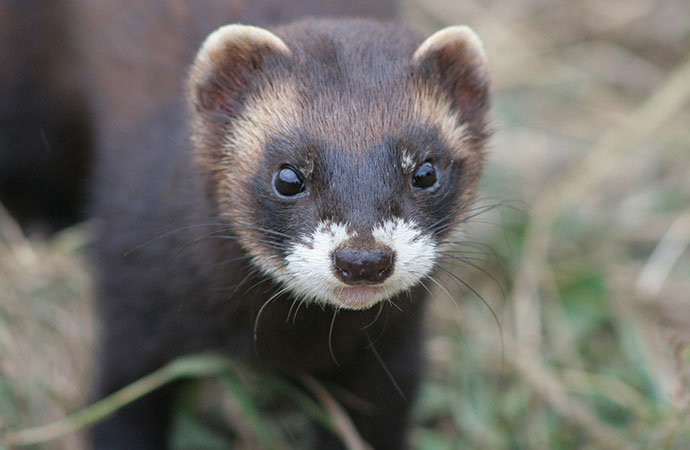
The polecat, this big outsider

Its bad reputation precedes it. It is accused of smelling, of “screaming loudly”, and more recently of sexism through the character of Pepe the Polecat. But, the polecat, this small mustelid, we know little or nothing about it. This is the observation made by researcher Sébastien Devillard and his team, who received the Barbault and Weber “Involved Ecology” grant in 2021 to fill this knowledge gap: “The polecat is a species that is difficult to observe and study because it is a cryptic and nocturnal animal. It lives in low density territories where males and females only cross paths during reproduction”, explains the researcher.


The Curriculum of the polecat is therefore quite short. As an adult, this small mustelid weighs between 600 grams and 1.5 kg, has the diet of an omnivore, mainly meat, and lives in open and wooded areas, often near wetlands. “However,”, continues Sébastien Devillard, “we have noticed that for the past 30 or 40 years, the wetlands, and riparian forests, which are its preferred habitat, have been steadily deteriorating. In all likelihood, that this had and continues to have an impact on the populations of this species.”


If its conservation status is not considered to be at risk by IUCN, it is once again due to a lack of knowledge on this topic according to the researcher: “When IUCN does not have the exact number of individuals living in a territory to monitor its temporal evolution, it looks to see if the distribution area of this species has decreased independently of the population densities. However, the polecat is still present in Europe over a distribution area that seems stable, which is why IUCN has not classified it as a threatened species. “However, local studies carried out by naturalists using photographic traps, or by national organizations responsible for collecting signs of presence, such as visual observations or roadside kills, suggest that the number of such signs of presence has been steadily declining for the last twenty years, particularly in wetlands.” To change its conservation status and justify the implementation of in situ conservation programmers, scientists will have to adopt a conservation biology approach that will study the polecat’s space use and population size.


The research team is therefore committed to understanding how this small mustelid uses and selects its habitat, in particular its dependence on wetlands and protected areas. At the Pierre Vérots Foundation estate in Ain, the research team plans to fit three polecats with GPS collars to track their movements and identify the determinants of their use of space. “This is a world first, stresses the researcher. For a long time, we were limited by the size of GPS collars, which required large batteries to operate and ensure sufficiently long tracking to obtain useful information. “In ecology, the rule is that animals cannot be fitted with collars that exceed 3 to 5% of their weight. Until then, only larger mammals, from a few kilograms up to giraffes or elephants, benefited from this type of tracking to respect the ethical and animal welfare dimension. The miniaturization of batteries has changed the situation: “Once the polecats are fitted with the equipment, we will be able to go out into the field every week to download the data, which will give us extremely detailed and unprecedented information on the use of space by this species.”


The technique is revolutionary in many ways. Previously, the data collected came from VHF radio collars. To locate the individuals studied, the scientists had to visit the area several times a week and triangulate by positioning themselves at three different locations to pick up the signal from the radio collars. “This classic radio-tracking technique did not allow for more than two or three locations per week. Thanks to the GPS collars, this team of scientists will now be able to obtain data on the polecat’s occupation of space and on its pace of activity throughout the day.


This project is only the first step in a larger ambition: “If we manage to show that this device works, we will be able to expand our study area and fit more animals.” The goal? To obtain more data and carry out survival analyses, which will then enable demographic models to estimate the size of the population locally and the rate of population growth. At the same time, researchers want to deploy a photo-trapping protocol to estimate local polecat density. Scientists will thus be able to propose new arguments for the study of its conservation status and perhaps also change the way our society looks at this small, discreet mustelid.

[FRB-CESAB] Opening of the joint call SYNERGY with SinBiose / FAPESP / CEBA on biodiversity in the neotropical realm

In partnership with SinBiose, FAPESP, and LabEX CEBA, the French Foundation for Biodiversity Research (FRB) opens a call for research projects through its Center for Biodiversity Synthesis and Analysis (CESAB), to fund two innovative research projects on biodiversity in the neotropical realm. The submitted projects can be in the fields of natural sciences and/or social and human sciences and should aim at developing the synthesis of ideas and concepts and/or the analysis of existing data.


The selected projects will be funded for a period of three years, including: the recruitment of a post-doctoral fellow based in Brazil and working on the project for two years, the organization of four meetings (two in France, at CESAB in Montpellier and two in Brazil in the state of São Paulo) and the promotion and publication of the results. Logistical, technical and administrative support will also be provided.


  • Pre-proposal deadline : 30th July 2021, 12:00 CEST


More information

[FRB-CESAB] Behind the WOODIV paper: the Euro-Mediterranean trees in a database

From the Spanish fir (Abies pinsapo), endemic species in Andalusia, to the Golden oak (Quercus alnifolia) in Cyprus, the Mediterranean Basin is home to emblematic species. These trees have always fascinated the people around them and the botanists. Yet, the Mediterranean trees are comparatively less well-known than their northern relatives.


Anne-Christine Monnet, member of the FRB-CESAB project WOODIV, present in an article about the scientific publication “WOODIV, a database of occurrences, functional traits, and phylogenetic data for all Euro-Mediterranean trees”, published in March 2021 in Scientific data, how Agathe Leriche, principal investigator of the WOODIV project, and Frédéric Médail, project member, gathered scientists and botanists in order to combine data and knowledge on Mediterranean trees from sparse national databases to one high-quality standardized dataset.


Read the article

[FRB-CESAB / CIEE] Earth’s ecosystems in a time of global change: Six ecologists discuss challenges and solutions

The Canadian synthesis center CIEE-ICEE  organized, with the help of the FRB-CESAB, the French Embassy in Vancouver and the University of British Columbia, a 1h30 conference on Wednesday, April 7, 2021 at 16:00 PT (Pacific Time) – 01:00 French time.


The six panelists of “Earth’s ecosystems in a time of global change: Six ecologists discuss challenges and solutions” are Bastien Mérigot (Montpellier University) – principal investigator of the FRB-CESAB/ CIEE project FISHGLOB, Nicolas Loeuille (Sorbonne Université), Shawn Leroux (Memorial University of Newfoundland), William Cheung (University of BC), Nancy Shackell (Bedford Institute of Oceanography), and Isabelle Gounand (Sorbonne Université) – principal investigator of the FRB-CESAB/ CIEE project RED-BIO.


The recorded panel discussion is now available below. 


[Press release] Study in Nature: Protecting the Ocean Delivers a Comprehensive Solution for Climate, Fishing and Biodiversity

A new study published in the prestigious peer-reviewed scientific journal Nature today offers a combined solution to several of humanity’s most pressing challenges. It is the most comprehensive assessment to date of where strict ocean protection can contribute to a more abundant supply of healthy seafood and provide a cheap, natural solution to address climate change—in addition to protecting embattled species and habitats.


An international team of 26 authors – including researchers from Ifremer and the University of Montpellier and with the CNRS – identified specific areas that, if protected, would safeguard over 80% of the habitats for endangered marine species, and increase fishing catches by more than eight million metric tons. The study is also the first to quantify the potential release of carbon dioxide into the ocean from trawling, a widespread fishing practice—and finds that trawling is pumping hundreds of millions of tons of carbon dioxide into the ocean every year, a volume of emissions similar to those of aviation. This work was partly funded by the Foundation for Research on Biodiversity (FRB), EDF and the Total Foundation, through the FREE and PELAGIC research projects of the FRB’s Center for Biodiversity Synthesis and Analysis (CESAB).


“Ocean life has been declining worldwide because of overfishing, habitat destruction and climate change. Yet only 7% of the ocean is currently under some kind of protection,” said Dr. Enric Sala, explorer in residence at the National Geographic Society and lead author of the study, Protecting the global ocean for biodiversity, food and climate.


“In this study, we’ve pioneered a new way to identify the places that—if strongly protected—will boost food production and safeguard marine life, all while reducing carbon emissions,” Dr. Sala said. “It’s clear that humanity and the economy will benefit from a healthier ocean. And we can realize those benefits quickly if countries work together to protect at least 30% of the ocean by 2030.” 


To identify the priority areas, the authors—leading marine biologists, climate experts, and economists—analyzed the world’s unprotected ocean waters based on the degree to which they are threatened by human activities that can be reduced by marine protected areas (for example, overfishing and habitat destruction). They then developed an algorithm to identify those areas where protections would deliver the greatest benefits across the three complementary goals of biodiversity protection, seafood production and climate mitigation. They mapped these locations to create a practical “blueprint” that governments can use as they implement their commitments to protect nature.


The study does not provide a single map for ocean conservation, but it offers a first-in-kind framework for countries to decide which areas to protect depending on their national priorities. However, the analysis shows that 30% is the minimum amount of ocean that the world must protect in order to provide multiple benefits to humanity.


“There is no single best solution to save marine life and obtain these other benefits. The solution depends on what society—or a given country—cares about, and our study provides a new way to integrate these preferences and find effective conservation strategies,” said Dr. Juan S. Mayorga, a report co-author and a marine data scientist with the Environmental Market Solutions Lab at UC Santa Barbara and Pristine Seas at National Geographic Society.


The study comes ahead of the 15th Conference of the Parties to the United Nations Convention on Biological Diversity, which will gather end of 2021 in Kunming, China. The meeting will bring together representatives of 190 countries to finalize an agreement to end the world’s biodiversity crisis. The goal of protecting 30% of the planet’s land and ocean by 2030 (the “30×30” target) is expected to be a pillar of the treaty. The study follows commitments by the United States, the United Kingdom, Canada, the European Commission and others to achieve this target on national and global scales.


“Solutions with multiple benefits are attractive to people and leaders alike. Our pioneering approach allows them to pinpoint the places that, if protected, will contribute significantly to three big problems at once—food security, climate change, and biodiversity loss.  Our breakthrough in methodology can bring multiple benefits to nature and people,” said Dr. Sala.


Two projects were selected from the FRB-CESAB call for proposals of systematic reviews

Two projects were selected by the steering and selection committee from the FRB-CESAB call for proposals of systematic reviews. Both projects will use systematic mapping, critical assessment and narrative synthesis of the corpus of selected texts. Expected outcomes are publications of review articles in international scientific journals.


  • Theme 1: State and future of marine biodiversity in a time of global change 


InDySem: Influence of ecological dynamics on production and demand for marine ecosystem services. A systematic review for decision-making.

PI : Eric THIEBAUT, Sorbonne University, Paris (France)


  • Theme 2, in partnership with Agropolis Fondation: Solutions for agro-ecological transition that conserve biodiversity 


Agri-TE (Agriculture Transition Evidence): Evidence-based synthesis of the impacts of agro-ecological transition at the global scale to support integrated modelling and decision-making

PI: Damien BEILLOUIN – CIRAD, HORTYS, Montpellier (France)

[Press release] Double jeopardy for ecologically rare birds and terrestrial mammals

Common assumptions notwithstanding, rare species can play unique and essential ecological roles. After studying two databases that together cover all known terrestrial mammals and birds worldwide, scientists from the CNRS, the Foundation for Biodiversity Research (FRB), Université Grenoble Alpes, and the University of Montpellier have demonstrated that, though these species are found on all continents, they are more threatened by human pressures than ecologically common species and will also be more impacted by future climate change.


Thus they are in double jeopardy. The researchers’ findings, published in Nature Communications on October 8th 2020, show that conservation programmes must account for the ecological rarity of species.


Read the full press release

[Press release] Double jeopardy for ecologically rare birds and terrestrial mammals

It has long been thought that rare species contribute little to the functioning of ecosystems. Yet recent studies have discredited that idea: rarity is a matter not only of the abundance or geographical range of a species, but also of the distinctiveness of its ecological functions. Because these functionally distinct species are irreplaceable, it is essential we understand their ecological characteristics, map their  distributions, and evaluate how vulnerable they are to current and future threats.


Using two databases that collect information on the world’s terrestrial mammals (4,654 species) and birds (9,287 species), scientists from the FRB’s Centre de Synthèse et d’Analyse de la Biodiversité (CESAB), CNRS research laboratories, Université Grenoble Alpes, the University of Montpellier, and partner institutes divided the earth’s surface into 50 × 50 km squares and determined the number of ecologically rare species within each. They showed that ecological rarity among mammals is concentrated in the tropics and the southern hemisphere, with peaks on Indonesian islands, in Madagascar, and in Costa Rica. Species concerned are mostly nocturnal frugivores, like bats and lemurs, and insectivores, such as small rodents. Ecologically rare bird species are mainly found in tropical and subtropical mountainous regions, especially in New Guinea, Indonesia, the Andes, and Central America. The birds in question are essentially frugivorous or nectarivorous, hummingbirds being an example. For birds and terrestrial mammals alike, islands are hotspots of ecological rarity.


The researchers also ranked these species according to their IUCN Red List status1 and found they made up the bulk of the threatened species categories. That is, ecologically rare mammals account for 71% of Red List threatened species (versus 2% for ecologically common mammals); and ecologically rare birds, 44.2% (versus 0.5% for ecologically common birds). For each species, they determined (i) anthropogenic pressure exerted; (ii) human development indexes (HDIs) of host countries; and (iii) exposure to armed conflicts. The last two of these elements shape conservation policies. The scientists observed that  human activity had a greater impact on ecologically rare mammals and birds than on more common species, and that these rare species were found in countries of every kind of profile, irrespective of HDI or the prevalence of warfare2 They used models to demonstrate that ecologically rare species will be the greatest victims of climate change, many of them facing extinction within 40 years.


This profiling of ecologically rare species makes it clear that current conservation efforts, even in zones already protected, are insufficient. Conservation strategies still too often ignore functional distinctiveness and focus instead on population sizes. But it is essential to take this distinctiveness into account, letting this knowledge guide steps taken to protect these rare species. As they are necessary for healthy ecosystems, a true paradigm shift in conservation policy is needed to ensure their survival.


For more information... some examples of ecologically rare species


[1] The International Union for Conservation of Nature (IUCN) is a leading international NGO focused on nature conservation. It evaluates the risk of extinction faced by different species, assigning each to a particular category (e.g., ‘Least Concern’, ‘Near Threatened’, ‘Vulnerable’, ‘Endangered’, or ‘Extinct’).

[2] For example, the Philippines, where HDI is low and armed conflicts prevalent, are a hive for ecologically rare species (19 terrestrial mammals and 15 birds). Yet Australia, where HDI is high and armed conflict rare, is also home to many ecologically rare species (10 terrestrial mammals and 10 birds).

[Call for proposals] The FRB-CESAB call on systematic reviews has been extended until the 9th of September

The FRB, through its Centre for the Synthesis and Analysis of Biodiversity (CESAB), is funding 2 postdoctoral researchers for up to 18 months, to carry out systematic reviews, using systematic mapping, critical assessment and narrative synthesis of the corpus of selected texts, in order to write a review article for an international scientific journal.


The project may go as far as either a completed lexicographical analysis or the extraction of statistical data from the corpus and their analysis (meta-analysis).


  •  Theme 1: State and future of marine biodiversity in a time of global change 
  • Theme 2, in partnership with Agropolis Fondation: Solutions for agro-ecological transition that conserve biodiversity 


Pre-proposals deadline : 9th September 2020, 23:59 CEST

More information can be found on the call page

[Call for proposals] Opening of the joint call FRB-CESAB / ITTECOP


The FRB, with the support of ITTECOP programme, call on the scientific community to submit projects to the Centre for the Synthesis and Analysis of Biodiversity (CESAB), based on the analysis and synthesis of existing data on the theme “Territorial approach to biodiversity: transport infrastructures, natural and agricultural environments” at a European geographic level.


Pre-proposals deadline : 16th July 2020, 13:00 CEST

More information can be found on the call page

[Call for proposals] Opening of the joint call FRB-CESAB / France Filière Pêche

Climate change will have a lasting impact on the oceans and seas on a global scale. The impacts of these changes on marine fisheries have become a priority.  


FRB, with the support of France Filière Pêche, calls on the scientific community to submit projects to the Centre for the Synthesis and Analysis of Biodiversity (CESAB), based on the analysis and synthesis of existing data, as well as the modelling of the effects of climate change on the biodiversity of European fish stocks and associated fisheries (North-East Atlantic and Mediterranean).


The project will contribute to a better understanding of the effect of climate change on fish resources and fisheries, to help develop adaptive fisheries management measures. 


Pre-proposals deadline : 11 juin 2020, 13:00 (UTC+1)

More information can be found on the call page

[FRB-CESAB] Two calls open early December 2019

  • Joint call FRB-CESAB / CIEE : launch December 3, 2019

Biodiversity in a time of global change


The Canadian Institute of Ecology and Evolution (CIEE) and the Centre for the Synthesis and Analysis of Biodiversity (CESAB) of the French Foundation for Biodiversity Research (FRB) offer a joint call for working groups that include researchers based primarily in Canada and France, on the topic “Biodiversity in a time of Global Change”.


Two working groups of eight researchers will be funded for two meetings each (the first one in 2020 in Vancouver – Canada; the second one in 2021 in Montpellier – France).


The full proposals should be sent by e-mail before 31/01/2020 and the selection will be made by the 06/03/2020.


  • Joint call FRB-CESAB / CeMEB: launch December 9, 2019

Short term stays for foreign researchers (2-3 months)


The CeMEB LabEx (Mediterranean Environment and Biodiversity Centre) and the Centre for the Synthesis and Analysis of Biodiversity (CESAB) of the French Foundation for Biodiversity Research (FRB) offer financial support for hosting 2 foreign researchers for short stays at the CESAB in Montpellier (from 2 months minimum to 3 months maximum).


The full proposals should be sent by e-mail before 12/03/2020 and the selection will be made by the 15/05/2020.

[CESAB] The project FAIR_Data hosted by CESAB

The CESAB of the FRB is an internationally renowned research structure whose objective is to implement innovative work to synthesize and analyse existing data sets in the field of biodiversity.

CESAB now offers researchers the opportunity to meet and make progress on their projects combining data synthesis and biodiversity. Today, it is inaugurating a new collaboration with the FAIR project by hosting a meeting.

The growing need to make research data ” Findable, Accessible, Interoperable and Reusable” (hence the principles of FAIR data) has led to the creation of a think tank within the Montpellier academic community. The objective of this group is to apply the principles of FAIR data and to develop procedures for their implementation in different disciplinary fields: biodiversity/ecology, agronomy, engineering sciences, human and social sciences. It was set up in spring 2019 at the initiative of LabEx CeMEB, NUMEV, Agro and the DigitAg convergence institute.

The Reflection Group is meeting today for the second time with the objective of designing a data management plan and identifying the relevant terminology resources (metadata, controlled vocabularies) to produce “FAIR” data sets.


Principal Investigator :

Eric GARNIER (CNRS)


Participants :

Cédric BOURRASSET – ATOS ; Sophie BOUTIN – Université de Montpellier ; Marie-Christine CORMIER SALEM – AGROPOLIS ; Olivier GIMENEZ – CNRS ; François GREGOIRE – ATOS ; Mylène JONQUET – LIRMM ; Carole KERDELHUE – INRA ; Anne LAURENT – Université Montpellier ; Emmanuel LE CLEZIO – Université Montpellier ; Nicolas MOUQUET – CNRS-FRB ; Loïc MAISONNASSE – ATOS ; Antoine OLGIATI – ATOS ; Andrea PARMEGGIANI – Université Montpellier  ; Pierre PERE – IRSTEA ; Pascal PONCELET – LIRMM ; Lionel TORRES – Université Montpellier ; Olivier TORRES – UPV.


ACTIAS | Global patterns of insect diversity, distribution and evolutionary distinctness

The ACTIAS project stemmed from the observation that large-scale studies of spatio-temporal patterns of terrestrial biodiversity are biased toward vertebrates and plants, leaving insects largely untouched at that scale. Yet, insects are key organisms in ecosystems and their species and populations are severely impacted by global changes.


Large-scale biodiversity studies have built on the outstanding development in the recent past of infrastructures, methods and tools to manage and analyze very large datasets. “Big Data” analyses stimulated invaluable advances in the field of macroecology, biogeography and evolutionary biology, and have fueled better informed conservation policies in a world that we unfortunately now understand as entering what has been termed its “sixth extinction” period.


The Actias project aimed at:

  • erecting a set of two families of moths – Saturniidae and Sphingidae – as the first models for large-scale diversity studies in insects,
  • carrying out the first large-scale investigation of macroecological patterns and of the processes governing them,
  • and ultimately at informing the fate of insect diversity and help design adapted conservation strategies.
retour en haut de la page
fermer
This site is registered on wpml.org as a development site. Switch to a production site key to remove this banner.