[FRB-CESAB] Biodiversity knowledge synthesis: an introduction to meta-analyses and systematic reviews – 2025

Pre-registrations are now closed for the 2025 session.

The number of places being limited, successful applications will be confirmed in June.


The CESAB – Centre for Biodiversity Synthesis and Analysis – of the FRB is offering the fourth edition of the following training course: “Biodiversity knowledge synthesis: an introduction to meta-analyses and systematic reviews“. This five-day training aims to equip researchers with techniques for conducting meta-analyses and systematic reviews/maps in the field of biodiversity. Participants will also become familiar with key tools (Web of Science, Scopus, Zotero, etc.) and statistical methods (R packages: metaDigitise, metafor, etc.) necessary to undertake systematic reviews and/or meta-analyses.

Strong proficiency in R is required, but prior experience in meta-analyses or systematic reviews is not necessary.


The training course will be given in French and will take place from October 6 to October 10th 2025 at CESAB, in Montpellier. The price will be 250 € for the week, including lunch. Participants will be responsible for their own travel, accommodation, and evening meals. 


Find more about the course on GitHub


The FRB offers 4 scholarships of 250 euros each, which will cover the full registration fees. These scholarships are intended to support individuals who do not receive any institutional support (e.g., funding from their laboratory, research team, etc.) and who are unable to cover the registration fees with their own funds. We fully trust each applicant to assess their situation and apply for a scholarship only if necessary. The selection of participants will be carried out independently of the scholarship applications. Once this selection is made, the scholarships will be awarded by a random draw among the selected participants who have expressed a need for financial assistance (4 scholarships). 


List of organisers (in alphabetical order):

This list includes the people who contributed to the organisation of the training course (O) and the speakers in 2024 (S).


[FRB-CESAB] Biodiversity data: From data collection to publication – 2025

Pre-registrations are now closed. Registrations will be confirmed after selection of candidates at the end of June.


The CESAB (Centre for Biodiversity Synthesis and Analysis), the French Biodiversity Data Hub (PNDB, Pôle National de Données de Biodiversité), and GBIF France (Global Biodiversity Information Facility for France) organize the first edition of the training course “Biodiversity data: From data collection to publication”. This five-day course aims to 1) contextualize the issues surrounding the understanding, sharing and (re)use of biodiversity data and metadata, and 2) enhance the skills of communities involved in one or more stages of the data cycle.


This training will be given in French and will take place from November 3rd to 7th 2025, at CESAB in Montpellier. The fees cost 250 € for the whole week – lunches included. Commuting, accommodation and evening meals shall be borne by participants.


The FRB offers 4 scholarships of 250 € each, which will cover the full registration fees. These scholarships are intended to support individuals who do not receive any institutional support (e.g., funding from their laboratory, research team, etc.) and who are unable to cover the registration fees with their own funds. We fully trust each applicant to assess their situation and apply for a scholarship only if necessary. The selection of participants will be carried out independently of the scholarship applications. Once this selection is made, the scholarships will be awarded by a random draw among the selected participants who have expressed a need for financial assistance.


Find more about the course on GitHub


A strong proficiency in R is required.


List of organisers (in alphabetical order):

[FRB-CESAB] Data Toolbox for Reproducible Research in Computational Ecology – 2025

Pre-registrations are now close for the 2025 session.

Please note that as places are limited, successful applications will be confirmed in mid-July.


Did you register after June 17? A technical bug has prevented you from registering, please contact us by mail.


The CESAB – Centre for Biodiversity Synthesis and Analysis – and the RT EcoStat organize the seventh edition of the training course Data Toolbox for Reproducible Research in Computational Ecology. The objective of this five-day course is to train young researchers in reproducibility, software development and version management tools (Git, GitHub, R Markdown, Quarto, renv, Docker), applied to biodiversity research. 


This training will be given in French and will take place from December 1st to 5th 2025 at CESAB in Montpellier. Its price is 250 € for the week – lunch included. Transportation, accommodation and evening meals are at the charge of the participants.


The FRB offers 4 scholarships of 250 € each, which will cover the full registration fees. These scholarships are intended to support individuals who do not receive any institutional support (e.g., funding from their laboratory, research team, etc.) and who are unable to cover the registration fees with their own funds. We fully trust each applicant to assess their situation and apply for a scholarship only if necessary. The selection of participants will be carried out independently of the scholarship applications. Once this selection is made, the scholarships will be awarded by a random draw among the selected participants who have expressed a need for financial assistance.


A good mastering of the R software is required.


Find the training course on GitHub


List of speakers (in alphabetical order):
  • Iago BONNICI (CNRS ISEM)
  • Nicolas CASAJUS (FRB-CESAB)
  • François GUILHAUMON (IRD Entropie)
  • Aurélie SIBERCHICOT (UCBL LBBE)

[Call for experts] Which practices are the most effective for biodiversity enhancement ? Your expertise is required !

The platform Puzzling Biodiversity is OPEN ! 


You are an experienced ecologist currently working in the biodiversity and environment sector (academic research, private company, nature management and conservation…)? You have an opinion on biodiversity-friendly practices efficiency in forest management or agriculture in temperate climate of Western Europe ? Work out your own ranking of biodiversity-friendly practices on the Puzzling Biodiversity platform. 


The Puzzling Biodiversity Platform 


Puzzling Biodiversity is a platform specifically design to allow you to share your expertise. Thanks to your contribution, we will be able to test the degree of consensus between experts and attempt to publish a reference ranking of biodiversity-friendly practices in open access that could change the game in assessment tools currently available. 


The platform especially design to provide the most fluid experience for users will allow you to produce quality data based on your knowledge, skills and intuition. More than just an online form to fill out Puzzling Biodiversity is built to look like a real personal work space available until the 30th of June 2025 meaning the end of this first experimentation. 


It’s now your turn to act !

The most people will contribute, the stronger the results will be ! Thank you for sharing the news as widely as possible through your networks


🔎 Find out more…


A scientific consortium composed of the Muséum national d’Histoire naturelle (MNHN) (The French National Natural History Museum), Carbone 4 and the Fondation pour la recherché sur la biodiversité (FRB) (French Biodiversity Research Foundation) launched, in early 2024, a methodological research project based on biodiversity-friendly practices certification. The assessment of the expected biodiversity gains associated with the maintenance or set-up of these practices will be achieved thanks to expert consultation and consensus building.


  • Webinar : Many of you attended the webinar presenting the project and the method for assessing biodiversity gains! If you were unable to attend or would like to see it again, the video of the webinar is now online : https://youtu.be/y7ycfKzuqQc


  • Expert consultation : open to academic and non-academic experts. A particular attention will be given to quantifying the degree of consensus to the underlying assumptions of additivity of the various practices listed and the conditions of validity of associating an average gain in biodiversity with the maintenance and/or implementation of a given practice. A critical examination of the results from the statistical analysis of the data collected during the study will be carried out, including the profile of the respondents. The whole assessment process will take place on the Puzzling Biodiversity platform specifically developed for the matter. It has been specifically designed to provide an easy and fluid experience for the users.


  • The wider project : The research project lead by the scientific consortium was built to achieve two main objectives :

➣ The development of an assessment methodology to test the degree of consensus between experts on expected biodiversity gains associated with the maintenance or set-up of biodiversity-friendly practices. The lists of forest management and agricultural practices used in this evaluation thanks to the Puzzling Biodiversity platform were elaborated in consultation with practitioners and academic researchers. The whole methodology as well as the reference rankings of practices that will be published at the end of the critical examination of the results could be applied to many purposes: building practices lists and elaboration of reference rankings for other sectors; utilization in projects of practices improvement; targets identification and set-up levels for plan or strategy design …

➣ The mapping of risks, opportunities and use cases associated with the set-up of a practices certification mechanism. This work led to the undermentioned publication: Publication_ Biodiversity certificates – risks and opportunities

Results from the Puzzling Biodiversity platform would supply this type of mechanism.

[FRB-CESAB] Analyzing ecological network data – 2025

The CESAB – Centre for Biodiversity Synthesis and Analysis – and the ANR EcoNet are organizing the second edition of the workshop “Analyzing ecological network data”. The objective of this five-day course is to train young researchers in analyzing ecological network data. The course covers a general introduction to networks, classical metrics (including modularity, nesteness, clustering), null models, generative models (including SBM), multilayer networks, as well as an overview of newer techniques (such as motifs or collections of networks). Each topic is explored through lectures followed by practicals.


The training course, in English, will take place from the 31st of March to the 4th of April 2025 at the CESAB in Montpellier. The price is 250 € for the week, including lunches. Travel, accommodation and evening meals are at the expense of the participants.


Pre-registrations closed on the 2nd of December 2024.

Please note, the number of participants being limited, acceptance of applications will be confirmed in late January. 


List of organizers (by alphabetical order):

[FRB-CESAB] Theory-driven Analysis of Ecological Data – 2025


The CESAB – Centre for Biodiversity Synthesis and Analysis – and the GdR TheoMoDive organize the third edition of the training course “Theory-driven Analysis of Ecological Data”. The objective of this five-day course is to train young researchers in building and analyzing mathematical models that will help them better understand ecological data. By contrast with purely statistical models, this course emphasizes a process-driven approach based on ecological theory. The course covers a general introduction to ecological modeling and thematic sessions focused on three topics of interest (time series, spatial data, interaction networks). Each topic is explored through mathematical models as well as inferential and predictive approaches, with a mix of courses and practical.


The training course, in English, will take place from the 17th to the 21st of March 2025 in the CESAB premises in Montpellier. Its price is 250 € for the week – lunch included. Transportation, accommodation and evening meals are at the charge of the participants.


Find the training course on GitHub


Pre-registrations were open from the 15th of October 2024 to the 18th of November 2024.

A good knowledge of the R software is required.


List of organizers (by alphabetical order):

  • Vincent CALCAGNO (INRAE, ISA) 
  • Emanuel FRONHOFER (CNRS, ISEM) 
  • Isabelle GOUNAND (CNRS, iEES-Paris) 
  • Claire JACQUET (CNRS, ISEM) 
  • Sonia KEFI (CNRS, ISEM)
  • François MASSOL (CNRS, CIIL) 

Des résultats rassurants sur le déclin des insectes remis en cause par l’analyse détaillée d’une base de données mondiale

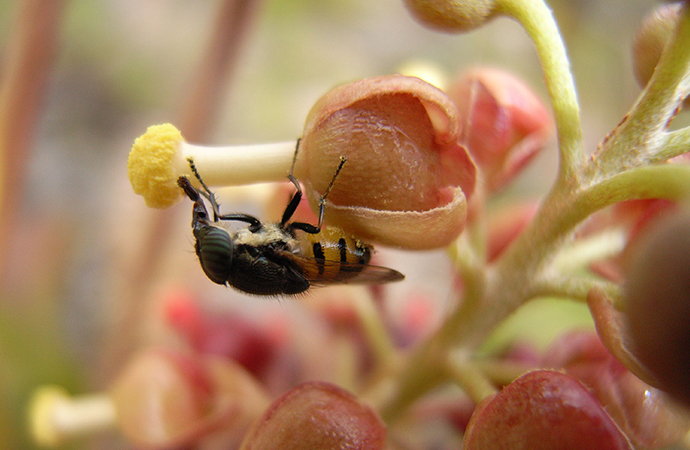
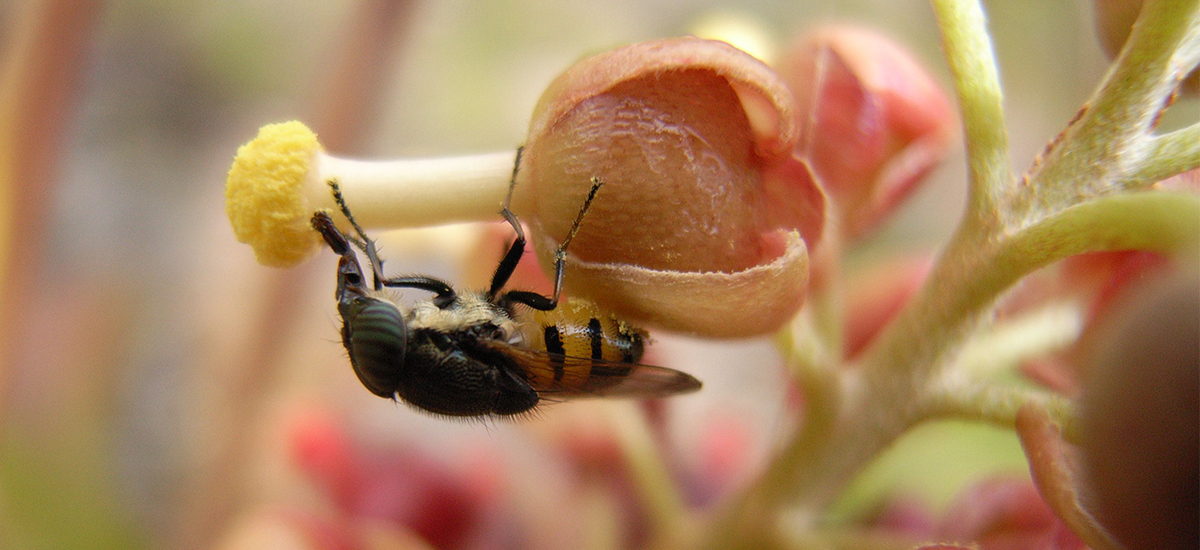
Syrphe (Diptera : Syrphidae) sur une fleur de Nepenthes rafflesiana (Brunei, Borneo) © Laurence Gaume (CNRS). Les syrphes sont des mouches rendant des services de pollinisation essentiels pour les flores sauvage et cultivée. Les syrphes sont pourtant en déclin, notamment en Europe où elles sont particulièrement impactées par l’agriculture intensive.


Le problème de la qualité des données en écologie : l’exemple d’InsectChange


La crise actuelle de la biodiversité soulève des enjeux écologiques, économiques et sociétaux majeurs. Aussi, des bases de données en écologie se multiplient pour évaluer les tendances de la biodiversité. Les résultats de ces évaluations influencent l’opinion publique et les décideurs. Or, bien qu’elle soit une condition nécessaire à la fiabilité des tendances estimées, la qualité de ces jeux de données fait rarement l’objet d’investigations poussées.


Les données sur les insectes n’échappent pas à ce constat. Les insectes assurent des services essentiels dans les écosystèmes (pollinisation, recyclage de la matière organique, source de nourriture pour de nombreuses espèces, contrôle des bioagresseurs …). Leur déclin est donc particulièrement préoccupant mais il est très difficile de mesurer précisément son ampleur et ses déterminants en raison de leur grande diversité taxonomique et d’un manque de données concernant certains groupes.


Ainsi, une évaluation minutieuse de la seule base de données mondiale sur les insectes, InsectChange, publiée dans Ecology en 2021, montre qu’il est crucial de mieux prendre en compte la question de la qualité des bases de données. InsectChange rassemble les données utilisées dans la méta-analyse de van Klink et al. publiée dans Science en 2020, qui montrait un déclin des insectes terrestres de 9 % par décade, et une augmentation des insectes d’eau douce de 11 % par décade. Cette méta-analyse ne mettait pas en évidence d’impact de l’agriculture sur le déclin des insectes. Elle argumentait au contraire que l’amélioration des pratiques agricoles était un facteur explicatif de l’augmentation des insectes d’eau douce. Cette méta-analyse, plutôt rassurante par rapport à d’autres résultats antérieurs, a fait néanmoins l’objet de plusieurs analyses critiques de la part de la communauté scientifique internationale, dont une publiée dans Science la même année. Les auteurs de l’article débattu ont publié une correction, mais celle-ci n’a considéré qu’à la marge les critiques énoncées, et la publication a continué à être fortement médiatisée. L’analyse complète de InsectChange, en révélant une accumulation d’erreurs et de biais dans les données, démontre que les tendances estimées et leurs déterminants ne sont pas fiables.


Cette analyse critique révèle plus de 500 erreurs et problèmes méthodologiques dans la constitution de cette base de données à partir de 165 jeux de données. Ces problèmes, parfois transmis depuis une autre base de données, relèvent de 17 types : chiffres mal reportés, biais d’échantillonnage, insectes comptés deux fois, unités de mesures non standardisées, etc. La méthode développée pour évaluer la base de données définit des critères spécifiques et regroupe les problèmes en quatre catégories : erreurs, incohérences, problèmes méthodologiques et déficit d’informations.


Illustration de la répartition et du nombre moyens des 17 types de problèmes rencontrés par jeu de données dans la base InsectChange, auquel s’ajoute le problème général de non-standardisation des données (non représenté sur le graphique). Ces types de problèmes appartiennent à quatre catégories : les erreurs, les incohérences, les problèmes méthodologiques et les déficits d’information.


Ainsi, l’analyse détaille quatre problèmes majeurs qui ont conduit à fausser l’analyse des tendances des insectes et celle de leurs déterminants.


Des données hétérogènes et leur transformation mathématique invalident l’estimation des tendances globales


Un problème majeur de la base de données réside dans le fait que les métriques (abondance, biomasse) sont disparates, les méthodes d’échantillonnage sont différentes et les unités de mesure ne sont pas standardisées. L’analyse montre que la transformation mathématique log(x+1) de ces données hétérogènes effectuée dans la méta-analyse de Science compromet la comparaison des pentes entre les séries temporelles et l’estimation des tendances globales des insectes. Elle ne permet pas, comme il était spécifié, de travailler sur des variations temporelles relatives et donc comparables entre jeux de données. Ce problème suffit ainsi à lui seul à invalider l’estimation faite des tendances des insectes dans le monde. 


Des erreurs conduisent à sous-estimer le déclin des insectes


La base de données présente plusieurs d’erreurs et d’incohérences comme :

  • l’inversion des chiffres entre le premier et le dernier enregistrement d’une série, transformant ainsi une diminution en une augmentation,
  • la sélection préférentielle dans certaines études de séries où la tendance des insectes augmentait,
  • ou encore la non-correction de l’augmentation de l’effort d’échantillonnage.

En plus de ces erreurs, un problème majeur a conduit à sous-estimer le déclin des insectes à partir de cette base de données. En effet, beaucoup de jeux de données comprennent des invertébrés qui ne sont pas des insectes, comme des moules envahissantes, des escargots, des vers et des crustacés. C’est le cas de près de la moitié des jeux de données d’eau douce concernant l’abondance des insectes (le nombre d’individus) et plus de trois quarts de ceux concernant leur biomasse (le poids cumulé des individus). Ce type d’erreur peut avoir des impacts importants sur l’évaluation des tendances : ainsi, un jeu de données d’un lac du Kazakhstan montre, en près d’un siècle, une augmentation exponentielle « d’insectes » … alors qu’il s’agit pour la plupart de coquillages envahissants, atteignant à la fin de la période considérée 95 % de la biomasse de l’assemblage total d’invertébrés pris en compte.


De plus, un examen minutieux des données sources a permis d’identifier les jeux de données pour lesquels il était en fait possible de séparer insectes et non insectes. Dans ces jeux de données, bien souvent la biomasse des seuls insectes diminuait, alors que celle des assemblages d’invertébrés présentés comme des insectes augmentait. Il a pu ainsi être démontré que la prise en compte de l’ensemble des invertébrés, et non des seuls insectes, conduisait à surestimer la tendance des « insectes » d’eau douce.


Des données sont issues de contextes spécifiques, influençant les tendances locales, mais non pris en compte


Une faille méthodologique réside dans le fait que plus de la moitié des publications sources étudiaient les dynamiques des insectes dans des contextes très spécifiques (mesures de restauration, création de nouveaux habitats, feu, sécheresse, traitements insecticides, etc.). Ces contextes étaient des perturbations extrêmes ou des facteurs étudiés comme pouvant influencer les dynamiques observées et testés au travers d’expériences contrôlées (avec manipulation du milieu) ou d’expériences naturelles (comparaison de sites naturellement perturbés avec d’autres restés intacts). Mais ces contextes spécifiques ne sont la plupart du temps pas reportés dans la base de données. Or ils créent des situations non représentatives de la diversité des conditions de vie des insectes dans le monde qui favorisent cinq fois plus fréquemment l’augmentation des insectes que leur diminution. L’utilisateur est laissé ignorant des biais dans les tendances, artificiellement causés par ces facteurs influents, et de la sous-estimation du déclin global des insectes qui en résulte.


Une méthodologie inappropriée conduit à écarter l’agriculture comme facteur du déclin des insectes


Alors que les contextes spécifiques aux études sources – facteurs les plus directement influents sur la dynamique des insectes – ne sont souvent pas reportés dans la base de données, cette dernière extrait depuis des bases externes des données concernant les facteurs anthropogéniques susceptibles d’influencer localement les tendances observées. Plus précisément, les données d’évolution des insectes dans InsectChange sont appariées via les coordonnées géographiques des sites d’échantillonnage avec d’autres bases de données mondiales décrivant l’évolution de l’utilisation des terres (agriculture, urbanisation) et du climat. Or, une analyse détaillée montre que pour deux tiers des jeux de données, l’appariement des bases de données est compromis parce que la zone d’échantillonnage est plus grande que la zone définie comme échelle locale dans la base de données externe, ou n’est pas localisée au bon endroit dans InsectChange. Par ailleurs, la base de données qui code la couverture des terres du globe à partir d’une interprétation automatisée d’images satellites, peut confondre les cultures agricoles avec des prairies, des steppes, etc. Ainsi, une analyse exhaustive montre que les sites considérés sans culture agricole au niveau local sont bien non cultivés, tandis que les sites considérés comme cultivés ne le sont en général pas, ou moins que ce qui est reporté. Cette surestimation importante de la couverture des terres cultivées conduit les auteurs de la méta-analyse à écarter ainsi de façon erronée les pratiques agricoles comme cause possible du déclin des insectes. À cause d’une méthodologie doublement inappropriée, InsectChange ne permet donc pas d’identifier les déterminants des tendances des insectes.


Conclusion


Ce travail minutieux et complet d’évaluation montre l’insuffisante attention accordée à la qualité des données d’InsectChange et amène à réfléchir sur la nécessité d’une évaluation systémique des grosses bases de données construites pour estimer les tendances de la biodiversité. À ce titre, la méthodologie reproductible développée pour évaluer InsectChange peut contribuer à l’élaboration d’une méthode généralisable d’évaluation de la qualité des bases de données en écologie.


Ce travail d’ampleur met également en garde contre les risques d’une science toujours plus rapide. Il appelle les revues scientifiques à améliorer leur processus d’évaluation par les pairs et à garantir la prise en compte des commentaires post-publication, afin de préserver la qualité des connaissances scientifiques. Cela concerne tout particulièrement les revues de renom, intermédiaires privilégiés des journalistes.


Enfin, cette démarche inédite met en lumière le rôle fondamental de l’organisation de chercheurs à but non lucratif Peer Community In. En publiant, comme elle l’a fait pour cette réanalyse des données de InsectChange, des commentaires critiques sans restriction éditoriale, selon une démarche de science ouverte et un processus d’évaluation indépendant et transparent, cette organisation participe à préserver l’intégrité scientifique et la qualité du débat scientifique.


Cet article a d’ores et déjà fait l’objet de différentes communications et reprises dans la presse. Merci à Laurence Gaume, chercheuse en écologie au CNRS, et Marion Desquilbet, chercheuse en économie de l’environnement (INRAE) d’avoir pris le temps de revenir sur ce texte pour la FRB.


Does a consensus on biodiversity-friendly practices effectiveness exist ?


As part of the discussions during the Conference of the Parties on the Convention on Biological Diversity, in Colombia last November, biodiversity protection and restauration are confronted with financial issues. Furthermore, questions about effectiveness assessment of measures established to restore and maintain biodiversity in a social-ecosystem are also raised.


A scientific consortium composed of the Muséum national d’Histoire naturelle (MNHN) (The French National Natural History Museum), the Fondation pour la recherché sur la biodiversité (FRB) (French Biodiversity Research Foundation) and Carbone 4 launched, in early 2024, a methodological research project based on biodiversity-friendly practices certification. The assessment of the anticipated biodiversity gains associated with the maintenance or set-up of these practices will be achieved thanks to expert consultation and consensus building.


The scientific consortium has designed a method to assess the biodiversity gains associated with biodiversity-friendly practices. It is launching the compendium for two case studies: ‘Arable land and permanent grassland’ and ‘Utilised forests’ in Western Europe. The assessment of gains will be reached thanks to a platform developed in order to allow semi-quantitative ranking of the practices relative to each other. A large-scale expert consultation will be launched soon to validate the hypothesis that a sufficiently robust consensus exists in order to publish the first biodiversity-friendly practices’ ranking.


Temperate mixed-farming or forestry associated biodiversity is in your field of expertise?

We invite you to take part in this assessment on biodiversity gains associated with biodiversity-friendly practices.

The more people who contribute, the stronger the results will be!


Many of you attended the webinar presenting the project and the method for assessing biodiversity gains! If you were unable to attend or would like to see it again, the video of the webinar is now online.


(Re)discover the webinar


­
📆 See you in spring


The Puzzling Biodiversity platform, which will enable biodiversity gains associated with forestry and agricultural practices to be assessed, will open in spring 2025.


🔎 More informations about … 


Experts consultation : open to academic and non-academic experts. A particular attention will be given to quantifying the degree of consensus to the underlying assumptions of additivity of the various practices listed and the conditions of validity of associating an average gain in biodiversity with the maintenance and/or implementation of a given practiceA critical analysis of the results from the statistical analysis of the data collected during the study will be carried out, including the profile of the respondents. The whole assessment process will take place on an online platform specifically developed for the matter. It has been specifically designed to provide an easy and fluid experience for the users.  


The project : the scientific consortium is developing a methodology to evaluate biodiversity-friendly practices. Another part of the project is dedicated to mapping the risks, opportunities, and use cases in connection with a certification process. 


[FRB-CESAB] Data Toolbox for Reproducible Research in Computational Ecology – 2024

Pre-registrations for this training course are open. 

Please beware, the number of places being limited, successful applications will be confirmed at the end of July.


The CESAB – Centre for Biodiversity Synthesis and Analysis – and the RT EcoStat organize the sixth edition of the training course Data Toolbox for Reproducible Research in Computational Ecology. The objective of this five-day course is to train young researchers in reproducibility, software development and version management tools (Git, GitHub, R Markdown, Quarto, renv, Docker), applied to biodiversity research. 


This training will be given in French and will take place from December 2nd to 6th 2024 at CESAB in Montpellier. Its price is 150 € for the week – lunch included. Transportation, accommodation and evening meals are at the charge of the participants.


A good mastering of the R software is required.


Find the training course on GitHub


List of speakers (in alphabetical order):
  • Iago BONNICI (CNRS ISEM)
  • Nicolas CASAJUS (FRB-CESAB)
  • François GUILHAUMON (IRD Entropie)
  • Aurélie SIBERCHICOT (UCBL LBBE)

[FRB-CESAB] Biodiversity data: From data collection to publication – 2024

Pre-registrations are now open!

To pre-register, fill out the form at the bottom of the page. Registrations will be confirmed after selection of candidates at the end of June.


The CESAB (Centre for Biodiversity Synthesis and Analysis), the French Biodiversity Data Hub (PNDB, Pôle National de Données de Biodiversité), and GBIF France (Global Biodiversity Information Facility for France) organize the first edition of the training course “Biodiversity data: From data collection to publication”. This five-day course aims to 1) contextualize the issues surrounding the understanding, sharing and (re)use of biodiversity data and metadata, and 2) enhance the skills of communities involved in one or more stages of the data cycle.


This training will be given in French and will take place from November 4th to 8th 2024, at CESAB in Montpellier. The fees cost 150 € for the whole week – lunches included. Commuting, accommodation and evening meals shall be borne by participants.


Find the training course on GitHub


A good mastering of the R software is required


List of organisers:

[FRB-CESAB] Biodiversity knowledge synthesis: an introduction to meta-analyses and systematic reviews – 2024

Pre-registrations are now open (in French)!

To pre-register, fill in the form at the end of the page. Beware, the number of places being limited, successful applications will be confirmed in June.


The CESAB – Centre for Biodiversity Synthesis and Analysis – of the FRB is offering the second edition of the following training course: “Biodiversity knowledge synthesis: an introduction to meta-analyses and systematic reviews“. This five-day course aims to train researchers on the methods and techniques of meta-analyses and systematic reviews/maps applied to the field of biodiversity.


In addition, it will be an opportunity to become familiar with the various  different tools available, both bibliographic (e.g., WOS; Zotero/Mendeley/Endnote) and statistical (R packages: metaDigisitise, metafor…), necessary for undertaking a review and meta-analysis.


The training course will be given in French and will take place from 30th September to October 4th 2023 at CESAB, in Montpellier. The price will be 150 € for the week, including lunch. Travel, accommodation and evening meals are at the expense of the participants. 


Find more about the course on GitHub


A good command of R software is required, but it is not necessary to have previous experience in meta-analyses or systematic reviews.

In addition, a good level of French and English is required


List of organisers (in alphabetical order):

This list includes the people who contributed to the organisation of the training course (O) and the speakers in 2024 (S).


[FRB-CESAB] Analyzing ecological network data – 2024

The CESAB – Centre for Biodiversity Synthesis and Analysis – and the ANR EcoNet are organizing the first edition of the workshop “Analyzing ecological network data”. The objective of this five-day course is to train young researchers in analyzing ecological network data. The course covers a general introduction to networks, classical metrics (including modularity, nesteness, clustering), null models, generative models (including SBM), multilayer networks, as well as an overview of newer techniques (such as embedding). Each topic is explored through lectures followed by practicals.


The training course, in English, will take place from the 22nd to the 26th of April 2024 at the CESAB in Montpellier. The price is 150 € for the week, including lunches. Travel, accommodation and evening meals are at the expense of the participants.


Thanks for your interest, pre-registrations are now closed.

Please note, the number of participants being limited, acceptance of applications will be confirmed in February. 


List of organizers (by alphabetical order):

[FRB-CESAB] Theory-driven Analysis of Ecological Data – 2024


The CESAB – Centre for Biodiversity Synthesis and Analysis – and the GdR TheoMoDive organize the third edition of the training course “Theory-driven Analysis of Ecological Data”. The objective of this five-day course is to train young researchers in building and analyzing mathematical models that will help them better understand ecological data. By contrast with purely statistical models, this course emphasizes a process-driven approach based on ecological theory. The course covers a general introduction to ecological modeling and thematic sessions focused on three topics of interest (time series, spatial data, interaction networks). Each topic is explored through mathematical models as well as inferential and predictive approaches, with a mix of courses and practical.


The training course, in English, will take place from the 11th to the 15th of March 2024 in the CESAB premises in Montpellier. The price is 150 € for the week, including lunch. Travel, accommodation and evening meals are at the expense of the participants.


Find the training course on GitHub


Pre-registrations are now closed. If you have already pre-registered, please note that the number of places is limited.

Your registration will be confirmed in January after assessment of your application.

A good knowledge of the R software is required.


List of organizers (by alphabetical order):

  • Vincent CALCAGNO (INRAE, ISA) 
  • Emanuel FRONHOFER (CNRS, ISEM) 
  • Isabelle GOUNAND (CNRS, iEES-Paris) 
  • Claire JACQUET (CNRS, ISEM) 
  • Sonia KEFI (CNRS, ISEM)
  • François MASSOL (CNRS, CIIL) 

[FRB-CESAB] Data Toolbox for Reproducible Research in Computational Ecology – 2023

Pre-registrations for this training course are now closed. 

Please beware, the number of places being limited, successful applications will be confirmed in September 2023.


The CESAB – Centre for Biodiversity Synthesis and Analysis – and the RT EcoStat organize the fourth edition of the training course Data Toolbox for Reproducible Research in Computational Ecology. The objective of this five-day course is to train young researchers in reproducibility, software development and version management tools (Git, GitHub, R Markdown, Quarto, renv, Docker), applied to biodiversity research. 


This training will be given in French and will take place from November 20 to 24th, 2023 at CESAB in Montpellier. Its price is 150 € for the week – lunch included. Transportation, accommodation and evening meals are at the charge of the participants.


Find the training course on GitHub


List of speakers (in alphabetical order):
  • Iago BONNICI (CNRS ISEM)
  • Nicolas CASAJUS (FRB-CESAB)
  • François GUILHAUMON (IRD Entropie)
  • Aurélie SIBERCHICOT (UCBL LBBE)

[FRB-CESAB] Biodiversity knowledge synthesis: an introduction to meta-analyses and systematic reviews – 2023

Pre-registrations for this training course are now closed.


The CESAB – Centre for Biodiversity Synthesis and Analysis – of the FRB is offering the second edition of the following training course: “Biodiversity knowledge synthesis: an introduction to meta-analyses and systematic reviews“. This five-day course aims to train young researchers on the methods and techniques of meta-analyses and systematic reviews/maps applied to the field of biodiversity.


In addition, it will be an opportunity to become familiar with the various  different tools available, both bibliographic (e.g., WOS; Zotero/Mendeley/Endnote) and statistical (R packages: metaDigisitise, metafor…), necessary for undertaking a review and meta-analysis.


The training course will be given in French and will take place from 2 to 6 October 2023 at CESAB, in Montpellier. The price will be 150 € for the week, including lunch. Travel, accommodation and evening meals are at the expense of the participants. 


Find the training course on GitHub


Proficiency in R software is required but no experience in meta-analysis or systematic review is necessary.


List of organizers (by alphabetical order):

Autres intervenants (Guest speaker) : Frédéric GOSSELIN (INRAE)

[FRB-CESAB] Theory-driven Analysis of Ecological Data – 2023


The CESAB – Centre for Biodiversity Synthesis and Analysis – and the GdR TheoMoDive organize the second edition of the training course “Theory-driven Analysis of Ecological Data”. The objective of this five-day course is to train young researchers in mathematical modelling (differential equations, Lotka Volterra, Jacobian matrices), and in the statistical links between models and biodiversity data.


The training course, in English, will take place from the 3rd to the 7th of April 2023 in the CESAB premises in Montpellier. The price is 100 € for the week, including lunch. Travel, accommodation and evening meals are at the expense of the participants. 


Find the training course on GitHub


A good knowledge of the R software is required.


List of organizers (by alphabetical order):
  • Vincent CALCAGNO (INRAE, ISA) 
  • Emanuel FRONHOFER (CNRS, ISEM) 
  • Isabelle GOUNAND (CNRS, iEES-Paris) 
  • Claire JACQUET (CNRS, ISEM) 
  • Sonia KEFI (CNRS, ISEM)
  • François MASSOL (CNRS, CIIL) 


[Course] Opening of pre-registration for the training course “Theory-driven Analysis of Ecological Data” – 2023

This 5-days training course, organized by the CESAB and the GdR TheoMoDive aims to train young researchers in mathematical modelling (differential equations, Lotka-Volterra, Jacobian matrices), and the statistical links between models and biodiversity data. 


The training course, in English, will take place from the 3rd to the 7th of April 2022 in the CESAB premises in Montpellier. Its price is 100 € for the week, including lunch. Travel, accommodation and evening meals are at the expense of the participants. 


You can pre-register for this course by filling in the form available on the event page until Wednesday 8th of February at midnight (CET). As the number of places is limited, registrations will be confirmed in February. 


Pre-registration and programme

[FRB-CESAB] Data Toolbox for Reproducible Research in Computational Ecology – 2022

 
The CESAB – Centre for Biodiversity Synthesis and Analysis – and the GdR EcoStat organize the fourth edition of the training course Data Toolbox for Reproducible Research in Computational Ecology. The objective of this five-day course is to train young researchers in reproducibility, software development and version management tools (Git, R Markdown, renv, Docker), applied to biodiversity research. The RStudio IDE will be used throughout the training.


This training will be given in French and will take place from November 28 to December 2, 2022 at CESAB in Montpellier. Its price is 200 € for the week – lunch included. Transportation, accommodation and evening meals are at the charge of the participants.


The GdR EcoStat offers financial support to those whose funds available through the supervisor/laboratory would not be sufficient. These scholarships are primarily intended for PhD students and post-doctoral fellows. In order to benefit from these grants, the participant must belong to a laboratory member of the GdR. The amount of the financial support granted will depend on the number of applications. 


Find the training course on GitHub


List of speakers (in alphabetical order):
  • Iago BONNICI (CNRS ISEM)
  • Nicolas CASAJUS (FRB-CESAB)
  • François GUILHAUMON (IRD Entropie)
  • Aurélie SIBERCHICOT (UCBL LBBE)

[FRB-CESAB] Biodiversity knowledge synthesis: an introduction to meta-analyses and systematic reviews – 2022

The CESAB – Centre for Biodiversity Synthesis and Analysis – of the FRB is offering the first edition of the following training course: “Biodiversity knowledge synthesis: an introduction to meta-analyses and systematic reviews“. This five-day course aims to train young researchers on the methods and techniques of meta-analyses and systematic reviews/maps applied to the field of biodiversity.


In addition, it will be an opportunity to become familiar with the various  different tools available, both bibliographic (e.g., WOS; Zotero/Mendeley/Endnote) and statistical (R packages: metaDigisitise, metafor…), necessary for undertaking a review and meta-analysis.


The training course will be given in French and will take place from 3 to 7 October 2022 at CESAB, in Montpellier. The price will be 350 € for the week, including lunch. Travel, accommodation and evening meals are at the expense of the participants. 


Find the training course on GitHub


Proficiency in R software is required but no experience in meta-analysis or systematic review is necessary.


List of organizers (by alphabetical order):


Other speakers: Dakis-Yaoba OUEDRAOGO, Romain SORDELLO, Frédéric GOSSELIN.

[Press release] A new method to assess ecosystem vulnerability and protect biodiversity

As states committed to creating protected areas on at least 30% of their land and sea territories by 2030, an international team of researchers has developed a new tool to quantify the vulnerability of species communities. Combined with future ecosystem risk assessment studies, this tool should help decision-makers identify management priorities and guide protection efforts where they are most needed. Setting appropriate conservation strategies is a challenging goal, especially because of the complexity of threats and responses from species, and budget limitations. To overcome this challenge, the team of scientists, including researchers from CNRS, IFREMER, IRD and international organizations, has simulated the response of species communities to a wide range of disturbances, providing a robust estimation of their vulnerability, in a world where future threats are diverse and difficult to predict.


Quantifying the vulnerability of biodiversity is crucial to safeguard the most threatened ecosystems. Published in Nature Communications on the 1st of September 2022, this new tool stands out from previous work as it estimates the degree to which functional diversity, that is biodiversity and associated ecosystem functions, is likely to change when exposed to multiple pressures. It was developed as part of two projects funded by the French Foundation for Research on Biodiversity (FRB) within its Centre for Biodiversity Synthesis and Analysis (CESAB) and with the support of Electricité de France (EDF) and France Filière Pêche (FFP).


Read the press release

[Course] Opening of the 2022 training course – Data Toolbox for Reproducible Research in Computational Ecology

The CESAB and the GdR EcoStat organize the third edition of the training course “Data Toolbox for Reproducible Research in Computational Ecology“. The objective of this five-day course is to train young researchers in reproducibility, software development and version management tools, applied to biodiversity research.


This training will be given in French and will take place from November 28 to December 2, 2022 at CESAB in Montpellier. Its price is 200 € for the week – lunch included. Transportation, accommodation and evening meals are at the charge of the participants.


You can pre-register for this course by filling in the form available on the event page until Tuesday 26th of July at midnight (CEST). As the number of places is limited, registrations will be confirmed during in September. 


Pre-registration and programme

[CALL FOR TENDERS] Desk study on the role of biodiversity in Nature-Based Solutions

Under the objective “Connecting R&I programs, results and experts to policy” of the Biodiversa+ Partnership, the subtask 4.1.2 “Desk studies and production of knowledge syntheses” led by the French Foundation for Research on Biodiversity (FRB) is subcontracting a service provider to develop a scoping review in order to summarise the state of knowledge on the role of biodiversity in Nature-Based Solutions (NBS). The FRB will appoint the service provider – after the evaluation/selection process – on July 1st, 2022.


The deadline to apply to this call for tender is midnight 22nd of June. All applications should be submitted in English and sent by email to :

Joseph LANGRIDGE <joseph.langridge@fondationbiodiversite.fr> before this deadline with Cécile MANDON <cecile.mandon@fondationbiodiversite.fr> in copy.


[Course] Opening of pre-registration for the training course “Biodiversity knowledge synthesis: an introduction to meta-analyses and systematic reviews” – 2022

This new five-day course, organised by the CESAB – Centre for Biodiversity Synthesis and Analysis – of the FRB,  aims to train young researchers on the methods and techniques of meta-analyses and systematic reviews/maps applied to the field of biodiversity.
 
The training course will be given in French and will take place from 3 to 7 October 2022 at CESAB, in Montpellier.


You can pre-register for this course by filling in the form available on the event page until Friday 24th of June 2022 at midnight (CEST). As the number of places is limited, registrations will be confirmed in July. 


Pré-inscription et programme

[FRB-CESAB] Theory-driven Analysis of Ecological Data – 2022


The CESAB – Centre for Biodiversity Synthesis and Analysis – and the GdR TheoMoDive organize the first edition of the training course “Theory-driven Analysis of Ecological Data”. The objective of this five-day course is to train young researchers in analyzing ecological data using theory-driven approaches. 


The training course, in English, will take place from the 16th to the 20th of May 2022 in the CESAB premises in Montpellier. Price is 150 € for the week, including lunch. Travel, accommodation and evening meals are at the expense of the participants. 


Find the training course on GitHub


A good knowledge of the R software is required.


List of organizers (by alphabetical order):
  • Vincent CALCAGNO (INRAE, ISA) 
  • Emanuel FRONHOFER (CNRS, Isem)
  • Isabelle GOUNAND (CNRS, iEES-Paris) 
  • François MASSOL (CNRS, CIIL) 


Others speakers: Matthieu BARBIER, Maxime DUBART, Claire JACQUET, Benjamin ROSENBAUM.

[Course] Opening of pre-registration for the training course “Theory-driven Analysis of Ecological Data” – 2022

This new 5-days training course, organized by the CESAB and the GdR TheoMoDive aims to train young researchers in analyzing ecological data using theory-driven approaches. 


The training course, in English, will take place from the 16th to the 20th of May 2022 in the CESAB premises in Montpellier. Price is 150 € for the week, including lunch. Travel, accommodation and evening meals are at the expense of the participants. 


You can pre-register for this course by filling in the form available on the event page until Monday 14th of February at midnight (CET). As the number of places is limited, registrations will be confirmed in March. 


Pre-registration and programme

[FRB-CESAB] Data Toolbox for Reproducible Research in Computational Ecology – 2021

The CESABand the GdR EcoStat organize the third edition of the training course “Data Toolbox for Reproducible Research in Computational Ecology“. The objective of this five-day course is to train young researchers in reproducibility, software development and version management tools (e.g. R, git, markdown, tidyverse, docker), applied to biodiversity research.


Price is 300 € for the week, including lunch. Travel, accommodation and evening meals are at the expense of the participants. Grants may be awarded to some participants (for an amount not exceeding the registration fee): one grant from the FRB and one grant from the GdR EcoStat (for students belonging to a laboratory member of the GdR). The training course, in French, took place from the 29th of November to the 3rd of December 2021 in the CESAB premises in Montpellier. 


The training course can be credited for students registered in the following doctoral schools:

  • GAIA (Montpellier)
  • EGAAL (Rennes)
  • ABIES (Paris)
  • Sciences and agrosciences (Avignon)
  • SEVAB (Toulouse) 
  • Sciences de l’environnement (Aix en Provence)
 
List of speakers (in alphabetical order):
  • Nicolas CASAJUS (FRB-CESAB)
  • Stéphane DRAY (CNRS LBBE)
  • Olivier GIMENEZ (CNRS Cefe)
  • Loreleï GUÉRY (CIRAD PHIM)
  • François GUILHAUMON (IRD Marbec)
  • Nina SCHIETTEKATTE (EPHE Criobe)

[Course] Opening of the 2021 training course – Data Toolbox for Reproducible Research in Computational Ecology

The CESAB and the GdR EcoStat organize the third edition of the training course “Data Toolbox for Reproducible Research in Computational Ecology“. The objective of this five-day course is to train young researchers in reproducibility, software development and version management tools, applied to biodiversity research.


The training course will take place from the 29th of November to the 3rd of December 2021 in the CESAB premises in Montpellier. The course will be in French. The training course can now be credited for students registered in specific doctoral schools, you can find the list on the event page.


You can pre-register for this course by filling in the form available on the event page until Saturday 31st July at midnight (CEST). As the number of places is limited, registrations will be confirmed during the first week of September. Note that the course can now give you credit in specific French doctoral schools. 


Pre-registration and programme

[FRB-CESAB] Data Toolbox for Reproducible Research in Computational Ecology – 2020

The CESAB and the GDR EcoStat organize the second edition of the training course “Data Toolbox for Reproducible Research in Computational Ecology“. The objective of this five-day course, in French, is to train young researchers in reproducibility, software development and version management tools (e.g. R, git, markdown, tidyverse, docker), applied to biodiversity research.

The registration fee is 100 € for the week and will be used to compensate the speakers. Students from laboratories member of the GDR EcoStat can apply for financial support from the GDR.


The training course took place from 2 to 6 November 2020.


You can access the training course’s slides as well as the R codes


List of speakers (in alphabetical order):

  • Nicolas CASAJUS (FRB-CESAB)
  • Stéphane DRAY (CNRS LBBE)
  • Olivier GIMENEZ (CNRS Cefe)
  • François GUILHAUMON (IRD Marbec)
  • Nina SCHIETTEKATTE (EPHE Criobe)


[FRB-CESAB] The training course ecoinfofair2020 is hosted at CESAB

Within the framework of the research infrastructure “National hub for biodiversity data” (in French PNDB: Pôle national des données de biodiversité), the research and actions in progress on making data FAIR – Findable, Accessible, Interoperable and Reusable – propose the implementation of products and services, around the biodiversity data, “as FAIR and open as possible”.


Thanks to the support of the DevLOG network (network of actors in the field of software development within Higher Education and Research), the PNDB is organizing workshops open to all, including an introductory training aspect.


This workshop takes place from October 19 to 21 from multiple remote sites (Concarneau, Paris and CESAB in Montpellier).


More information

[Course] Opening of the 2020 course – Data Toolbox for Reproducible Research in Computational Ecology

The CESAB and the GDR EcoStat organize the second edition of the training course “Data Toolbox for Reproducible Research in Computational Ecology“. The objective of this five-day course is to train young researchers in reproducibility, software development and version management tools, applied to biodiversity research.


The training course will take place from 2 to 6 November 2020 in the CESAB premises in Montpellier. The course will be in French.


You can pre-register for this course by filling in the form available on the event page. Pre-registrations will close on Friday 17th of July at midnight (CEST). As the number of places is limited, registrations will be confirmed during the first week of September.


[FRB-CESAB] Data Toolbox for Reproducible Research in Computational Ecology – 2019

The CESAB and the GDR EcoStat organize the training course “Data toolbox for reproducible research in computational ecology“. The objective of this five-day training is to train young researchers in reproducibility, software development and version management tools (e.g. R, git, markdown, tidyverse, docker), applied to biodiversity research.


The training course will take place from 2 to 6 December 2019 in the CESAB premises in Montpellier. The course will be in French. Price is 350 € for the week, including lunch. Travel, accommodation and evening meals will be at the expense of the participants. Students from laboratories member of the GDR EcoStat may apply for financial support from the GDR.


List of speakers (in alphabetical order):
  • Nicolas CASAJUS (FRB-CESAB)
  • Stéphane DRAY (CNRS LBBE)
  • Olivier GIMENEZ (CNRS Cefe)
  • Loreleï GUÉRY (IRD Marbec)
  • François GUILHAUMON (IRD Marbec)
  • Nina SCHIETTEKATTE (Criobe)

ACTIAS | Global patterns of insect diversity, distribution and evolutionary distinctness

The ACTIAS project stemmed from the observation that large-scale studies of spatio-temporal patterns of terrestrial biodiversity are biased toward vertebrates and plants, leaving insects largely untouched at that scale. Yet, insects are key organisms in ecosystems and their species and populations are severely impacted by global changes.


Large-scale biodiversity studies have built on the outstanding development in the recent past of infrastructures, methods and tools to manage and analyze very large datasets. “Big Data” analyses stimulated invaluable advances in the field of macroecology, biogeography and evolutionary biology, and have fueled better informed conservation policies in a world that we unfortunately now understand as entering what has been termed its “sixth extinction” period.


The Actias project aimed at:

  • erecting a set of two families of moths – Saturniidae and Sphingidae – as the first models for large-scale diversity studies in insects,
  • carrying out the first large-scale investigation of macroecological patterns and of the processes governing them,
  • and ultimately at informing the fate of insect diversity and help design adapted conservation strategies.
retour en haut de la page
fermer
This site is registered on wpml.org as a development site. Switch to a production site key to remove this banner.